We occasionally share updates when important information changes or new long-form guides are published. Just practical updates related to long-term living in Surat Thani and Southern Thailand.
Calculating the cost of living in Surat Thani for a single person requires a clear distinction between tourism and long-term residency. This guide defines a single person as a solo professional, such as a remote worker or educator, who requires a private, modern living space and a functional daily routine. We avoid basing these figures on ultra-low student budgets or the inflated spending typical of short-term travelers.
Surat Thani serves as a practical middle ground in the Thai economy. It offers a sustainable alternative to the high costs of Phuket or Koh Samui while avoiding the density and intensity of Bangkok. Moving here allows for significant cost control without sacrificing essential infrastructure like healthcare and logistics. For a broader look at regional expenses, you can explore our comprehensive guide to the cost of living in Surat Thani, which covers family budgets and long-term financial planning.
Our analysis focuses on the reality of living in Surat Thani rather than visiting. A sustainable Surat Thani budget is built on long-term rental contracts, utility management, and local market prices. By removing the tourist tax common in coastal provinces, a solo resident can achieve a high degree of financial stability in 2026.
Monthly Budget Summary (The “Big Picture”)
To understand the cost of living in Surat Thani for a single person, one must categorize expenses based on lifestyle choices rather than absolute minimums. Unlike Phuket or Bangkok, where price volatility is high due to tourism and luxury demand, Surat Thani remains economically stable. The following tiers represent realistic monthly expenditures for 2026, encompassing rent, food, transport, and basic utilities.
Category
Low-End (Local Style)
Mid-Range (Comfortable)
High-End (Premium)
Housing & Rent
5,000 – 7,000 THB
9,000 – 15,000 THB
18,000 – 25,000+ THB
Utilities & Fiber Internet
1,500 – 2,500 THB
3,000 – 4,500 THB
5,500 – 8,000+ THB
Food & Daily Groceries
6,000 – 8,000 THB
10,000 – 14,000 THB
18,000 – 25,000+ THB
Transportation
1,200 – 2,000 THB
2,500 – 5,000 THB
7,000 – 12,000+ THB
Leisure & Misc
2,000 – 4,000 THB
6,000 – 10,000 THB
12,000 – 20,000+ THB
Total Monthly Budget
15,700 – 23,500 THB
30,500 – 48,500 THB
60,500 – 90,000+ THB
Summary of Lifestyle Tiers
Low-End (Local Style): Designed for those prioritizing cost control. This involves living in a traditional Thai-style apartment or a modest studio, eating primarily at local markets, and using a small motorbike for transport.
Mid-Range (Comfortable): The most common Surat Thani expat budget. This allows for a modern 1-bedroom condo with a pool or a small house, regular visits to Western-style cafes, consistent air conditioning use, and a well-maintained vehicle.
High-End (Premium): Focuses on maximum convenience and comfort. This includes living in a premium gated community, dining at high-end international restaurants, comprehensive insurance, and private car ownership.
Housing and Utilities in Surat Thani
Securing a stable and comfortable home is the most significant variable in your Surat Thani budget. Unlike the heavy competition for housing in Phuket or Koh Samui, Surat Thani offers a high degree of availability. However, the price you pay depends heavily on whether you prioritize city center convenience or the quiet space found on the outskirts.
Monthly Rent Comparison
For a single person, the choice typically rests between a modern studio condominium or a standalone house. This choice is a core factor when calculating the cost of living in Surat Thani for a single person.
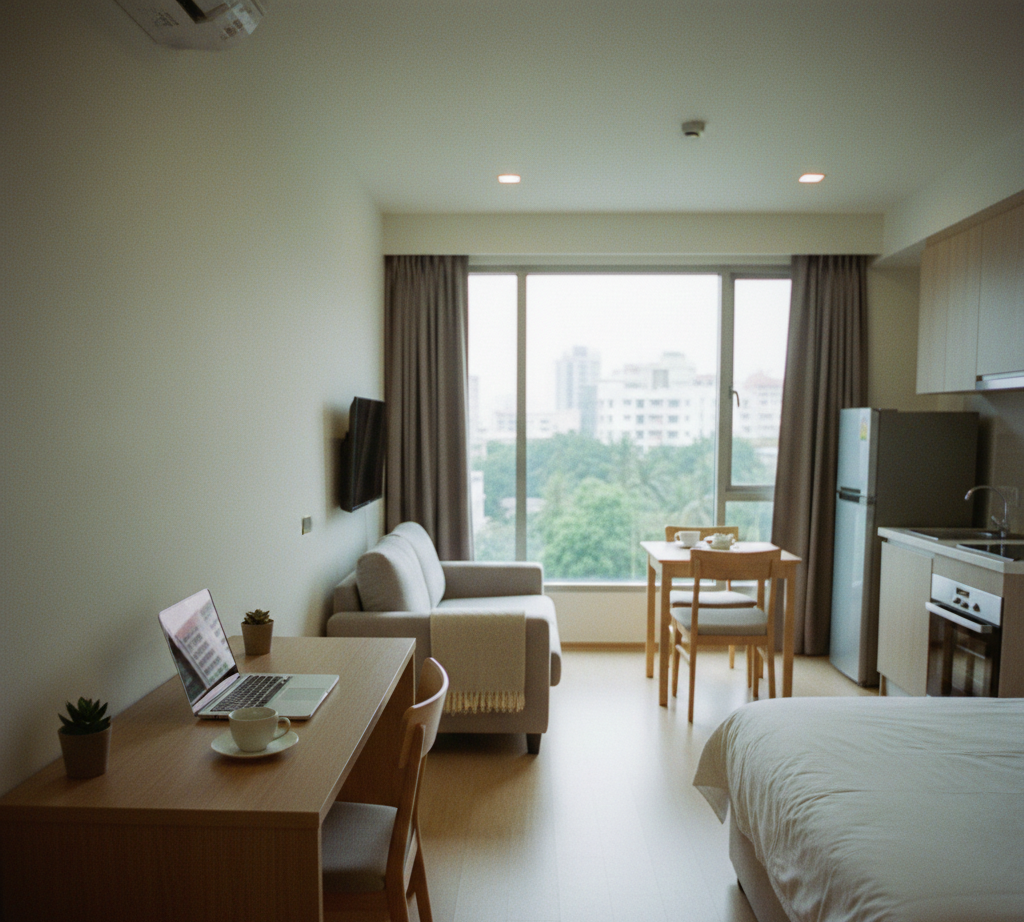
Modern City Studios: Located in well-positioned projects near major shopping districts, these units range from 7,000 to 11,000 THB per month. While compact, they offer 24-hour security, gym access, and a pool. This is often the preferred choice for those prioritizing cost control through location, as it significantly reduces commute times.
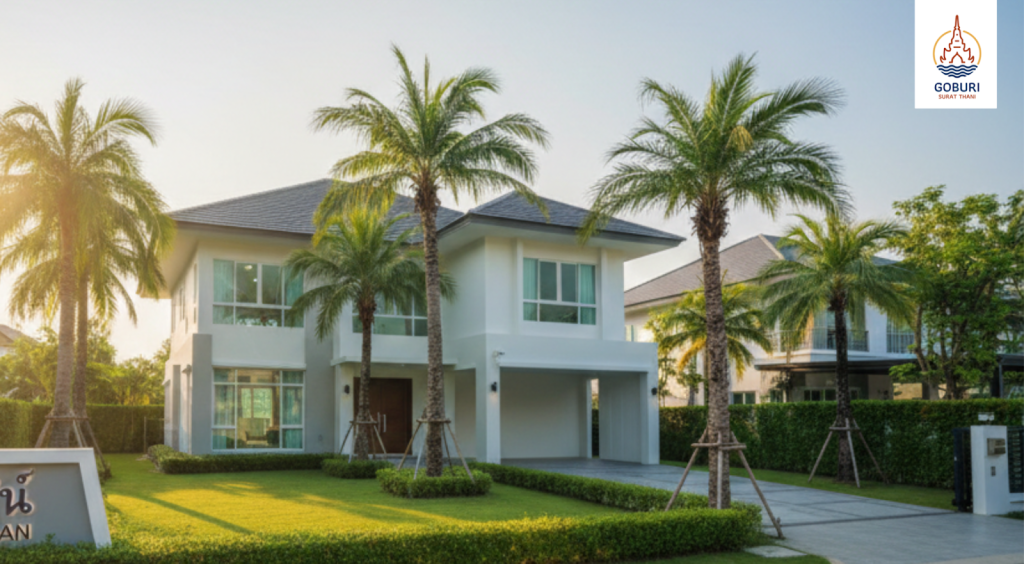
Standalone Houses: Moving 10 to 15 minutes away from the urban core to areas like Makham Tia allows you to rent a two-bedroom house for 8,000 to 14,000 THB. This option provides more privacy and space but necessitates private transportation and increases the daily commute.
Electricity and the Impact of Air Conditioning
The most variable monthly expense for a solo resident is electricity, which can fluctuate significantly based on usage habits. In 2026, government-rate electricity remains stable, but personal consumption patterns remain the primary driver of the cost of living in Surat Thani for a single person.
Using air conditioning only during the night for approximately eight hours usually results in a bill of 1,200 to 1,800 THB. For remote workers who stay home during the day and run air conditioning for 16 hours or more, the bill can rise to between 2,500 and 3,500 THB. We recommend verifying that your rental contract uses the official Provincial Electricity Authority (PEA) residential tariff rather than a flat rate set by a landlord, as the latter can be significantly higher.
Connectivity and Communication
Thailand remains a global leader in high-speed connectivity at a low cost. For a solo resident, internet reliability is rarely an issue when living in Surat Thani. The infrastructure supports high-intent work and entertainment without the premiums seen in Western countries.
Service Type
Typical Monthly Cost
Specifications
Standard Home Fiber
599 THB
500/500 Mbps (Ideal for solo remote work)
Premium Home Fiber
899 – 1,200 THB
1 Gbps+ (Best for heavy streaming or gaming)
Mobile 5G Data
399 – 600 THB
20GB – 30GB High-speed data (AIS or True)
Total Baseline
998 – 1,800 THB
Professional-grade stability
In total, your baseline connectivity will cost roughly 1,000 to 1,800 THB per month. This investment provides professional-grade stability for remote work and ensures a low-stress digital lifestyle while maintaining a reasonable Surat Thani budget.
Food and Daily Sustenance in Surat Thani
Managing your cost of living in Surat Thani for a single person depends largely on your dietary habits and where you choose to source your ingredients. Surat Thani offers a distinct advantage over tourist-heavy islands because it functions as a major agricultural hub. This proximity to the source keeps fresh food prices low for those willing to shop like a resident.
Sourcing Groceries: Local Markets vs. Supermarkets
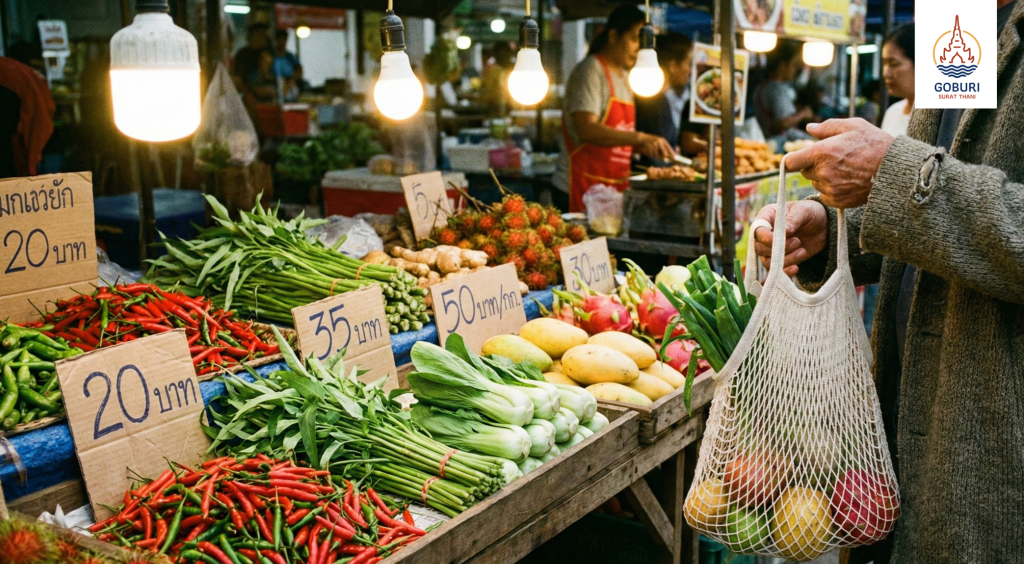
Fresh Night Markets: For daily essentials like vegetables, fruits, and proteins, markets such as the San Chao Night Market are the most cost-effective options. Most single residents can source a week’s worth of fresh produce here for 400 to 700 THB. These markets prioritize seasonal local items, which is a key strategy for cost control.
Western-Style Supermarkets: Chains like Tops Food Hall and Lotus carry imported goods such as cheese, butter, and specific international brands. While convenient, these items carry a premium. A single person’s weekly shop at these locations typically ranges from 1,500 to 2,500 THB, depending on the volume of imported products purchased.
Bulk Goods: For household staples, Makro provides wholesale pricing. While often used by businesses, it is a practical choice for long-term residents to stock up on dry goods and frozen proteins, further stabilizing the Surat Thani budget.
Eating Out: From Street Food to Western Cafes
Local Roadside Meals: A standard single-dish meal (such as Pad Krapow or Khao Man Gai) at a local stall typically costs between 40 and 60 THB. For a single person eating locally twice a day, the daily food cost is approximately 120 to 150 THB, including water or a small coffee.
Modern Thai Restaurants: Air-conditioned local restaurants offer more variety and comfort, with main dishes ranging from 120 to 250 THB. These are excellent for those seeking a balance between price and a calm dining environment.
Western and Specialty Cafes: If you prefer “Western” breakfasts, pasta, or high-quality burgers, expect to pay between 250 and 450 THB per meal. While these options are available in the city center, they are considered luxury expenditures within a Surat Thani expat budget.
Socializing and the Cost of Imported Goods
Alcohol and Taxes: As of early 2026, Thailand has implemented stricter import duties and VAT on all foreign goods. A local beer at a convenience store costs roughly 45 to 60 THB, whereas imported craft beers or wine at a restaurant often start at 250 to 400 THB per serving due to high excise taxes.
Socializing Friction: Frequent social drinking or dining at international-standard bars can easily double a solo resident’s food and beverage budget. Those who focus on a calm, sustainable lifestyle often find that socializing over coffee or local meals is the most rational way to maintain long-term financial health while living in Surat Thani.
Transportation and the Cost of Mobility
Surat Thani is a sprawling provincial capital that is not designed for pedestrians. While the city center has some walkable pockets, a single resident will find that private transportation is a non-negotiable requirement for long-term sustainability and mental calm. Relying solely on on-demand services often leads to daily friction and unpredictable costs.
The Necessity of Personal Transport
Surat Thani is a sprawling provincial capital that is not designed for pedestrians. While the city center has some walkable pockets, a single resident will find that private transportation is a non-negotiable requirement for long-term sustainability and mental calm.
For a single person, the choice of vehicle is a primary driver of the cost of living in Surat Thani for a single person. A motorbike is the most rational and efficient way to navigate the city, while a car offers increased safety and comfort during the monsoon season.
Vehicle Type
Purchase Option
Estimated Cost (2026)
Best For
Motorbike
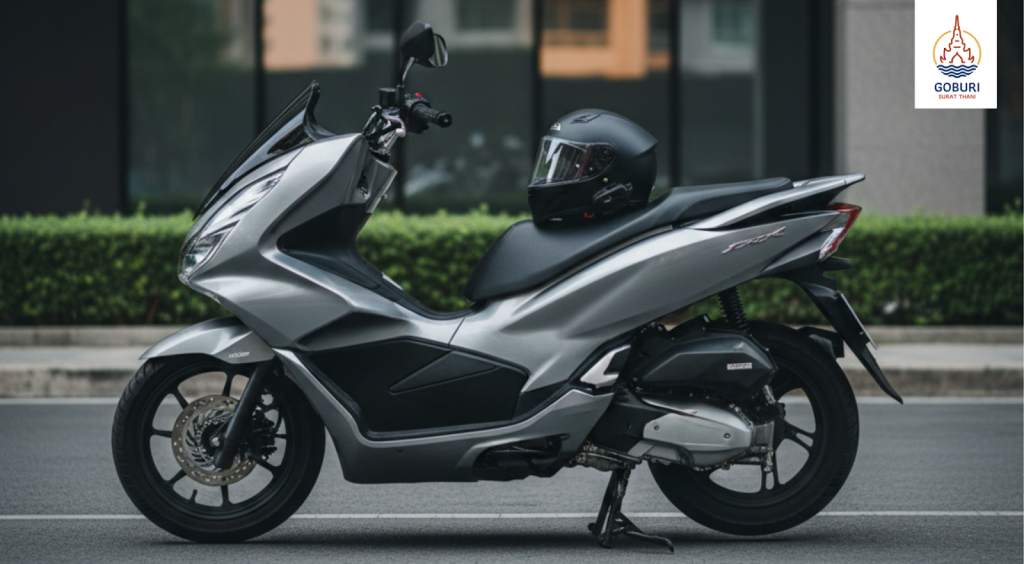
New (e.g., Honda Click)
55,000 – 65,000 THB
Maximum cost control and efficiency
Motorbike
Used (Reliable)
25,000 – 35,000 THB
Short-term or budget-conscious residents
Small Car
New (e.g., Toyota Yaris)
550,000+ THB
High stability and rainy season comfort
Small Car
Used (Well-maintained)
250,000 – 350,000 THB
Balancing safety with a lower Surat Thani budget
Monthly Running Costs and Maintenance
Operating a vehicle in Surat Thani is relatively affordable compared to Western standards, provided you adhere to a regular maintenance schedule.
Fuel Expenses: As of early 2026, retail gasoline prices in Thailand fluctuate around 42 to 46 THB per liter. You can track current provincial rates through the Bangchak Corporation historical price index. For a single person using a motorbike for daily errands and a short commute, monthly fuel costs typically range from 600 to 1,000 THB. For a small car, expect 2,500 to 4,000 THB depending on mileage.
Routine Maintenance: A standard motorbike oil change and safety check at a local dealership costs approximately 300 to 500 THB. For a car, a basic service interval (every 10,000 km) averages 2,500 to 4,500 THB.
Annual Costs: Mandatory insurance (Por Ror Bor) and annual road tax for a motorbike are negligible, totaling less than 600 THB per year. Car registration and insurance are higher, with comprehensive insurance for a single driver costing between 12,000 and 18,000 THB annually.
Public Transport Limitations
It is important to understand that Surat Thani does not have a formal mass transit system like the BTS in Bangkok. Public options are functional but limited in scope.
Songthaews: These are blue or orange pickup trucks with benches in the back. They follow set routes and cost between 15 and 30 THB per trip. While they are the cheapest option, they are often crowded, lack air conditioning, and do not run late into the evening.
Tuk-Tuks and Taxis: Traditional tuk-tuks in the city do not use meters; prices must be negotiated before the journey and usually start at 60 to 100 THB for short distances.
Ride-Hailing Apps: While services like Grab Thailand are operational in Surat Thani, they have a smaller fleet than in Phuket or Bangkok. A typical car ride across town costs 120 to 200 THB. While convenient, relying on these daily will significantly inflate the cost of living in Surat Thani for a single person.
Health and Miscellaneous Expenses
A sustainable Surat Thani budget must account for the less visible but essential costs of long-term residency. For a single person, these expenses provide the safety net and lifestyle quality necessary for long-term sustainability and mental calm.
Health Insurance for a Single Person
While healthcare in Surat Thani is highly affordable for minor issues at facilities like Bangkok Hospital Surat or Thaksin Hospital, comprehensive insurance is a non-negotiable requirement for serious medical events. In 2026, insurance premiums are influenced by age and the choice between local or international coverage.
Insurance Type
Monthly Premium (Est.)
Coverage Scope
Local Thai Policy
1,800 – 3,500 THB
Focused on Thailand; compliant with most visa requirements.
International/Global
5,500 – 9,000+ THB
Worldwide coverage, higher limits, and easier direct billing.
Social Security (SSS)
750 THB
Available only if legally employed by a Thai company.
For most single expats, a mid-range local policy providing inpatient and outpatient care is the most rational choice for cost control while maintaining adequate protection.
Gym Memberships and Leisure
Surat Thani offers various options for physical health and leisure, ranging from community-focused local gyms to modern fitness centers.
Standard Gym Membership: A monthly pass at a modern fitness center in the city center typically costs between 1,200 and 1,800 THB. These facilities usually include air conditioning and a variety of weight-training equipment.
Muay Thai Training: For those seeking traditional Thai fitness, a month of unlimited Muay Thai classes ranges from 2,500 to 4,000 THB.
Leisure and Entertainment: A single cinema ticket at Central Plaza costs approximately 200 to 250 THB, while a traditional Thai massage at a reputable local shop costs 250 to 400 THB per hour. These small, recurring costs are essential for a balanced solo life.
Visa Maintenance and Administration
Visa costs are often “hidden” because they are paid annually or quarterly, but they are a vital part of the cost of living in Surat Thani for a single person.
Standard Extensions: A yearly extension for a Non-Immigrant visa at the Surat Thani Immigration Office costs 1,900 THB.
90-Day Reporting: While this is free to do yourself, it requires consistent administrative attention every three months.
Destination Thailand Visa (DTV): For remote workers using the DTV (introduced for 5-year stays), the initial application fee is approximately 10,000 THB, with a 1,900 THB fee for each 180-day extension.
Agent Fees: If you prefer to avoid the friction of immigration paperwork, local agents in the region typically charge between 8,000 and 15,000 THB for processing assistance. We recommend budgeting for these fees if you value convenience over direct administrative involvement.
Comparison: Surat Thani vs. Phuket and Bangkok
For a solo resident, the primary incentive for choosing this region is the ability to maintain a high standard of living while exercising significant cost control. In 2026, the cost of living in Surat Thani for a single person remains approximately 25% to 40% lower than in Thailand’s major international hubs. This section outlines where those savings occur and the practical trade-offs required to achieve them.
Direct Cost Comparison
The following data reflects the average monthly expenditure for a single person maintaining a “Comfortable Expat” lifestyle across three key regions.
Expense Category
Surat Thani (Monthly)
Phuket (Monthly)
Bangkok (Monthly)
Modern 1-BR Condo
8,000 – 12,000 THB
18,000 – 30,000 THB
15,000 – 25,000 THB
Daily Thai Meal
45 – 60 THB
80 – 120 THB
60 – 90 THB
Western Cafe Meal
250 – 350 THB
400 – 600+ THB
350 – 550 THB
Motorbike Rental
2,500 – 3,500 THB
4,000 – 5,500 THB
3,000 – 4,500 THB
In Surat Thani, your money buys significantly more “private space.” A budget that secures a cramped studio in a noisy Bangkok sub-soi or a basic room in Phuket’s interior can often afford a modern, standalone house or a premium city-center condo in Surat Thani.
The Trade-Offs of the “Middle Ground”
While a Surat Thani budget offers clear financial benefits, long-term residents must consider the practical lifestyle shifts required to live here realistically.
Language and Communication: Daily life at local markets and garages requires basic Thai or translation tools, as English is not the primary language of commerce.
Service Availability: The city follows a provincial rhythm with earlier closing times and fewer specialty Western goods compared to the 24-hour economy of Bangkok.
Expat Community Density: The social circle is smaller and consists mainly of serious long-term residents rather than the large tourist or nomad crowds found in Phuket.
Transportation Friction: Moving around requires your own vehicle because the city lacks a formal mass transit system or a dense taxi network.
Choosing Surat Thani is a decision to prioritize stability and mental calm over high-energy convenience. For the right person, the 40% savings represent a gateway to a much less stressful way of living in Southern Thailand.
Conclusion and Financial Sustainability
The cost of living in Surat Thani for a single person in 2026 offers a stable alternative to the volatile, tourism-driven economies of the nearby islands. By choosing this provincial capital, solo residents can accurately predict monthly expenses and avoid the price shocks common in Thailand’s more westernized hubs. This move represents a commitment to a grounded reality where cost control and mental calm are prioritized over high-energy convenience. Ultimately, a sustainable Surat Thani budget does not result in a compromised lifestyle, but rather a high-quality, secure, and rational path for long-term residency.