Updates from
Goburi Surat Thani

24K subscribers
We occasionally share updates when important information changes or new long-form guides are published. Just practical updates related to long-term living in Surat Thani and Southern Thailand.
You can unsubscribe at any time.

Surat Thani vs Pattaya

Deciding on a permanent base in Thailand requires shifting focus from temporary travel appeal to a rigorous analysis of provincial infrastructure and long-term economic durability. In 2026, the comparison of Surat Thani vs. Pattaya highlights a significant choice between two of the country’s most evolved regional hubs. Surat Thani has matured into a mainland logistical powerhouse for the south, reinforced by the expansion of its international airport and the full integration of cross-border rail links to Malaysia. This makes it a strategic choice for those seeking a stable, trade-driven environment that remains insulated from the volatility often associated with tourism-dependent coastal regions.
Conversely, Pattaya has successfully transitioned from its historical identity as a resort town into the primary residential and industrial anchor for the Eastern Economic Corridor (EEC). By 2026, the city has become a “New Living Destination,” attracting a permanent workforce of technical specialists and executives driven by the high-speed rail connectivity to Bangkok and the growth of “New S-Curve” industries like electric vehicles and digital technology. For those currently evaluating their future in the region, understanding these structural shifts is essential to contextualize how these hubs fit into our broader Southern Thailand residency and lifestyle comparisons.

Demographic and Economic Profiles

Economic residency is defined by the underlying industry of a province, which dictates local price stability and the long-term availability of specialized services. Choosing between Surat Thani vs. Pattaya in 2026 requires an assessment of whether your financial stability relies on domestic resource production or an internationalized service and tech sector.
The Surat Thani Economy
Surat Thani is the administrative and commercial heart of the upper south, functioning as a “production-first” province rather than a holiday destination. The economy is driven by massive agricultural exports such as rubber, palm oil, and seafood, as well as the processing plants that support them. This creates a highly stable consumer market where prices are set by local Thai purchasing power rather than tourist demand. Residents benefit from an economy that remains consistent year-round and is insulated from the seasonal volatility and “island inflation” that affects provinces relying heavily on foreign visitors.
The Pattaya Economy (The Established Retreat)
By 2026, Pattaya has redefined itself as the premier lifestyle suburb for the Eastern Economic Corridor (EEC). While tourism remains a major pillar, the city is now an essential residential hub for engineers, digital professionals, and high-net-worth retirees who require proximity to industrial zones and the capital. The influx of international investment into the EEC has created a high-spending local economy that supports premium retail and a sophisticated service industry, specifically tailored toward the Pattaya expat lifestyle.

Utilities and Administrative Bureaucracy

Long-term residency success depends on managing “administrative friction,” which varies significantly between a regional capital and a specialized economic zone. Navigating the administrative landscapes of Surat Thani vs. Pattaya requires understanding the different bureaucratic paces of the southern mainland versus the Eastern Seaboard.
Immigration and Government Services
In 2026, the Destination Thailand Visa (DTV) will be the standard for remote professionals. Pattaya Immigration is highly specialized in handling international residents and EEC-related certifications, offering streamlined digital services but often dealing with high seasonal volume. Conversely, the Surat Thani office is a traditional provincial headquarters; while English-language resources are more limited, the lower volume of foreign applications often results in faster processing for standard procedures like 90-day reporting and address verifications.
Utility Management (Electric and Water)
Surat Thani provides robust utility reliability as the primary southern hub for water and energy distribution, with residents paying direct Provincial Electricity Authority (PEA) rates. In Pattaya, while the infrastructure is world-class, the rapid urbanization of the city center occasionally necessitates private water management solutions in high-rise developments. Residents in Pattaya’s newer luxury condos or gated communities should account for the logistical necessity of on-site storage tanks and potential private maintenance surcharges.

Climate and Seasonality Logistics

Environmental factors directly impact daily operational costs, such as cooling and transport. Understanding these patterns is essential for anyone considering a move to Southern Thailand residency and lifestyle centers.
Surat Thani Climate and Weather
The climate here is characterized by the Northeast Monsoon, with a significant rainy period between October and December. This seasonal surge is critical for the province’s agriculture but can cause localized flooding in low-lying areas. The presence of nearby wetlands and high forest cover results in consistently higher humidity levels than those found on the Eastern Seaboard.
Hua Hin Climate and Weather
Pattaya benefits from a drier coastal microclimate with a notably shorter rainy season that peaks in September and October. The primary concern in 2026 is the urban heat index during the summer months; however, coastal breezes generally keep air quality superior to inland cities. Residents here enjoy more sunny days annually, facilitating a consistent outdoor lifestyle, provided they account for slightly higher cooling costs in high-density urban zones.

Housing and Real Estate:
Value Comparison

Housing strategies differ between a market driven by local professionals and one built for international standards. Prospective residents must analyze the value differences between the southern mainland and the Chonburi coast.

Surat Thani Housing

The residential market in Surat Thani is designed for local stability, dominated by traditional gated communities (Moo Bans) where three-bedroom detached homes average between 18,000 and 35,000 THB. There is little speculative “expat pricing” here; most housing is built for the families of local civil servants and business owners, ensuring long-term rental stability and high-quality build standards for permanent living.
who should not move to Surat Thani

Pattaya Housing

Pattaya offers an unparalleled variety of modern condominiums and luxury pool villas. In high-demand zones like Jomtien or the “Darkside” (East Pattaya), one-bedroom units average 15,000–25,000 THB, while luxury family villas can range from 45,000 to over 80,000 THB. While choices are more diverse, the market is more susceptible to seasonal demand, making long-term (12-month) contracts essential for price protection.

Cultural Life and
Community Events

Social integration depends on whether you prefer the “local-first” rhythm of a traditional capital or the multicultural ecosystem of a global hub.
Surat Thani: The Local Tradition
Chak Phra Festival: A grand, community-wide event in October featuring land and water processions that remain largely authentic and free of tourist markups.
Tapi Riverfront Scene: Daily social life is centered on the riverfront, where night markets and public parks serve the local working population.
Low-Hype Socializing: Cultural events focus on Southern Thai traditions and agricultural cycles, offering a quiet, immersion-heavy experience for those comfortable in a Thai-speaking environment.
Pattaya: The International Hub
Pattaya Expat Lifestyle: A mature social infrastructure including international chambers of commerce, rotary clubs, and hobbyist groups for every demographic.
Global Dining Enclaves: From high-end Italian bistros to authentic Russian and German eateries, the dining scene is one of the most diverse in Southeast Asia.
High-Production Events: The city hosts constant international events, from the Fireworks Festival to professional golf tournaments, catering to a globalized community.

Infrastructure: Healthcare and Education

The reliability of local support systems often determines the success of a multi-year residency. In 2026, the cost of living Southern Thailand 2026 must be weighed against the premium options available in the EEC.

Medical Facilities

Healthcare infrastructure in 2026 is a major differentiator between these two hubs. Pattaya serves as a premier medical destination featuring JCI-accredited care and specialized international coordination at Bangkok Hospital Pattaya, where multilingual staff and seamless insurance handling cater to a global demographic. The facility maintains its international Gold Seal of Approval through 2026 and provides services in over 20 languages to ensure effective communication for its diverse clientele.
Conversely, Surat Thani provides robust regional care through established institutions like Thaksin Hospital, which maintains high clinical expertise within an administrative framework primarily geared toward Thai speakers. While medical standards are high in both locations, the mainland system in Surat Thani prioritizes domestic pricing and localized service, making it a pragmatic choice for those comfortable navigating a Thai-centric environment.

who should not move to Surat Thani

Educational Infrastructure

Educational infrastructure in 2026 highlights the contrast between premium international hubs and cost-effective mainland cities. Pattaya hosts some of the country’s most elite international schools, such as Tara Pattana International School, which follows the British curriculum with primary tuition for Year 1 and 2 starting at approximately 437,850 THB. The city’s mature school system includes advanced facilities and a high density of native English-speaking faculty members.
In contrast, Surat Thani provides more integrated and economical options, such as Daniel International School (DIS), where the 2026/2027 primary tuition for Grade 1 is approximately 334,000 THB. DIS follows an American-based curriculum and offers high academic standards within a community that provides deeper cultural integration at a significantly lower entry cost for expatriate families.

Comparative Data Matrix

Category Pattaya (EEC Hub) Surat Thani (Mainland Capital)
Housing (3-Bed House/Villa) 40,000 – 90,000 THB 18,000 – 35,000 THB
Utility Baseline 4,000 – 6,000 THB 3,500 – 5,000 THB
Grocery (Western) Moderate (High Competition) Limited (Mostly Regional)
Transportation Low (Songthaews & Hailing) Moderate (Personal Vehicle Necessary)
Service Fees Standard / Competitive Low / Domestic-First

Connectivity and Logistics

Regional and international mobility in 2026 is defined by the contrasting roles these provinces play in Thailand’s national transport grid. While one remains a critical gateway for the southern peninsula and Malaysia, the other is being reshaped by the industrial connectivity of the Eastern Economic Corridor (EEC).

Surat Thani: The Southern Hub

Surat Thani Airport (URT) continues to function as a strategic domestic gateway, offering high-frequency, cost-effective access to the capital. Carriers like Thai AirAsia operate over 10 daily rotations to both Don Mueang (DMK) and Suvarnabhumi (BKK), making it a preferred transit point for those who want to avoid the higher “island pricing” of private airports in Samui.
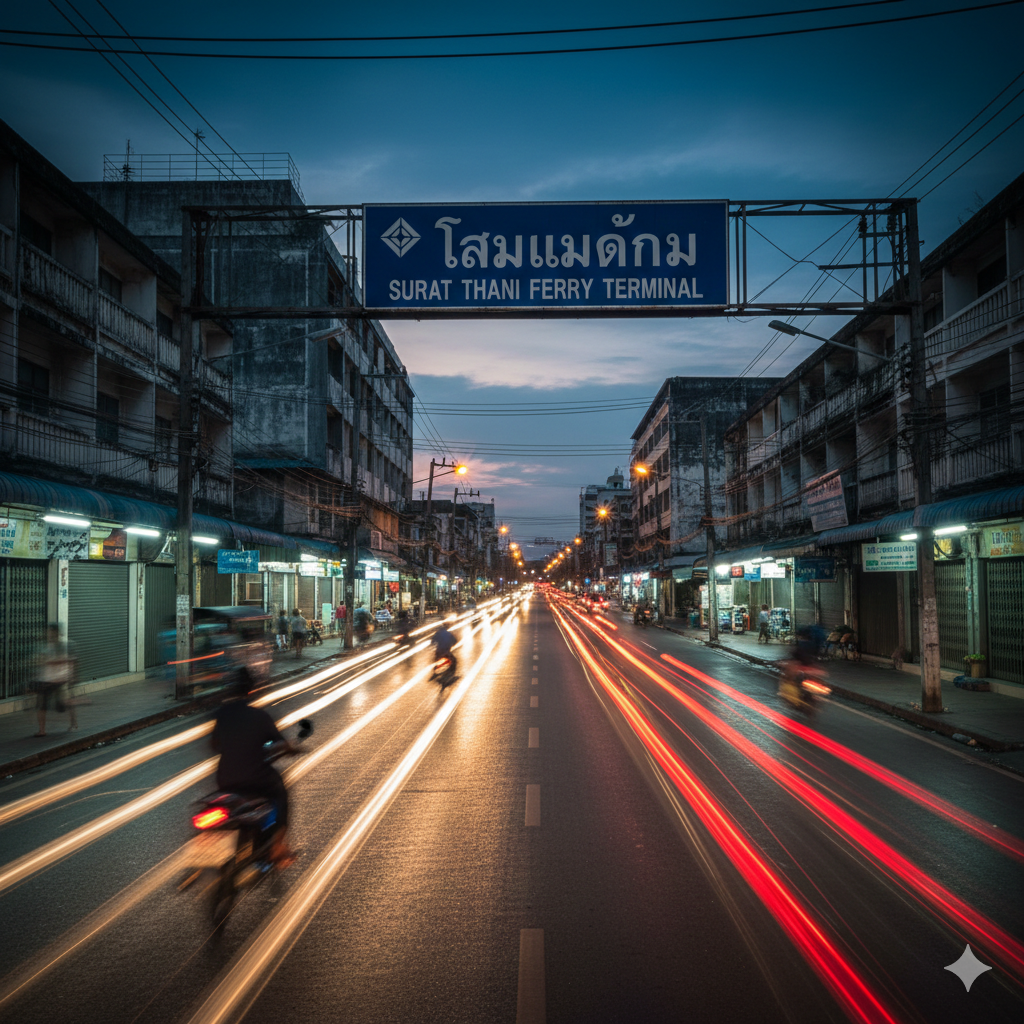
On the ground, Surat Thani is a primary node on the State Railway of Thailand’s southern line. By early 2026, the double-track rail expansion from Nakhon Pathom to Chumphon is fully operational, significantly cutting travel times for both freight and passengers moving between Bangkok and the south. The province has also solidified its role as an international gateway with the launch of the “MySawasdee” cross-border train. This service provides a direct, comfortable rail link from Malaysia (via Padang Besar) directly to Surat Thani, facilitating seamless regional travel and boosting cross-border trade.
who should not move to Surat Thani

Pattaya: The EEC Gateway

In 2026, Pattaya’s connectivity is defined by its integration into the Eastern Economic Corridor. While the high-speed rail linking Don Mueang, Suvarnabhumi, and U-Tapao has faced administrative pauses and is now targeted for a 2029–2030 launch, the existing road and standard rail networks have been heavily upgraded. The city remains highly accessible from Bangkok, with travel times to the capital’s central business district averaging under 90 minutes via the motorway, making it a viable coastal residence for those with occasional business in the capital.
The expansion of U-Tapao International Airport (UTP) is the most significant logistical shift for the region. In 2026, the airport has seen a surge in international direct routes, including new services from Central Asia via SCAT Airlines and expanded regional links to Malaysia and China through AirAsia. Additionally, the signing of the U-Tapao Aircraft MRO (Maintenance, Repair, and Overhaul) center contract in early 2026 marks the airport’s transition into a major regional aviation service hub. For residents, this means direct international access that bypasses Bangkok entirely, coupled with a high-tech logistical infrastructure that supports both lifestyle and industrial professional requirements.

Which Province Suits Your Long-Term Goals?

Choosing between Surat Thani vs Pattaya requires an objective assessment of whether your residency priorities lean toward deep cultural immersion and mainland economic stability or the high-convenience, internationalized infrastructure of a premier economic corridor.
Choose Surat Thani if:
Your primary objective is financial predictability; you want a location where rental prices and daily services are dictated by the local economy rather than international tourism cycles
You seek a genuine immersion experience and prefer living in a “Thai-first” environment that exists independently of typical expatriate bubbles.
You value a mainland logistical base that offers quiet residential stability while maintaining direct, high-frequency rail and air connections to Malaysia and the rest of the peninsula.
You possess (or are willing to develop) the language skills necessary to navigate a provincial administration where English is not the primary medium of service.
Choose Pattaya if:
Your lifestyle requires frequent, rapid access to Bangkok for professional or personal reasons via high-speed rail or motorway.
You prioritize immediate access to international-standard amenities, specialized healthcare, and a mature expatriate community.
You want a wide variety of housing options ranging from high-rise beachfront condominiums to luxury suburban villas.
You are relocating with family and need proximity to elite international schools that offer a global curriculum and diverse social opportunities.