We occasionally share updates when important information changes or new long-form guides are published. Just practical updates related to long-term living in Surat Thani and Southern Thailand.
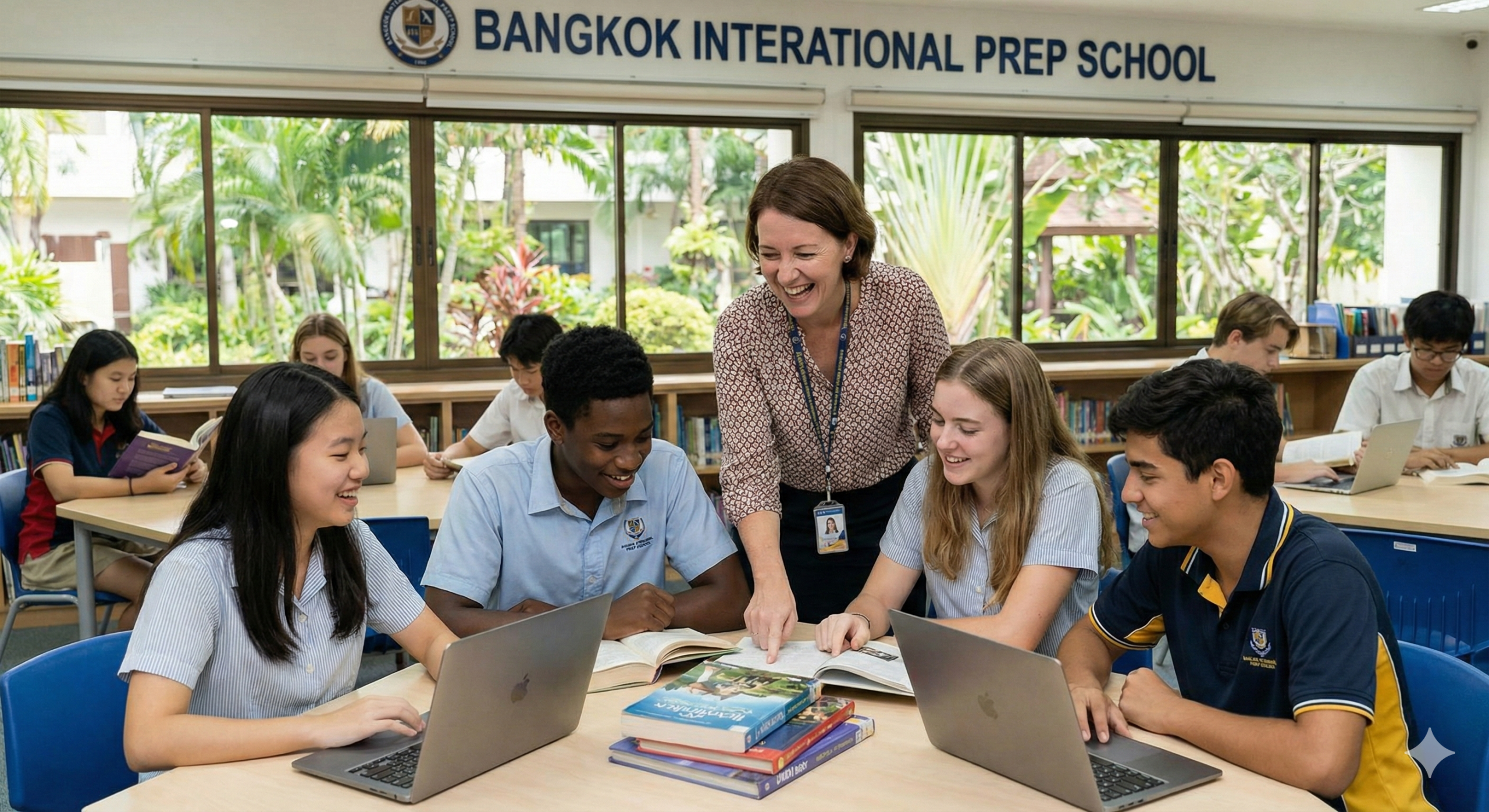
The landscape of international schools in Surat Thani and the surrounding islands has undergone a profound transformation over the last few decades. What was once a region primarily known for backpacker tourism and agricultural exports has evolved into a functional hub for expat families and professionals seeking long term stability.
This transition is anchored by the development of a robust educational infrastructure that serves as the primary deciding factor for many families considering Southern Thailand as a permanent residence.
The availability of high quality schooling that adheres to global educational standards has effectively bridged the gap between the lifestyle aspirations of foreign residents and the practical requirements of modern academic rigor.
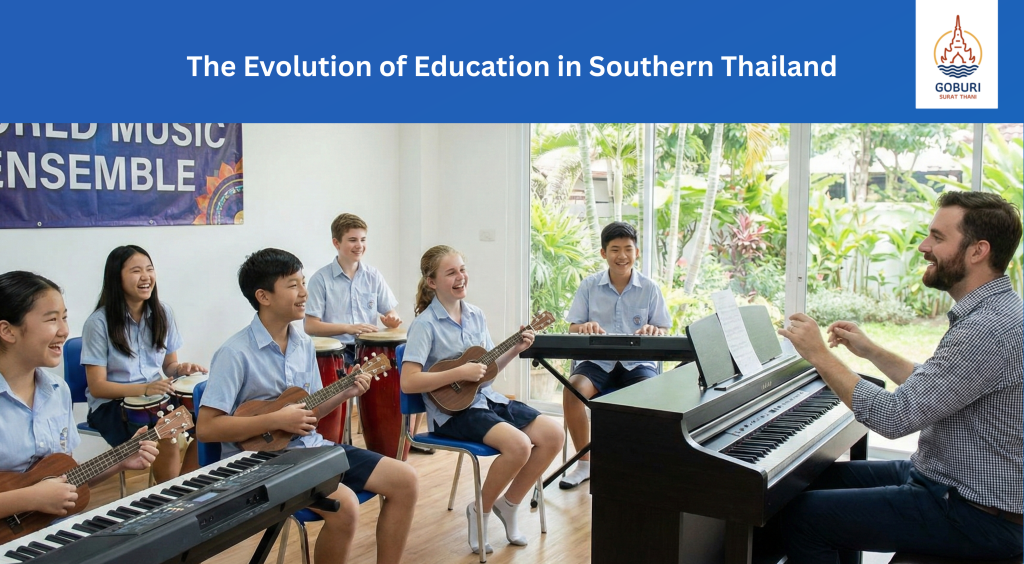
The Evolution of Education in Southern Thailand
When evaluating international schools in Surat Thani, it is essential to distinguish between the mainland provincial capital and the island communities of Koh Samui and Koh Phangan.
The mainland offers a grounded experience characterized by a lower cost of living and deep cultural integration. Conversely, the islands have developed into specialized educational enclaves that cater to a high density of international residents.
This tiered system allows families to select an environment that aligns with their professional commitments, whether they are working remotely, establishing local businesses, or managing industrial projects in the region.
The growth of private education in this province is not merely a response to foreign demand but also reflects the aspirations of the local Thai middle class. Many affluent Thai families now prioritize bilingualism and international qualifications, leading to a synergistic development of schools that offer both the British curriculum and specialized English Programs.
This trend ensures that international schools in Surat Thani remain financially viable and diverse, fostering a multicultural environment where children from dozens of nationalities learn alongside their Thai peers.
For families navigating this transition, the choice of a school is arguably the most critical component of their relocation strategy. It dictates where they will purchase or rent property, their daily commute, and their social circle.
The institutions in this region, such as the International School of Samui and PBISS, have moved beyond being simple language centers to become fully accredited hubs of innovation. They provide the necessary framework for students to eventually pursue higher education at elite universities across the globe.
Mainland Surat Thani: Stability and the Mainland Discount
The mainland city of Surat Thani provides a distinct alternative to the high cost environments found in Phuket or Bangkok. Residents here benefit from what is known as the mainland discount, which applies to housing, services, and education.
While the city has fewer fully independent international schools than the islands, the options available are highly respected and well integrated into the provincial administrative systems.
Suratthani International School (STIS)
Suratthani International School (STIS) serves as a primary conduit for international education on the mainland. The school follows the International Baccalaureate (IB) curriculum framework, providing a rigorous and globally recognized educational structure.
Guiding learners from the early years through primary education, STIS focuses on nurturing confident, multilingual thinkers. English is the primary medium of instruction, while Mandarin is taught as a compulsory subject to prepare students for a globalized future.
STIS is recognized for its commitment to 21st century learning environments. It maintains a low student to teacher ratio to facilitate personalized learning. Central to its philosophy is the belief that learning is most profound when ignited through hands on, inquiry rich experiences.
The school also offers after school care and learning support coordinators who work closely with teachers to provide academic and emotional guidance.
Balance International School (BISS)
Balance International School (BISS) is another cornerstone of the mainland educational landscape. It is recognized as a Cambridge International School, offering classes from the Early Years Foundation Stage through to Key Stage 4, which culminates in the IGCSE. The curriculum is designed to transition from play based learning in the early years to project based learning in the primary years, eventually reaching the academic vigor required for international examinations.
At BISS, class sizes are typically limited to 20 pupils. The school strives for balanced classes by considering language experience, nationality, and gender. The enrollment process includes academic assessments and language tests to ensure students are placed in the appropriate year level. This structured approach helps maintain high educational standards and ensures that students are well prepared for the challenges of higher education.
Koh Samui: The Premier Hub for International Education
Koh Samui has established itself as the leading destination for high end international education in Southern Thailand. The island hosts a concentration of schools that are accredited by major global bodies and offer a variety of academic pathways, including the British curriculum, the French AEFE system, and Montessori based models.
The International School of Samui (ISS)
The International School of Samui is among the most established institutions on the island. It provides a standard of education equivalent to that of British independent schools, catering to a diverse student body of hundreds of students from dozens of countries. The school is organized into four phases: Early Years, Primary School, Senior School, and Sixth Form.
ISS is highly regarded for its Cambridge accreditation and its status as a Pearson Edexcel Examinations Centre. This allows the school to offer a wide range of IGCSE and A-Levels. The school’s commitment to quality is validated by prestigious accreditations, such as the ISQM Gold status, which reflects excellence in curriculum delivery, leadership, and student welfare.
PBISS: The STEM+ Innovation Model
PBISS, formerly known as Panyadee, has been a pillar of the Samui educational community for many years. It has gained a reputation for its unique learning philosophy that integrates a Cambridge accredited curriculum with a STEM+ focus. This approach ensures that students are masters of traditional academic subjects while developing the technical and creative skills required for the modern workforce.
The STEM+ curriculum at PBISS is applied across all subjects, including those outside the traditional sciences. The school serves a diverse population and maintains a balance between global education and local cultural values. PBISS is accredited by the Western Association of Schools and Colleges (WASC) and is an active member of the International Schools Association of Thailand (ISAT).
Windfield International School: Bilingual Pathways
Windfield International School provides a unique educational model on Koh Samui by offering both a British pathway and a French pathway. This makes it an ideal choice for multicultural families who want their children to be proficient in multiple languages while following internationally recognized standards.
Meanwhile, the British section follows the Cambridge framework, preparing students for IGCSE and A-Levels. This dual track system fosters a bilingual education and multicultural environment from early childhood to graduation.
Boutique and Values Led Schooling
For families seeking a smaller or more environmentally focused environment, the region offers several boutique schools that prioritize holistic development.
Greenacre International School
Greenacre International School is a values led institution that follows the British curriculum. It is known for its green, caring atmosphere and its emphasis on growth, respect, environmental awareness, and empathy. The school provides a child centered approach that connects students to their community and the natural world, focusing on nurturing curious and responsible learners.
Lamai International School (LIS)
Lamai International School caters to primary aged children and places a significant emphasis on Socio-Emotional Learning (SEL). The school aligns its educational goals with the United Nations Sustainable Development Goals, ensuring that students are not only academically proficient but also socially conscious. LIS is recognized for its enthusiastic teaching staff and its focus on creating a united student body.
Si Ri Panya: The Center of Koh Phangan
On Koh Phangan, Si Ri Panya International School is the primary recognized international school. It provides a full British program authorized by the Thai Ministry of Education. The school is celebrated for its welcoming atmosphere and its commitment to the individual child. It uses a skills based curriculum that fosters a love of learning and curiosity.
Si Ri Panya follows the British National Curriculum in primary school and is a Cambridge accredited school in the secondary section. Regular inspections by international bodies highlight its orderly classrooms and effective pastoral care systems. The school provides a supportive environment where students feel safe and secure while developing resilience.
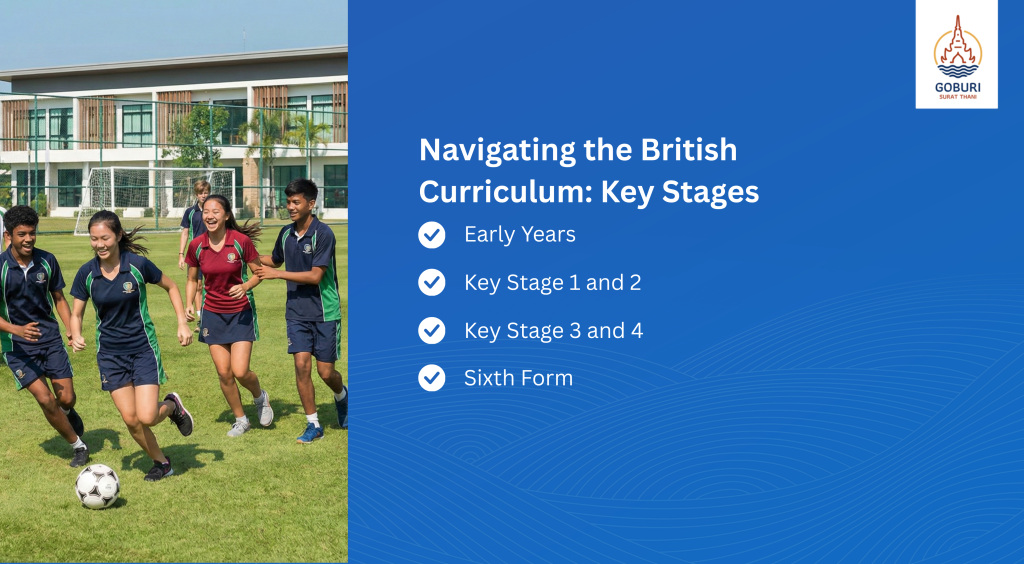
Navigating the British Curriculum: Key Stages
The dominance of the British curriculum in this region is due to its structured approach and global reputation. For expat families, understanding the various stages of this system is essential for long term planning.
Early Years: Known as Nursery or Foundation Stage, this covers children from ages 2 to 5. It focuses on the basics of education, including communication and personal development.
Key Stage 1 and 2: These primary years cover ages 5 to 11. The curriculum is broad and balanced, covering English, mathematics, science, and humanities. Progress is typically monitored through teacher assessments.
Key Stage 3 and 4: The secondary years lead to the IGCSE at age 16. These exams provide students with their first internationally recognized qualifications.
Sixth Form: The final two years of schooling culminate in A-Levels, which are the gold standard for university entrance worldwide.
The Legal Framework: Visas and Residency
Securing the legal right to stay is the most important hurdle for any family. The Thai immigration system has specific categories for students and their parents, and staying compliant is essential for a stress free residency.
The Student Visa (Non-Immigrant ED)
A student visa is issued to foreign nationals who enroll in recognized and accredited educational institutions. The school must be approved by the Ministry of Education to support visa applications. Once a child is accepted, the school provides the necessary documentation to apply for the visa. Regular attendance is mandatory, and schools are obligated to report significant absences to immigration authorities.
The Guardian Visa (Non-Immigrant O)
One parent or legal guardian of a foreign student is eligible for a guardian visa. This visa allows the parent to live in Thailand to care for their child. The most significant requirement is financial proof, typically in the form of a Thai bank account showing a balance of at least 500,000 THB. This amount must be held in the account for a specific period before the application or renewal.
Important Logistics
Immigration officers review the complete history of a family’s stay in Thailand. For certainty, families should always secure the correct long term student visa and guardian visa rather than relying on temporary exemptions. Schools typically provide visa letters within a few business days, but the overall process can take several weeks from enrollment to the first immigration appointment.
Financial Planning: Understanding the True Cost
When budgeting for education, it is important to look beyond the basic tuition fees. There are several additional costs that can significantly impact a family’s budget.
One-Time Fees: Most schools charge application fees, admission fees, and refundable security deposits upon enrollment.
Annual Fees: These may include administrative fees, development fees, and insurance costs.
Operational Costs: Uniforms, school lunches, bus services, and extra-curricular activities are typically billed separately.
External Exams: The costs for IGCSE and A-Level examinations are generally the responsibility of the parents.
To manage these costs, many parents take advantage of sibling discounts or prepay the full annual tuition in advance to secure a percentage discount. Living on the mainland remains the most effective way to optimize the cost of living, as the mainland discount applies to rent, services, and school fees.
Socio-Cultural Integration and the Expat Experience
Relocating a family involves a fundamental shift in perspective. For children, this often means becoming Third Culture Kids (TCKs), individuals who spend their developmental years outside their parents’ culture. This fosters high degrees of empathy and adaptability but also requires careful support from both parents and educators.
Challenges and Benefits
Many parents find that the hardest adjustments are related to school culture. Expectations regarding homework, teaching styles, and grading systems can vary significantly from Western models. For example, some international systems use a grading scale where a perfect mark is rarely given, which can be discouraging for students used to different standards.
However, the benefits of raising children in this environment are substantial. Students are exposed to a wide range of cultures and perspectives from a young age. Most graduate speaking multiple languages and possessing a global awareness that prepares them for success in any international context. The sense of community in these schools is often very strong, as families support each other through the shared experience of relocation.
Accreditation: The Benchmark of Quality
Accreditation is the process by which a school’s standards are independently verified. In Thailand, all international schools are required by law to secure accreditation from a recognized overseas agency. This ensures that the school meets global benchmarks and that its qualifications will be recognized by universities worldwide.
Choosing among the international schools in Surat Thani depends on a family’s unique priorities.
For Academic Rigor: The International School of Samui and PBISS are clear leaders for those targeting top tier global universities.
For Bilingualism: Windfield International School offers the best integration of French and English pathways.
For Holistic Growth: Greenacre and Lamai International School provide nurturing environments for younger children.
For Value: Mainland options like STIS and BISS, or bilingual education programs in reputable Thai schools, offer high quality education at a significantly lower price point.
Your Path Forward: Building a Future in Southern Thailand
Relocating a family to Southern Thailand is a commitment to a specific infrastructure and a local way of life. The maturity of the educational sector in Surat Thani province has provided the structural stability that expat families need to thrive.
By understanding the nuances of tuition fees, staying compliant with visa regulations, and choosing a school that aligns with long term goals, parents can build a sustainable and rewarding life in the region.
Whether you choose the mainland for its stability or the islands for their specialized international communities, the foundation for your family’s future is well established in the heart of the South.
For more information on the trade-offs between different systems, explore our guides on bilingual schools and setting for your move. You can also verify school memberships via the ISAT website.