Updates from
Goburi Surat Thani


24K subscribers
We occasionally share updates when important information changes or new long-form guides are published. Just practical updates related to long-term living in Surat Thani and Southern Thailand.
You can unsubscribe at any time.


Surat Thani vs Bangkok

Choosing a base in Thailand often presents a choice between two extremes of the Thai experience. On one hand, you have Bangkok, the vertical megacity that serves as the nation’s economic and political heart. On the other, you have Surat Thani, the quiet but powerful mainland engine of the south. For those moving beyond the initial tourist phase and into long term residency or deep travel planning, the decision involves more than just a preference for city lights or palm trees. It requires a technical look at provincial infrastructure, administrative efficiency, and the true cost of daily life.
This comparison evaluates the fundamental trade offs between the concrete jungle of Central Thailand and the strategic gateway to the Gulf. While Bangkok offers unparalleled global connectivity, Surat Thani provides a grounded, resident focused lifestyle that is increasingly attractive to digital nomads and families alike. For a broader look at how these locations fit into the regional landscape, you can explore our Southern Thailand residency and lifestyle comparisons.

Demographic and Economic Profiles

Understanding the economic and demographic “why” behind each location explains the practical “how” of daily residency. While both cities are vital to Thailand’s success, they operate on entirely different financial and social engines. One serves as a globalized financial hub while the other functions as a diversified regional capital and industrial gateway.
The Bangkok Economy (The Globalized Capital)
Bangkok is a Primate City which means it is significantly larger and more influential than any other urban center in the country. Its economy is a complex, multi-layered beast that serves as the financial, political, and media center of Southeast Asia. As of 2026, it remains the primary destination for multinational corporations and international startups.
Economic Driver: Finance, high technology, manufacturing, and high end luxury retail.
Residency Impact: Residents enjoy extreme convenience and endless professional opportunities, but this is balanced by extreme population density and a high “hustle” factor.
The Surat Thani Economy (The Mainland Engine)
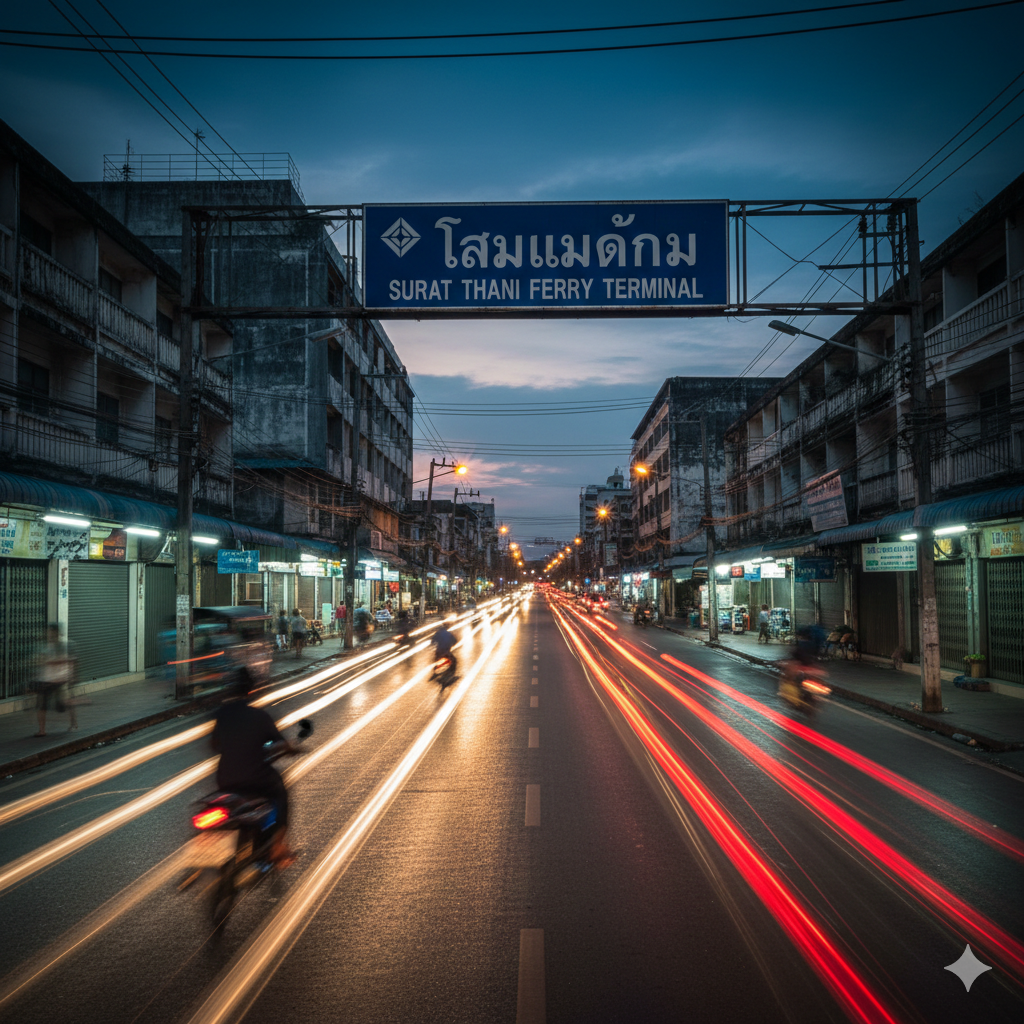
Surat Thani functions as a production first province. As the administrative and logistical heart of the upper south, its wealth is rooted in land based industry rather than seasonal visitors. While the province includes the famous Gulf islands, the mainland city where most long term residents live is a separate economic world.
Economic Driver: Logistics, agriculture (rubber and palm oil), and regional trade.
Residency Impact: Stable pricing, fewer crowds, and a community built for residents rather than visitors

Utilities and Administrative Bureaucracy

For anyone staying in Thailand on a long term visa like the Destination Thailand Visa (DTV), the efficiency of local government offices is a major quality of life factor. The administrative experience in a megacity is vastly different from that of a regional hub.
The Bureaucratic Scale
In Bangkok, the scale of the population means that government offices are often overwhelmed. While the staff at major immigration centers like Chaeng Watthana are highly professional and fluent in English, the sheer volume of applicants can make a simple 90 day report an all day affair. The “administrative friction” in the capital is a constant factor that residents must plan their schedules around.
Local Efficiency in the South
Surat Thani offers a more streamlined experience. Because the mainland office serves a smaller foreign population compared to the capital, the pace is more personal and significantly faster. For remote professionals who value their time, the ease of visa maintenance in Surat Thani is a major advantage. Furthermore, utility management is often more transparent. In Bangkok, many residents in high rise condos pay surcharges for water and electricity to the building management. In Surat Thani, residents typically pay government rates directly to the authorities which leads to lower monthly costs.

Climate and Seasonality Logistics

The environmental factor is perhaps the most significant differentiator for health conscious residents in 2026. The two cities face very different seasonal challenges that impact everything from physical health to daily commute times.
The PM2.5 Crisis in the Capital
Bangkok faces a seasonal air quality crisis that has become a primary concern for residents. From January to March, a combination of stagnant air, traffic emissions, and agricultural burning in the surrounding regions often pushes the Air Quality Index (AQI) into hazardous levels. For families and those with respiratory sensitivities, this often means several months of restricted outdoor activity.
Coastal Breezes and Rainfall
Surat Thani enjoys the benefit of coastal breezes and a lack of the heavy industrial smog that plagues the north. While it does not suffer from the same PM2.5 intensity, it has its own seasonal rhythm. The southern monsoon season from October to December brings heavy rainfall that can disrupt local travel. However, the air remains fresh and the surrounding landscape stays vibrant and green year round. If your lifestyle involves outdoor activities like exploring the Khao Sok National Park, Surat Thani offers a much healthier “green” lung than the capital.

Housing and Real Estate:
Value Comparison

The disparity in real estate value between the capital and the southern mainland is one of the most compelling reasons for the recent migration of remote workers to the south.

The Vertical Market of Bangkok

In Bangkok, you pay a premium for proximity to the mass transit lines. A modern 35 square meter studio in a prime area like Sukhumvit or Thonglor typically costs between 25,000 and 40,000 THB per month. These high rise condominiums offer impressive facilities like infinity pools and sky gyms but they often lack private outdoor space and are subject to the constant noise of the city.
who should not move to Surat Thani

Horizontal Freedom in Surat Thani

Surat Thani is a market built for space and stability. For the price of a small studio in Bangkok, you can easily rent a detached three bedroom house in a secure gated community. These “Moo Bans” offer private gardens, quiet streets, and a sense of community that is hard to find in the vertical world of the capital. For those looking to maximize their cost of living in Southern Thailand, the mainland is unbeatable.

Cultural Life and
Community Events

The social experience in these two cities reflects their economic roles. Bangkok is where the world meets Thailand, while Surat Thani is where you find the heart of southern tradition.
Globalized Socializing
Bangkok offers a social life that is truly global. From Michelin starred rooftop bars to international music festivals and art biennales, there is always something happening. You can live for years in the capital without ever needing to speak Thai as the city is designed for an international audience. However, this can sometimes lead to a “bubble” effect where residents feel disconnected from the local culture.
Southern Traditions and Immersion
In Surat Thani, cultural life is centered around the community and the seasons. Events like the Chak Phra Festival are not “tourist shows” but are deep rooted expressions of local faith and pride. Living here provides an authentic immersion that is increasingly hard to find in the hyper commercialized zones of the capital. Residents find that the social life is slower but more meaningful as they build long term relationships with local business owners and neighbors.

Infrastructure: Healthcare and Education

Both cities offer high standards of care but the delivery and cost vary significantly.

World Class Medical Hubs

Bangkok is arguably the medical capital of Asia. Facilities like Bumrungrad International and Bangkok Hospital are essentially luxury hotels that happen to provide world class surgery. If you have a highly specific medical condition that requires a world leading specialist, Bangkok is the place to be. However, these facilities come with a “global” price tag.
who should not move to Surat Thani

Reliable Regional Care

Surat Thani offers excellent regional healthcare through a mix of large government hospitals and modern private clinics. While the “luxury” receptionists are less common than in Bangkok, the medical expertise for routine care and emergencies is top tier. For most residents, the healthcare in Surat Thani is more than sufficient and significantly more affordable for those without premium international insurance.
In contrast, Surat Thani provides more integrated and economical options, such as Daniel International School (DIS), where the 2026/2027 primary tuition for Grade 1 is approximately 334,000 THB. DIS follows an American-based curriculum and offers high academic standards within a community that provides deeper cultural integration at a significantly lower entry cost for expatriate families.

Educational Choices

For families, Bangkok’s density of international schools is its biggest draw. There are over 100 schools following British, American, and IB curricula. Surat Thani’s options are more limited, focusing on high quality bilingual programs in top Thai private schools. This makes it an excellent choice for families who want their children to achieve true fluency in Thai, but it may be a challenge for those who require a specific international curriculum for older students.
who should not move to Surat Thani

Comparative Data Matrix (The Resident’s View)

Category Bangkok (The Megacity) Surat Thani (The Gateway)
Typical Rent (1-2 Bed) 25,000 – 50,000 THB 8,000 – 15,000 THB
Traffic Condition Severe / Unpredictable Low / Predictable
Air Quality (AQI) Seasonal Issues (Poor) Generally Good / Fresh
Language Barrier Low (English common) Moderate (Thai helpful)
Primary Hub Business and Nightlife Nature and Island Access

Connectivity and Logistics

Both cities are major transport nodes but they serve different directions and travel styles.

The International Pivot

Bangkok is your gateway to the world. With two major international airports, you can be anywhere in the world with a single flight. For those whose work requires frequent travel to Europe, the US, or other parts of Asia, the logistics of living in Bangkok are hard to beat.
who should not move to Surat Thani

The Regional Master

Surat Thani is the logistics king of the south. It is the primary jumping off point for the Gulf Islands and the Andaman coast. Whether you are taking the Don Sak Ferry to Samui or driving two hours to the ancient forests of Khao Sok, everything is accessible. The Surat Thani Airport (URT) offers dozens of daily flights to Bangkok, making it easy to connect to international routes while living in a much calmer environment.

Which Province Suits Your Long-Term Goals?

The choice between Surat Thani vs Bangkok ultimately comes down to what you value most in your daily life.
Choose Bangkok if:
You crave the high energy of a global megacity and world class nightlife.
You work in a field that requires physical networking in a central business district.
You require a high density of international schools for your children.
You want 24/7 convenience where everything can be delivered to your door.
Choose Surat Thani if:
You want your budget to go twice as far without sacrificing modern infrastructure.
You are a remote worker or “slow traveler” who prefers nature over skyscrapers.
You want easy, weekly access to the best islands and national parks in Thailand.
You prefer a “local” lifestyle where you can build a genuine connection with the community.