We occasionally share updates when important information changes or new long-form guides are published. Just practical updates related to long-term living in Surat Thani and Southern Thailand.
The evolution of the medical infrastructure in Southern Thailand has transformed the region into a sophisticated hub where traditional public care meets high technology private enterprise. For those navigating healthcare in Surat Thani, the landscape offers a diverse array of hospitals and clinics designed to serve a burgeoning population of local citizens, long term expatriates, and international tourists.
The province acts as a critical gateway to the Gulf of Thailand, meaning its medical facilities must manage both dense urban health requirements on the mainland and the specialized emergency needs of the island archipelagos including Koh Samui, Koh Phangan, and Koh Tao. This report provides an exhaustive analysis of the medical options available, the administrative processes required for foreign nationals, and the financial structures that underpin the system.
The Structural Duality of the Thai Healthcare System
To understand healthcare in Surat Thani, one must first recognize the fundamental divide between public and private medical provision. The Thai government operates a comprehensive public health system under the Ministry of Public Health, which is primarily designed to facilitate the Universal Coverage Scheme.
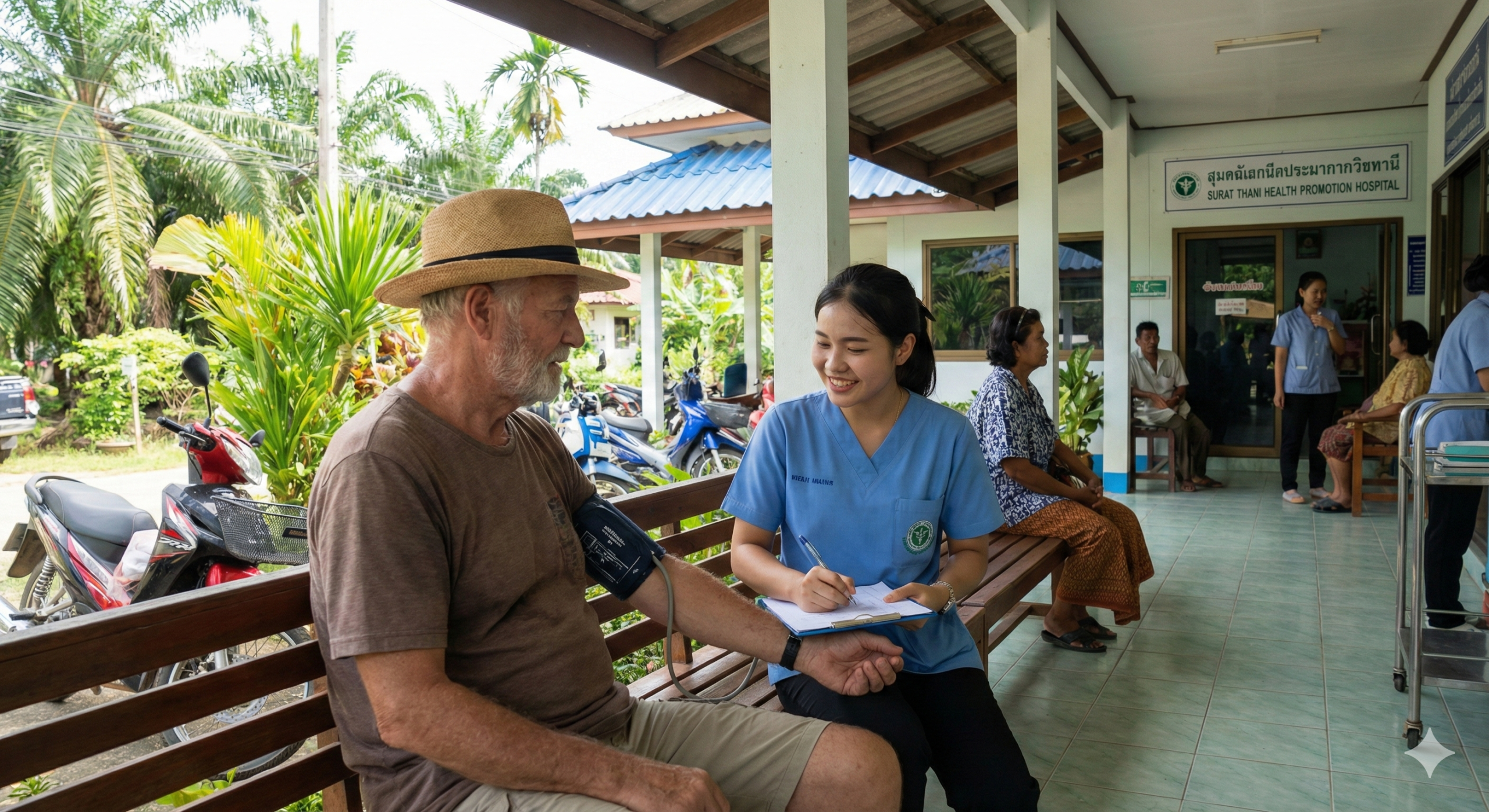
These government hospitals are characterized by high patient volumes and a focus on essential medical services. While they are accessible to foreigners, the experience is notably different from that of private institutions, often involving longer wait times and more complex administrative hurdles.
In contrast, private hospitals in the region have established themselves as centers of luxury and efficiency. These facilities prioritize the patient experience, offering English speaking staff, international standard amenities, and specialized medical centers that rival metropolitan facilities in Bangkok.
The growth of the private sector in Surat Thani is intrinsically linked to the rise of medical tourism and the increasing demands of the expatriate community who seek streamlined medical services and personalized attention.
Quantitative Comparison of Hospital Tiers
Feature
Government Hospitals
Private Hospitals
Primary Funding
National Taxation
Out of Pocket / Insurance
Wait Times
Several hours to months
Minimal to short
Language Services
Limited English
High English Proficiency
Technology Focus
Essential and High Volume
Cutting Edge and Specialty
Cost Basis
Tiered Subsidies
Premium Market Rates
The mechanism of this dual system ensures that while basic care is a right for citizens, those with the means to pay or with comprehensive medical insurance can access a more accelerated and comfortable care pathway.
Mainland Medical Giants: The Pillars of Surat Thani City
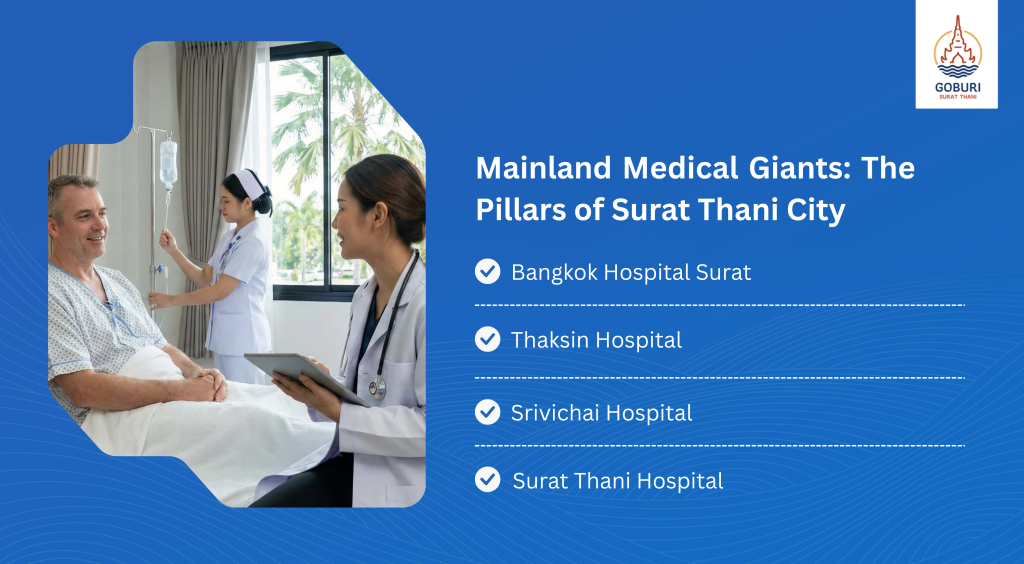
The mainland city of Surat Thani serves as the administrative and medical heart of the province. It houses the largest facilities, which act as referral centers for the surrounding districts and islands.
Bangkok Hospital Surat
As a key member of the Bangkok Dusit Medical Services (BDMS) network, Bangkok Hospital Surat represents the pinnacle of private hospitals on the mainland. The facility is not merely a general medical ward but a collection of specialized centers of excellence.
The Heart Center, for instance, provides advanced cardiac diagnostics and intervention, reducing the need for patients to be evacuated to Bangkok for life saving heart procedures.
The hospital also features a Bone and Spine Center and a Brain Center, which employ neurologists and orthopedic surgeons who are often trained in Western medical protocols. The inclusion of a Trauma Center ensures that the facility can handle critical accidents, a necessity given the province’s role as a major transportation hub.
For patients seeking the highest standard of healthcare in Surat Thani, this institution offers a blend of medical expertise and hospitality that includes VIP rooms and dedicated international patient coordinators.
Thaksin Hospital
For many long term residents, Thaksin Hospital remains the primary choice for routine and emergency care. Located centrally in Mueang Surat Thani, this private institution has built a reputation for reliable outpatient services and a high level of patient satisfaction among the expatriate community. Reviews from international patients frequently highlight the professional and attentive staff, as well as the cleanliness of the facility.
While it may not possess the expansive corporate branding of the BDMS group, Thaksin Hospital provides a comprehensive range of services from general medicine to specialized surgery.
Its established presence in the city makes it a frequent point of contact for those seeking relatable and efficient medical care without the ultra premium price tag of international medical centers.
Srivichai Hospital
Srivichai Hospital is another significant contributor to the mainland medical landscape, known for its strategic location and accessibility. The hospital has increasingly adapted its services to cater to non Thai speakers, with receptionists and medical staff who are proficient in English.
The facility offers a variety of outpatient programs and is noted for its hospitable environment, often providing a more personalized “boutique” feel compared to larger medical complexes.
Surat Thani Hospital
The Surat Thani Hospital is the massive state run facility that anchors the public sector. With a capacity of 748 beds and an affiliation with the Faculty of Medicine at Thammasat University, it is a teaching institution that handles the most complex medical cases for the local population.
While wait times are extensive, the hospital is equipped with high volume surgical units and advanced diagnostic laboratories that support the entire province. Foreigners who lack medical insurance or who require highly specialized care not available in the private sector may find themselves referred here, where they will be subject to the government’s tiered pricing regulations.
Island Healthcare: Navigation and Logistics
The islands of Surat Thani province present a unique set of medical challenges due to their geographic isolation. To address this, a network of hospitals and clinics has been developed to ensure that high quality care is never more than a short trip away.
Koh Samui
Koh Samui has reached a level of medical sophistication that allows it to operate almost independently of the mainland for most medical needs.
Bangkok Hospital Samui: This JCI accredited facility is the premier choice for international travelers and expats on the island. It mirrors the mainland branch in its commitment to technology and specialized care, offering everything from pediatrics to dental surgery.
Thai International Hospital: Established in $2004$, this multi specialty facility focuses on providing high quality care to the residents of the Bophut area. It is known for its co-operative medical staff and modern inpatient rooms that cater specifically to the international community.
Wattanapat Hospital Samui: A newer entrant to the island’s private sector, this hospital has quickly gained a reputation for its high English proficiency and “amazing” service levels according to patient reviews.
Koh Phangan and Koh Tao
On the smaller islands, the focus is on primary care and emergency stabilization.
United Medical Center (Koh Phangan): This clinic is highly rated for its professional staff and clean facilities, providing essential services like wound treatment, lab tests, and vaccinations.
Koh Tao Hospital: As the main government facility on the island, it provides critical 24 hour emergency services and maintains a $10$ bed capacity for overnight admissions. It acts as the primary node for medical evacuations via speedboat or helicopter to larger hospitals on Samui or the mainland.
Specialized Medical Verticals: Dental and Dermatology
Surat Thani is not only a center for general medicine but also a growing destination for specialized treatments, particularly in dentistry and aesthetic medicine.
The Excellence of Dental Care in Surat Thani
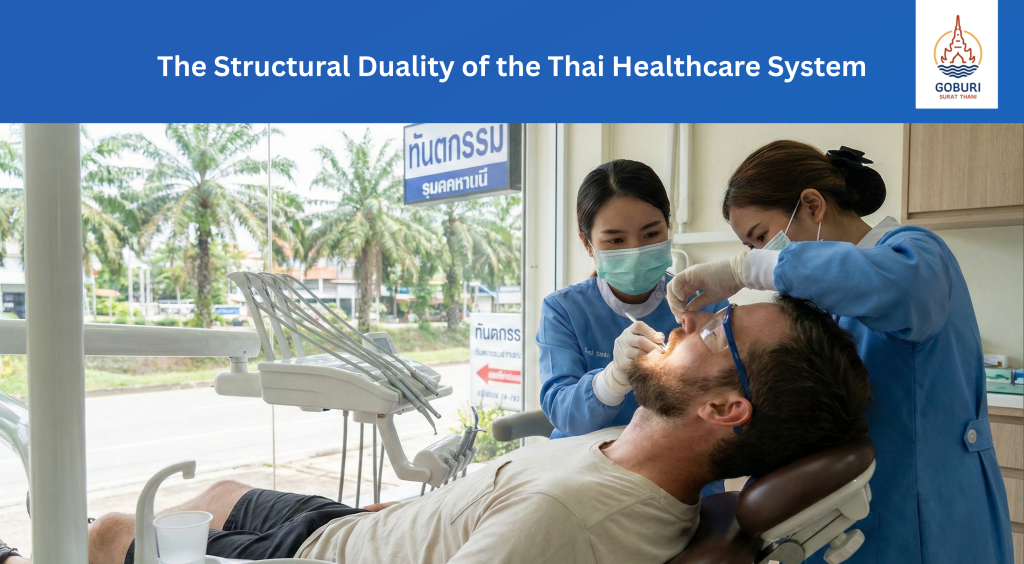
The reputation of Thai dentists for skill and affordability has made dental clinics in Surat Thani a major draw for medical tourists.
LDC Dental Surat Thani: Located in Mueang Surat Thani, this clinic is part of a leading national network. It provides a full spectrum of dentistry from routine preventives to complex orthodontics and implants. The facility is noted for its specialist dentists and the “Smile Warranty” program, which provides patients with peace of mind regarding the longevity of their treatments.
Kanyarat Dental Clinic: This clinic is highly recommended for its cleanings, fillings, and root canals, often offering package deals that appeal to the budget conscious expatriate.
Markin Dental Clinic: Renowned for its English speaking staff and modern equipment, this clinic provides a high standard of care for residents on the mainland.
Dermatology and Skincare
For dermatological issues such as acne, melasma, or aesthetic enhancements, the province offers several high quality options.
Rajdhevee Clinic (Surat Thani Branch): With over four decades of experience, this clinic employs board certified dermatologists and uses international standard medications for various skin conditions.
Hospital Based Skin Centers: Both Bangkok Hospital Surat and Bangkok Hospital Samui feature dedicated dermatology clinics that handle both medical skin diseases and cosmetic laser treatments.
Pediatrics and Maternal Wellness
For families living in Southern Thailand, access to high quality pediatric care is a non-negotiable requirement. The healthcare in Surat Thani sector has responded by establishing dedicated child and teen centers.
Bangkok Hospital Surat provides a Mother and Child Center that offers excellence in care from the prenatal stages through adolescence. This department is staffed by pediatricians, obstetricians, and child development specialists who ensure that the health of both mother and child is monitored with the latest medical technology.
Similarly, the Rapheephan Clinic on Koh Samui is a favorite for parents, offering immunizations, growth and development checks, and general pediatric consultations in multiple languages.
Summary of Pediatric Facilities
Hospital/Clinic
Key Services
Notable Features
Bangkok Hospital Surat
Prenatal to Adolescence
Specialized Child Development Unit
Rapheephan Clinic
Immunization / Growth Checks
Multilingual Support (English, Russian)
Thonburi Bamrungmuang
Endocrinology / Neurology
24/7 Pediatric Emergency Care
Samitivej International
Complex Conditions
JCI Accredited Specialty Care
Navigating the Registration Process for Foreigners
Interacting with the Thai medical system requires an understanding of the administrative and legal frameworks that govern patient registration and care delivery.
The Initial Contact and Documentation
Whether visiting a private or government hospital, the most critical document for any foreigner is their original passport. Thai law requires hospitals to verify the identity and visa status of all international patients before treatment can commence, except in life threatening emergencies.
Patients are advised to prepare the following:
Original Passport and a copy of the current visa page.
Proof of medical insurance or a guarantee of payment from the insurer.
Any relevant medical history, including lists of current medications and allergies.
In cases of work related injuries, copies of the work permit and social security documentation are necessary.
Outpatient vs Inpatient Procedures
For outpatient visits, the process is generally straightforward. After presenting documents at the registration counter, the patient is issued a hospital ID card and directed to the relevant department. In private facilities, this often happens within minutes. In public facilities, the patient must first join a queue, which can be quite long if they do not arrive early in the morning.
Inpatient admission involves more detailed documentation, especially regarding financial coverage. Patients using international insurance must ensure that the hospital can coordinate directly with their provider to avoid large upfront deposits.
Many private hospitals have dedicated international departments that handle this coordination, acting as an intermediary between the patient, the medical team, and the insurance company.
The Financial Landscape: Costs and Insurance
The cost of healthcare in Surat Thani is a primary concern for residents and visitors alike. Thailand’s medical costs are competitive on a global scale but can be significant for those without adequate coverage.
Understanding Medical Costs
Public hospitals operate on a tiered pricing system where tourists and retirees (Tier 4) are charged higher rates than Thai citizens (Tier 1). Despite this dual pricing, government facilities remain more affordable than private ones.
For example, a spinal MRI at a government hospital may cost around $28,050$ THB for a tourist, while the same procedure at a private hospital could range from $30,000$ to $50,000$ THB.
Private hospital costs are driven by the level of service and the technology utilized. A standard private room at Bangkok Hospital Surat is estimated at $3,300$ THB per night, whereas a VIP room at the Koh Samui branch can reach $9,450$ THB.
These rates typically cover the room and basic board but do not include medical supplies, nursing fees, or doctor consultations, which can quickly add thousands of baht to the final bill.
The Role of Medical Insurance
For expatriates, having a robust health insurance policy is often a mandatory condition of their stay. The Thai government has implemented specific insurance requirements for various long stay visas.
Non-Immigrant O-A Visa: Requires coverage of at least $3,000,000$ THB (approximately $100,000$ USD), including both inpatient and outpatient care.
LTR Visa: Demands a policy with at least $50,000$ USD in coverage.
Social Security Scheme (SSS): For those working in the private sector, the SSS provides access to a designated network of hospitals for a fixed monthly contribution, usually capped at $750$ THB.
Leading Insurance Providers and Direct Billing
Many private hospitals in Surat Thani work with international insurance groups to provide “cashless” treatment, where the hospital bills the insurer directly. Prominent providers with strong networks in Thailand include:
AXA Thailand: Offers comprehensive inpatient and optional outpatient benefits with a wide network of partner hospitals.
Allianz Care: Known for its extensive global network and efficient claims process for expats.
Cigna Global: Provides flexible plans with high annual benefit limits and dedicated support for non residents.
Pacific Cross: A popular choice for local Thai policies that meet specific visa insurance requirements at competitive rates.
Emergency Medical Services and Evacuations
In critical situations, the speed and quality of the response can be life defining. The primary emergency number in Thailand is $1669$. While this number connects to the national ambulance service, many private hospitals operate their own ambulance fleets equipped with advanced life support systems.
Island to Mainland Logistics
One of the most complex aspects of healthcare in Surat Thani is the transport of critically ill patients from the islands to mainland tertiary hospitals. Koh Samui hospitals are well equipped for most emergencies, but for highly specialized neurological or cardiac interventions, a patient may need to be moved to Surat Thani city or even Bangkok.
This process involves speedboats or medical helicopters and requires careful coordination between the island clinics, the transport providers, and the receiving hospital. The high cost of these evacuations reinforces the importance of an insurance policy that specifically covers emergency medical transportation and repatriation.
Physical Rehabilitation and Post-Operative Care
Rehabilitation services are an essential component of the healthcare continuum. Bangkok Hospital Surat and Thai International Hospital offer dedicated physical therapy departments that assist patients in recovering from orthopedic surgeries, spinal injuries, and strokes. These centers utilize modern modalities and manual therapy to ensure a safe and effective recovery process.
Future-Proof Healthcare Infrastructure
The medical infrastructure of Surat Thani is not static: it is part of a broader national initiative to position Thailand as a global medical hub. The ongoing integration of technology, such as tele-medicine and digitalized medical records, is designed to ensure that the system remains resilient and relevant for decades to come.
For the resident or traveler, the key to navigating this system is preparation. By understanding the differences between public and private care, maintaining the necessary documentation, and securing adequate insurance, one can access some of the best medical care in Southeast Asia.
The hospitals and clinics of Surat Thani are well positioned to serve the community, providing a safety net that allows for a high quality of life in one of Thailand’s most vibrant provinces.
Critical Takeaways for Navigating Surat Thani Healthcare
Always carry your passport: It is the single most important document for medical registration in Thailand.
Private for speed, Public for budget: Choose the facility that aligns with your financial resources and the urgency of your condition.
Secure local or international insurance: Ensure your policy meets your visa requirements and covers emergency evacuations if you are staying on the islands.
Use specialized clinics for routine work: High quality dental clinics and dermatology centers offer excellent care often at lower prices than large hospital departments.