We occasionally share updates when important information changes or new long-form guides are published. Just practical updates related to long-term living in Surat Thani and Southern Thailand.
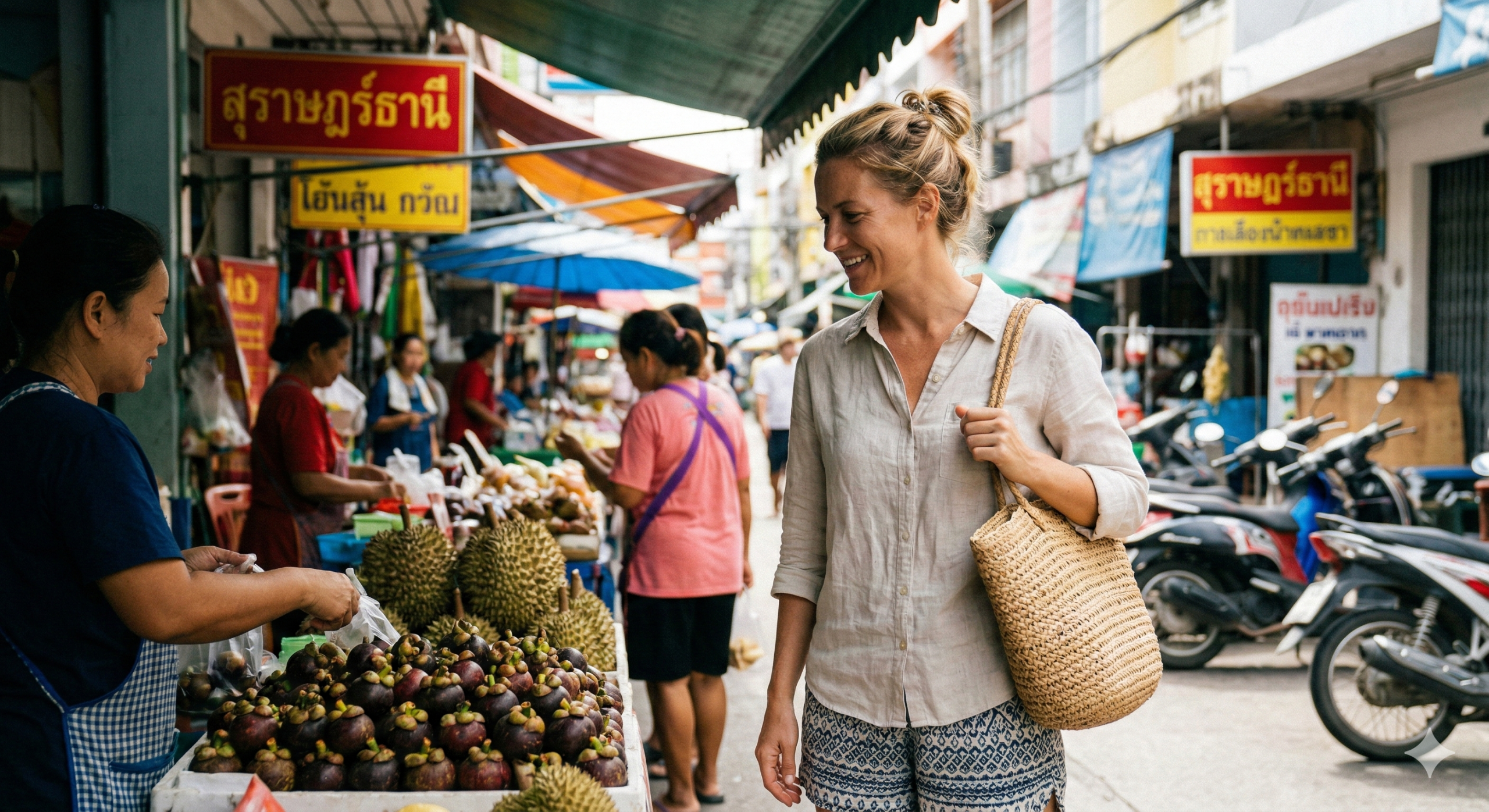
The transition of living in Thailand often begins with a profound sense of euphoria that researchers categorize as the honeymoon phase. This initial period is characterized by an intense fascination with the novelty of the environment where every sensory input provides a dopamine surge.
From the vibrant street food culture to the perceived ease of social connections, the new resident often feels they have discovered a paradise that was previously hidden from them. However, this psychological state is frequently transient. The euphoria acts as a veil that masks the underlying complexities of long term integration. As the novelty fades, the individual enters a more critical period of adjustment where the friction of daily life begins to take its toll.
This evolution is not merely a change in mood but a documented sequence of cultural adjustment. The shift from fascination to frustration is a universal experience for those who relocate to a foreign culture, yet it is intensified in Thailand due to the stark differences in social cues and bureaucratic expectations.
When the initial excitement is replaced by the weariness of navigating language barriers and unfamiliar routines, the risk of expat burnout after the honeymoon phase increases significantly. The psychological cost of starting over in a culture as nuanced as Thailand is often underestimated by those who arrive with an idealized vision of a permanent holiday.
For many, the first reality check regarding tourism myths happens when the “vacation” feeling ends and the “resident” reality begins.
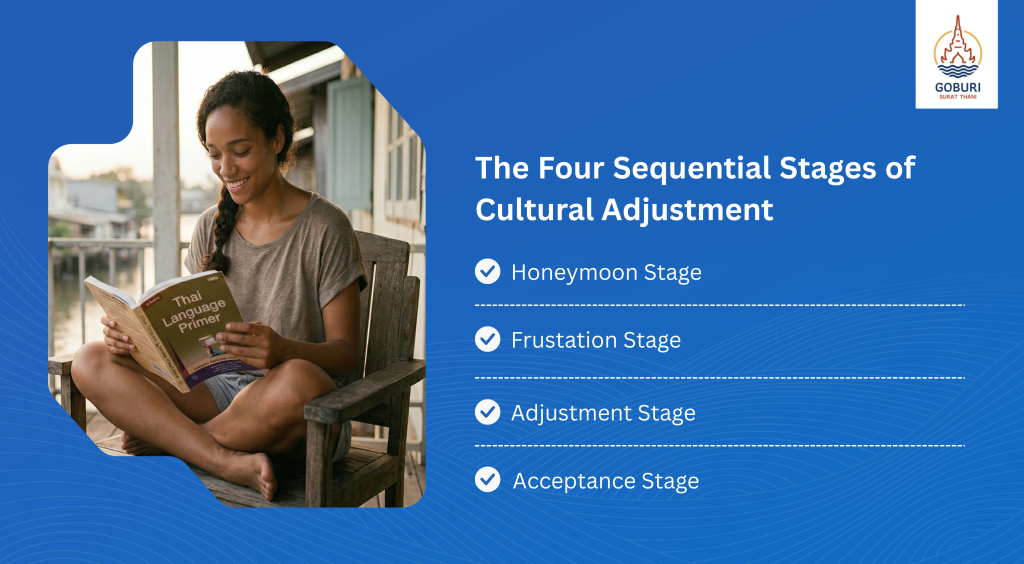
The Four Sequential Stages of Cultural Adjustment
Clinical observations of expatriate relocation identify four distinct stages that define the trajectory of adjustment. Each stage possesses its own emotional signature and cognitive challenges.
Stage of Adjustment
Psychological Characteristics
Common Behavioral Patterns
Honeymoon Stage
High optimism, fascination with differences, focus on similarities, euphoria.
Enthusiastic sharing of photos, exploration of local food, overlooking inconveniences.
Frustration Stage
Focus on differences, irritability, anxiety, feeling of being an outsider.
Anger over minor delays, rejection of the local environment, withdrawal from social life.
Adjustment Stage
Emerging routines, improved coping strategies, ability to laugh at misunderstandings.
Developing a stable circle of friends, improved language skills, realistic expectations.
Acceptance Stage
Feeling at home in the new culture, retaining home identity while integrating.
Navigating the culture with ease, appreciating the blend of old and new values.
The frustration stage represents the most critical juncture for the longevity of the resident. It is here that the Thailand reality check hits the hardest. Individuals often find themselves exhausted by the effort required to perform basic tasks, such as banking or visiting a doctor, which in their home country would be effortless.
This fatigue is compounded by the loss of familiar identity anchors. In the home country, an individual might be recognized for their professional status or long term community standing, but in Thailand, they often start as a blank slate with no pre-existing social capital. This is often the primary reason.
The Anatomy of Expat Burnout and the Fading Smile
Expat burnout is a multifaceted state of emotional, mental, and physical exhaustion resulting from the chronic stress of living in an unfamiliar environment while lacking traditional support systems.
Unlike standard workplace burnout, which is often confined to professional life, expatriate burnout permeates the entire existence of the individual. In the context of Thailand, this condition often manifests as the smile that fades where the initial joy of the move is replaced by a heavy sense of detachment.
The stressors that lead to this state are often insidious. They include the isolation of being far from loved ones, the persistent pressure of cultural adjustment, and the lack of a stable support network.
For remote workers, digital nomad burnout is particularly common because the boundaries between work and leisure often collapse, leading to a state of near constant nervous system arousal. When the body and mind can no longer sustain this level of stress, the individual enters a state of exhaustion that can lead to severe mental health decline.
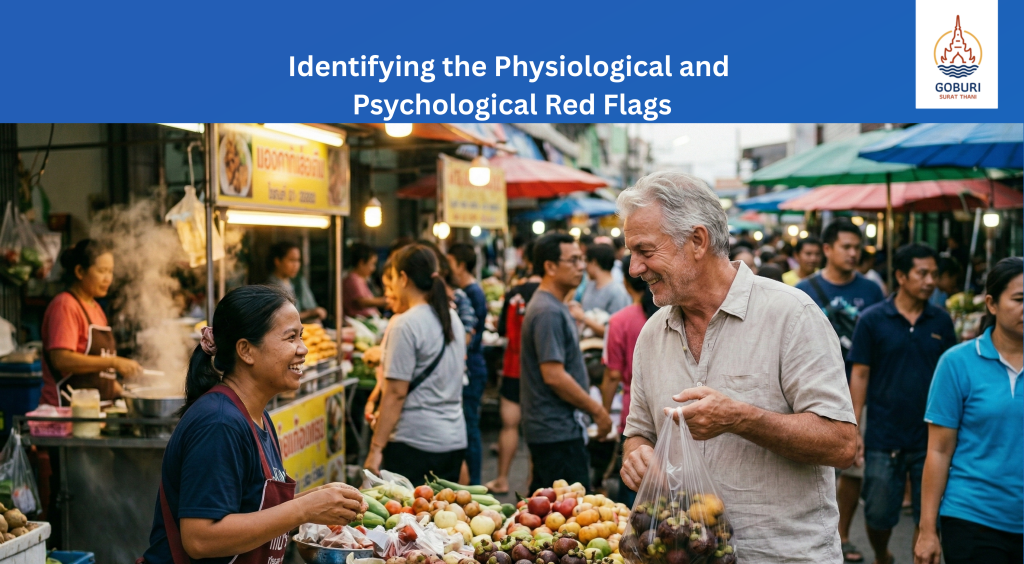
Identifying the Physiological and Psychological Red Flags
The warning signs of burnout are often physical before they are recognized as psychological. Chronic fatigue that is not relieved by sleep is a primary indicator. Individuals may also experience frequent headaches, body aches, or a weakened immune system.
Behaviorally, the most prominent sign is social withdrawal. In a country that allows for extreme anonymity, it is easy for a resident to disappear into their apartment for days at a time without anyone checking in.
Category of Symptom
Specific Warning Signs and Red Flags
Impact on Daily Life
Sleep Disturbances
Insomnia, waking in early hours, or using bed as a refuge by oversleeping.
Reduced cognitive function, irritability, and chronic physical exhaustion.
Appetite and Habits
Loss of interest in cooking, reliance on comfort foods, or increased alcohol consumption.
Weight changes, nutritional deficiencies, and the development of coping dependencies.
Emotional State
Persistent irritability, mood swings, feeling of hopelessness, or cynicism.
Strained relationships, increased conflict with locals, and a lack of motivation.
Cognitive Function
Lack of concentration, decision fatigue, and forgetting simple daily tasks.
Poor work performance, inability to manage time, and procrastinating on errands.
Social Engagement
Canceling plans, avoiding contact with family back home, and anhedonia.
Profound loneliness, loss of identity, and a feeling of being stuck.
Increased substance use is a significant risk factor in Thailand due to the high accessibility and social acceptance of alcohol. A quiet drink on the beach can quickly transition from a social activity to a primary coping mechanism for dealing with the expat blues.
When everyday tasks like paying a bill or going to the post office begin to feel heavy and are put off for weeks, it is a clear sign that the individual is no longer in the adjustment phase but is actively suffering from burnout after the honeymoon phase.
The Bureaucratic Panopticon: Visas and the Clock of Anxiety
One of the most significant external stressors for those living in Thailand is the administrative burden of maintaining legal status. The Thai visa system is designed around the principle of constant monitoring, which creates a background level of anxiety that never truly dissipates for most residents.
The requirement to interact with immigration officers every few months serves as a persistent reminder that the expatriate is a guest with temporary permission to stay.
The Stress of TM30 and 90 Day Reporting
The TM30 reporting requirement is a frequent source of frustration. This regulation mandates that the owner of any residence where a foreigner stays must report their presence within 24 hours. While the legal burden is on the landlord, the practical consequences often fall on the tenant.
Without a valid TM30 on file, foreigners are frequently blocked from performing essential services, such as renewing a visa or completing a 90-day reporting.
The 90-day reporting itself is a psychological hurdle. Every 90 days, a resident must confirm their address with immigration. While online systems exist, they are often plagued by technical failures, forcing residents to travel to crowded immigration centers like Chaengwattana in Bangkok.
The sight of hundreds of people waiting for hours just to confirm they still live where they said they did four times a year contributes to a sense of bureaucratic friction that drains mental energy.
Navigation of Visa Pathways
The visa landscape continues to evolve with the government introducing more options for high potential individuals while tightening the rules for others. Each visa path carries its own set of stressors and financial requirements that the resident must manage carefully to avoid losing their right to stay in the country.
The uncertainty of policy changes, such as rumors in early 2026 about reducing visa exempt stays from 60 to 30 days, adds to the feeling that the rules of the game can change at any moment. For those looking for long term peace of mind, this lack of legal permanence is a core element of the Thailand reality check.
Cultural Architecture: Face, Harmony, and the Invisible Wall
The cultural gap between the West and Thailand is often deeper than it appears on the surface. Thai social interactions are governed by concepts such as Saving Face, Kreng Jai, and Jai Yen, which can be difficult for foreigners to navigate when they are already stressed or burned out.
These cultural pillars prioritize social harmony over direct communication, which can lead to misunderstandings that are exhausting for those accustomed to a more assertive Western style of interaction.
The Mechanics of Saving Face and Social Harmony
Saving Face refers to the preservation of dignity, reputation, and social standing. In practice, this means that Thai people will go to great lengths to avoid embarrassing themselves or others. Direct confrontation is seen as a sign of weakness or low emotional maturity.
For an expat who is used to solving problems through direct feedback or debate, the Thai approach can feel like an exercise in futility. If a mistake is made, a Thai person might smile and stay agreeable even when the situation is unfair, simply to maintain harmony.
Kreng Jai is another fundamental concept that is often translated as deference or a reluctant heart. It involves an extreme awareness of how one’s actions might inconvenience others. While this leads to a very polite society, it also makes it difficult to get a straight answer.
A Thai friend or colleague might decline an offer they want to accept or say yes to a request they cannot fulfill, all out of kreng jai. For a resident suffering from burnout after the honeymoon phase, this lack of transparency can lead to a feeling that they are never truly connecting with the people around them on an authentic level.
The Concept of Jai Yen and Emotional Control
Jai Yen, or cool heart, is the admired trait of remaining calm and collected regardless of the situation. Conversely, losing one’s temper, which is common in some Western contexts like road rage, is deeply frowned upon and results in a significant loss of face for everyone involved.
Expatriates who cannot master this emotional restraint often find themselves increasingly isolated as their hot headed behavior leads to social rejection.
The pressure to remain jai yen while navigating the frustrations of bureaucratic delays or traffic can contribute to an internal buildup of stress. This emotional labor is a hidden component of expat burnout.
Without the ability to vent frustration in a socially acceptable way, the individual may begin to harbor long term resentment. For a deeper dive into the nuances of local integration, residents may consult resources such as the() to understand the cultural expectations placed on visitors and residents alike.
Environmental Stressors: The Reality of the Physical Landscape
The physical environment of Thailand is often the first thing that attracts people, yet it can also become a source of daily exhaustion.
The Heat and the Un-walkability of the City
The heat in Thailand is often described by newcomers as stepping into an oven. This persistent high temperature has a profound impact on the nervous system, making individuals more prone to irritability and fatigue.
Furthermore, the lack of walkable infrastructure in many cities means that a simple trip to a coffee shop can involve navigating broken sidewalks, crossing dangerous intersections, and dealing with intense humidity.
For many residents, this leads to a life spent moving between air conditioned bubbles, from the condo to the BTS train to the shopping mall. While this provides comfort, it also contributes to a sense of disconnection from the natural environment and the local community.
The Impact of PM2.5 and the Burning Season
Environmental pollution is perhaps the most significant Thailand reality check for those living in the northern provinces.
From January to May, the region experiences a Burning Season where agricultural fires and transboundary biomass burning lead to dangerous levels of PM2.5 particulate matter.
Environmental Factor
Impact on Expat Health and Well-being
Necessary Coping Mechanisms
PM2.5 Pollution
Respiratory issues, eye irritation, and long term cardiovascular risks.
Using high-quality air purifiers, wearing N95 masks, and fleeing the city during peak months.
Extreme Heat
Dehydration, heat exhaustion, and increased irritability.
High energy bills for AC, adjusting social life to evening hours, and constant hydration.
Traffic and Noise
Sensory overload, sleep disturbance, and time waste during commutes.
Living close to mass transit, using noise-canceling headphones, and practicing patience.
Unpredictable Weather
Flooding during monsoon season and sudden tropical storms.
Checking weather apps regularly and accepting that plans may be cancelled at the last minute.
The annual recurrence of the haze crisis in Chiang Mai has led many long term expats to reconsider their choice of residence. The feeling of being trapped indoors for several months a year is a major factor in the decision to leave the country permanently or relocate to the islands in the south.
Economic Realities and the Transactional Nature of Social Circles
The myth of a luxury life for pennies is one of the most common drivers of the honeymoon phase. While Thailand remains more affordable than many Western countries, the economic reality of long term living is more complex.
The low cost of living often applies only to those willing to live a Thai lifestyle whereas maintaining a Western standard of living can be surprisingly expensive.
The Trap of Easy Living and Loss of Purpose
One of the brutal truths about living in Thailand is that the ease of life can become a trap. When the struggle for survival is removed, some individuals find themselves drifting without a sense of purpose.
This is particularly common among retirees or those who have escaped high stress careers. Without the structure of a professional life or a clear mission, the days begin to blur together, leading to a state of existential boredom that is a precursor to burnout.
The accessibility of leisure activities, such as nightlife and massage, can also lead to a dopamine detox requirement.
When every day feels like a holiday, nothing feels special anymore. This hedonic adaptation means that the resident must constantly find new, more intense stimulations to feel the same level of excitement they felt during their first month.
The Transactional Nature of Relationships
A recurring theme in expat discourse is the difficulty of forming genuine relationships. Many social interactions in the expat bubble are seen as transactional where people are valued for what they can provide rather than who they are.
This is particularly prevalent in the dating scene where significant wealth disparities can lead to relationships based on financial support rather than emotional connection.
Social Challenge
Underlying Reason
Long-term Impact on Expat
Lack of Male Friendships
Cultural and language barriers between Western and Thai men.
Difficulty finding peers to relate to on a deep level.
Transactional Romance
Wealth disparity and traditional family expectations for support.
Feeling like a walking wallet and eventual disillusionment with love.
Expat Bar Culture
Social life centered around alcohol and transient travelers.
Superficial connections and the risk of developing alcohol dependencies.
Social Media Pressure
The need to portray a perfect life to friends and family back home.
Internalizing stress and feeling unable to admit to being unhappy.
When the wallet stops, many find that their support network vanishes, leading to feelings of loneliness and depression. This reality check often occurs after the individual has invested several years and significant financial resources into the country, making the burnout even more painful.
Sustainable Longevity: Strategies to Thrive Beyond the Honeymoon
Surviving the transition from the honeymoon phase to a stable, long term life in Thailand requires intentional effort and the implementation of specific psychological and lifestyle strategies. Thriving is about moving from escaping a previous life to building a new one with realistic foundations.
Somatic Tools for Nervous System Regulation
Because the stress of living abroad often keeps the nervous system in a fight or flight state, somatic practices are highly effective. These techniques focus on the body’s internal landscape to process stored stress and cultivate resilience.
Grounding: This involves reconnecting with the physical earth to lower cortisol levels. Walking barefoot on the sand or sitting still while focusing on the sensation of weight in the body can re-establish a sense of safety.
Breathwork: Simple daily breathing exercises serve as a bridge between the mind and the body. These practices help regulate the nervous system after a stressful interaction with bureaucracy or a difficult commute.
Somatic Movement: Unlike traditional exercise, this is about intuitive motion to discharge tension. Shaking or free-form stretching for ten minutes a day can prevent the body from becoming frozen in a state of chronic stress.
Mindful Massage: When approached with presence, a Thai massage can become a somatic reset rather than just a luxury treatment.
Creating an Ergonomic and Psychological Oasis
To combat the blurred lines of digital nomad burnout, it is essential to create a dedicated sanctuary for work and rest. An ergonomic oasis involves a properly positioned workspace that is mentally separated from relaxation areas. This helps the brain switch between productive and restorative modes which is critical for long term mental health.
Establishing a consistent daily schedule also provides a sense of control over the environment. This schedule should include non-negotiable moments for hobbies or meditative breaks that contribute to the individual’s well of self-renewal..
The Role of Language and Professional Growth
The loss of competence is one of the most significant psychological hits a person takes when moving to Thailand.
Being unable to read signs, order food accurately, or negotiate a contract makes even highly successful Westerners feel like children. To regain a sense of identity and agency, investing in the Thai language is non-negotiable.
Why Language is the Key to Integration
Learning Thai is about more than just communication. It is about understanding the local wisdom and being happy with very little that defines the Thai spirit.
When an expat can speak the local language, they gain a degree of humanity in their interactions with everyone from supermarket clerks to landlords. It allows them to bypass the tourist price and, more importantly, the tourist experience.
Benefit of Language Learning
Psychological Impact
Practical Outcome
Increased Competence
Reduced feeling of helplessness and frustration.
Ability to handle bureaucratic tasks without an agent.
Deeper Social Connection
Breaking the invisible wall of superficial politeness.
Forming real friendships with locals beyond service staff.
Professional Opportunity
Gaining an edge in the local and regional job market.
Avoiding the career death often associated with moving to Thailand.
Cultural Empathy
Understanding why people act the way they do through their idioms.
Reducing irritability over cultural differences like Face.
Most long term residents who regret their move cite the failure to learn the language as a primary mistake. Without it, the individual remains a permanent outsider which is a major contributor to the isolation that drives burnout after the honeymoon phase.
Professional Mental Health Support in Thailand
If self-care and community building are not enough to lift the expat blues, it is vital to seek professional help. Thailand has a maturing mental health infrastructure, though it is primarily focused on the private sector for international residents.
Accessing Care and Navigating the System
Public hospitals in Thailand often have a severe shortage of psychologists and psychiatrists, leading to wait times of up to six months. Therefore, the private sector is the primary route for expats.
For those in immediate crisis, the following resources are available:
The Samaritans of Thailand: Provides a 24-hour English call-back service at 02 113 6789, press 2. This is an anonymous service staffed by people trained in suicide prevention and emotional support.
Department of Mental Health Hotline (1323): A government-run 24/7 helpline, primarily in Thai, but can provide emergency referrals.
AI-Based Screening (DMIND): The Department of Mental Health has launched apps designed to use AI for depression screening based on facial expressions and voice patterns.
It is important for residents to check if their health insurance covers psychiatric care as many policies have specific exclusions or waiting periods for mental health conditions.
Mastering the Reality Check for Long-Term Success
The journey of living in Thailand is a profound psychological transformation. The end of the honeymoon phase is not a sign that the move was a mistake, but a signal that the real work of integration has begun.
The Thailand reality check is a necessary evolution that allows a resident to shed their idealized fantasies and build a life based on authentic connection and realistic expectations.
Expat burnout is a serious risk, but it is one that can be managed through proactive somatic practices, the establishment of firm professional boundaries, and a deep commitment to learning the Thai language.
By understanding the cultural architecture of Face and Kreng Jai, the expatriate can navigate the invisible walls of Thai society without losing their sense of self.
Longevity in the Land of Smiles is not about how much money one has in the bank, but about the resilience of the nervous system and the depth of one’s local social circle.
To thrive in Surat Thani, the resident must move past being a permanent tourist and become a conscious guest. This involves respecting the local norms, managing the bureaucratic clock of anxiety with patience, and maintaining a clear sense of purpose that transcends the easy distractions of tropical life.
Those who can navigate the transition from fascination to acceptance will find that Surat Thani is not a paradise to be consumed, but a complex, beautiful, and deeply rewarding home to be lived in with a cool heart.