We occasionally share updates when important information changes or new long-form guides are published. Just practical updates related to long-term living in Surat Thani and Southern Thailand.
For the vast majority of international visitors, Surat Thani is a blur viewed through the window of a bus or a train. It is widely regarded as the “gateway” city: a functional transit hub where travelers pause just long enough to catch a ferry to the white sands of Koh Samui or the parties of Koh Phangan. Tourism content rarely lingers on the mainland because it lacks the curated aesthetic of a resort town.
However, for those seeking what tourism content does not tell you about living in Surat Thani, this city represents one of the most strategic locations for long term residency in the kingdom. Known as the “City of Good People,” it offers an authentic southern Thai experience that is entirely different from the transactional energy of the islands.
If you are transitioning from being a Bangkok expat to a provincial resident or planning your first expat life move, there are critical operational truths about the mainland that the travel guides never mention.
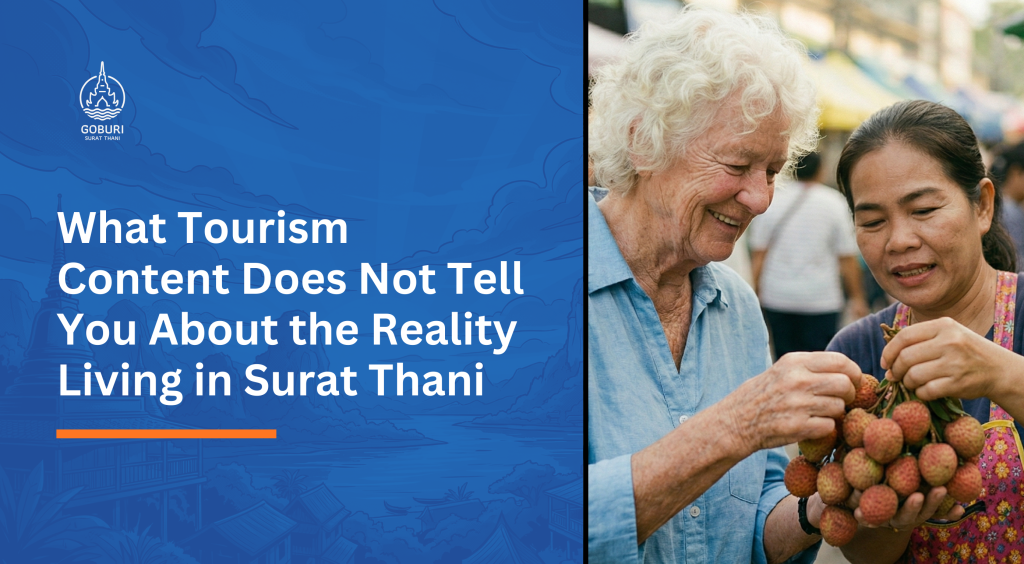
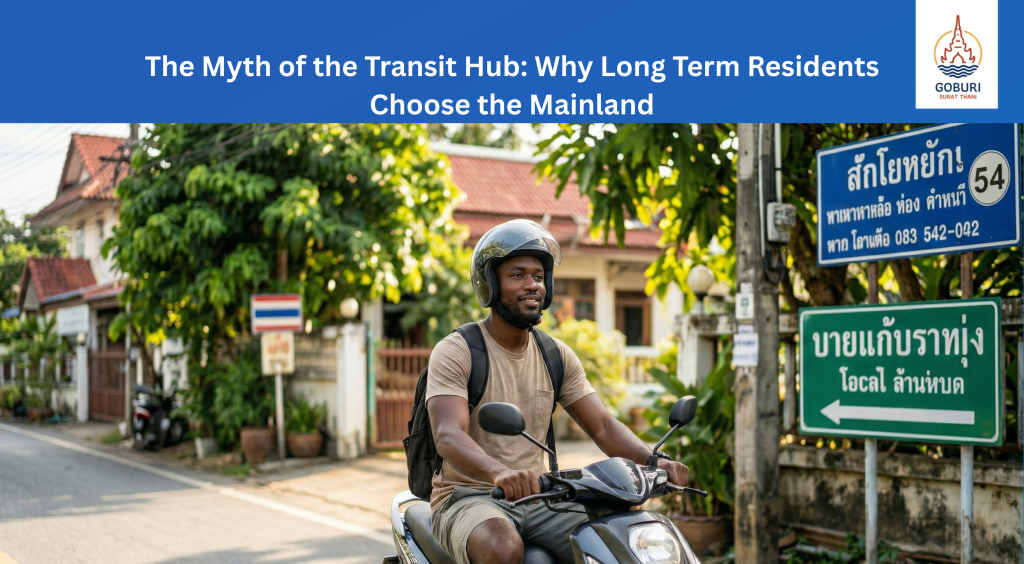
The Myth of the Transit Hub: Why Long Term Residents Choose the Mainland
The first thing tourism content fails to explain is why anyone would stay in a city that visitors often describe as gritty or unimpressive. The reality is that living in Surat Thani provides a sense of belonging that is often missing in overtouristed provinces.
In Phuket or Samui, the local economy is designed to extract revenue from visitors, which creates a permanent social barrier between the residents and the community.
In contrast, the economy of Surat Thani is built on agriculture, regional trade, and industry. When you live here, you are not the target audience for a tour package. You are a neighbor in a functioning society.
This shift in status is the foundation of a sustainable location strategy. Instead of competing with tourists for resources, you access genuine local life at local prices.
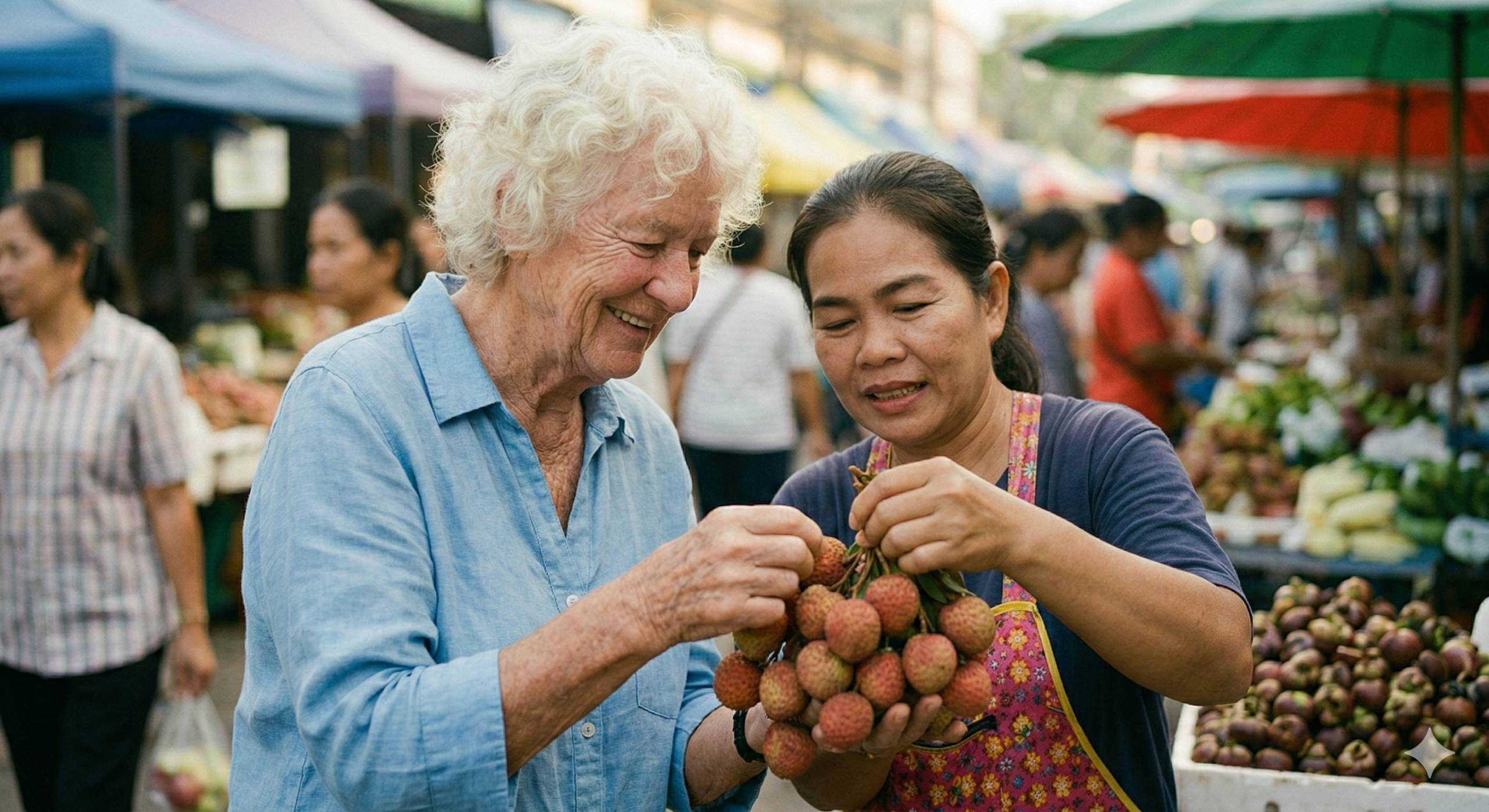
Every morning market visit reveals interactions that are not part of a performance. This cultural authenticity provides the mental space necessary for productive work or a peaceful retirement.
The Economic Reality: The Power of the Mainland Discount
The most compelling reason to choose the mainland over the islands is what residents call the mainland discount. While tourism marketing focuses on the “low cost of luxury,” it rarely provides the arithmetic of long term sustainability.
In Surat Thani, the cost of living is driven by local demand rather than holiday spending. A single professional can maintain a high quality lifestyle on a monthly budget that would barely cover basic survival in Bangkok.
By opting out of the tourist economy, residents effectively give themselves a 30% raise in purchasing power. This applies to every sector, from housing and utilities to personal care.
For example, a heaping bowl of noodle soup on the mainland remains affordable at 50 to 70 THB, whereas the same meal in a resort zone could easily exceed 120 THB. This economic insulation protects your budget from the volatile price spikes common during the high season.
Comparative Monthly Solo Budgets 2026
Category
Surat Thani (Mainland)
Koh Samui / Phuket (Island)
Modern Studio Rent
4,500 – 9,500 THB
15,000 – 30,000 THB
Monthly Food (Mixed Local)
10,000 – 15,500 THB
18,000 – 25,000 THB
Motorbike Rental + Fuel
2,500 – 4,500 THB
4,500 – 7,500 THB
Private Gym / Wellness
1,200 – 2,500 THB
3,000 – 5,500 THB
Unlimited 5G Data Plan
600 – 1,100 THB
1,000 – 1,800 THB
Total Estimated Base
18,800 – 33,100 THB
41,500 – 69,800 THB
These figures reflect actual resident data rather than promotional estimates. You can find more granular data in Cost of Living in Surat Thani.
The Geography of Risk: What You Need to Know About Flooding
Tourism content showcases the lush greenery of Southern Thailand but rarely mentions the topography that creates it. Surat Thani faces a significant flood risk that must be factored into any housing decision.
The city is located on the banks of the Tapi River and is part of a low-lying basin. Statistical data indicates that potentially damaging urban floods are expected to occur at least once every ten years due to heavy precipitation and dam releases upstream.
When you are looking for Surat Thani property, you cannot simply look at the aesthetics of the house. You must research the elevation of the neighborhood. The west and north zones of the city are generally more prone to flooding due to lower elevation, while parts of the south zone are more resilient.
Savvy residents look for properties with structural resilience, where critical equipment like air conditioning compressors and water pumps are elevated above historical flood levels. This is a practical hurdle that can turn the dream of living in Thailand into a logistical nightmare if ignored.
The Bureaucratic Reality: Visas and Reporting
The transition to a structured regional hub has brought an end to the era of informal residency. If you plan on living in Surat Thani, you must become an amateur compliance professional.
The Thailand visa landscape has shifted toward strict formalization. The 2025 mandate decisively ended the “visa run” lifestyle by limiting land entries to two per calendar year.
The Destination Thailand Visa (DTV) is now a primary path for remote workers, offering a five year multiple entry stay. However, the administrative burden of the TM30 form remains a persistent feature of daily life.
Your landlord must report your presence within 24 hours of your arrival. If this form is missing from the system, you will face fines and potential denial of visa extensions.
Furthermore, the 90-day report (Form TM47) is a mandatory requirement for anyone staying more than three consecutive months. For an honest look at the administrative fatigue that causes many to leave, read our article about Why People Leave Surat Thani.
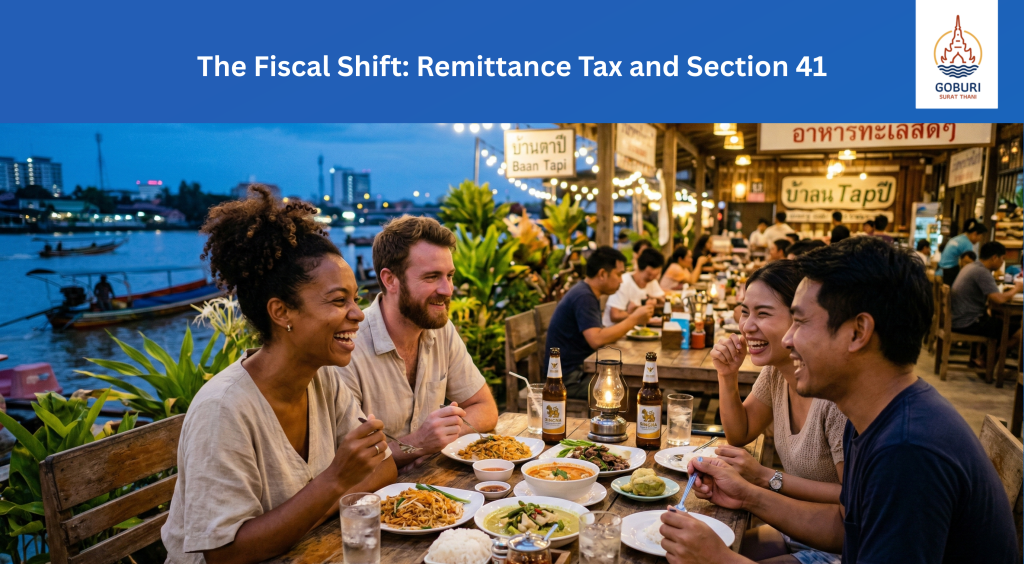
The Fiscal Shift: Remittance Tax and Section 41
Perhaps the most significant change for the modern resident is the enforcement of the remittance tax under Section 41 of the Revenue Code.
Historically, Thailand was seen as a tax haven because foreign income was only taxable if brought into the country in the same year it was earned. This loophole has been closed. If you stay in Thailand for 180 days or more in a calendar year, you are a tax resident.
Under current laws, any foreign income remitted into the country is subject to Thai income tax at a progressive rate from 5 to 35%. This includes pensions, dividends, and remote work salaries.
While there are proposed grace periods for income remitted within a certain window, you must maintain impeccable financial records to prove the origin and timing of your funds. This level of fiscal organization is a requirement for expat life that most lifestyle blogs fail to mention. You can verify the latest rules on the official.
Thailand Personal Income Tax Brackets 2026
Assessable Annual Income (THB)
Tax Rate
Notes
0 – 150,000
0%
Tax free threshold
150,001 – 300,000
5%
Entry level bracket
300,001 – 500,000
10%
Moderate income
500,001 – 750,000
15%
High middle income
750,001 – 1,000,000
20%
Upper middle income
1,000,001 – 2,000,000
25%
High income
2,000,001 – 5,000,000
30%
Luxury tier
Over 5,000,000
35%
Maximum rate
Property Law: The Reality of Ownership
For many, the ultimate goal of living in Thailand is owning a home. However, Thailand property laws are grounded in the principle that land ownership is reserved for Thai nationals. While the market for Surat Thani property is more stable than the islands, the legal mechanisms are the same. Foreigners cannot own land in their own name.
The most straightforward path to ownership is the freehold condominium. Under the Condominium Act, you can hold absolute ownership in your name as long as the building maintains a 51% Thai majority.
For houses and villas, you will likely use a 30-year registered leasehold. While these leases often include renewal clauses, they are contractual promises rather than statutory rights. Using a Thai limited company to purchase land is often considered an illegal nominee structure that the government is actively investigating.
The risk of asset seizure is a reality that you must discuss with a qualified lawyer before committing your capital.
The Social Code: Face and Kreng Jai
The “Land of Smiles” is a label that conceals a sophisticated cultural infrastructure. For the long term resident, a smile is a tool used to buffer tension or mask embarrassment. Maintaining social harmony is more important than absolute truth in many interactions. This is the core of Thai social etiquette.
The concept of “Face” shapes everything from business negotiations to neighborhood relations. If you raise your voice in a public disagreement, you have committed a major social transgression. You are expected to have a “Jai Yen” (cool heart).
Furthermore, the concept of “Kreng Jai” reflects a deep reluctance to impose on others or cause inconvenience. This can lead to a lack of direct feedback in the workplace, as Thai colleagues may choose to remain agreeable rather than voice a disagreement that could cause a loss of face.
Understanding these invisible rules is essential for avoiding the social alienation that often leads to burnout.
Infrastructure: Healthcare and Education
While Surat Thani is a provincial city, it offers robust infrastructure that serves the entire region. The city is home to major hospitals like Bangkok Hospital Surat and Thaksin Hospital.
However, the healthcare in Thailand reality check is that private care is expensive. A major medical event can easily cost over 100,000 THB. International level health insurance is a non-negotiable part of your budget.
Balance International School (BISS): The first fully credited Cambridge school in the city.
Suratthani International School (STIS): Focuses on the IB framework and multilingual thinking.
Bilingual Schools: Options like Thepmitrsuksa offer English Programs (EP) for significantly lower annual fees than international standards.
The Psychological Journey: Honeymoon to Burnout
Moving to a foreign country involves predictable psychological stages. The honeymoon phase is characterized by a sense of wonder. Every trip to the night market feels like an adventure.
However, this phase typically ends within the first year as the operations of life take over. Dealing with the Immigration Bureau, navigating the flood risk, and managing the remittance tax can lead to disillusionment.
Expat burnout is a real phenomenon where the initial love for the culture turns into frustration. You will always be a “Farang” (foreigner), a status that carries certain limitations.
Successful residents are those who accept their status as permanent guests and build a meaningful life that does not depend on being fully integrated into the local culture. If you find yourself struggling, there is a guide about the Expat Burnout After the Honeymoon Phase.
Is Surat Thani Sustainable?
Living in Surat Thani is a commitment to an authentic Thai lifestyle. It is a city that rewards those who treat compliance seriously and prioritize routines over a permanent holiday mindset.
While the humidity and flood risk are persistent challenges, the massive reduction in the cost of living and the stability of the local economy provide a compelling argument for the mainland.
To succeed here, you must move beyond the tourism narrative and embrace the administrative discipline required by Thailand immigration.
Those who achieve this balance will find that Surat Thani offers a quality of life that the travel guides simply do not know how to describe. It is a place where you can learn, adapt, and build a stable future in the heart of the “Land of Smiles.”