We occasionally share updates when important information changes or new long-form guides are published. Just practical updates related to long-term living in Surat Thani and Southern Thailand.
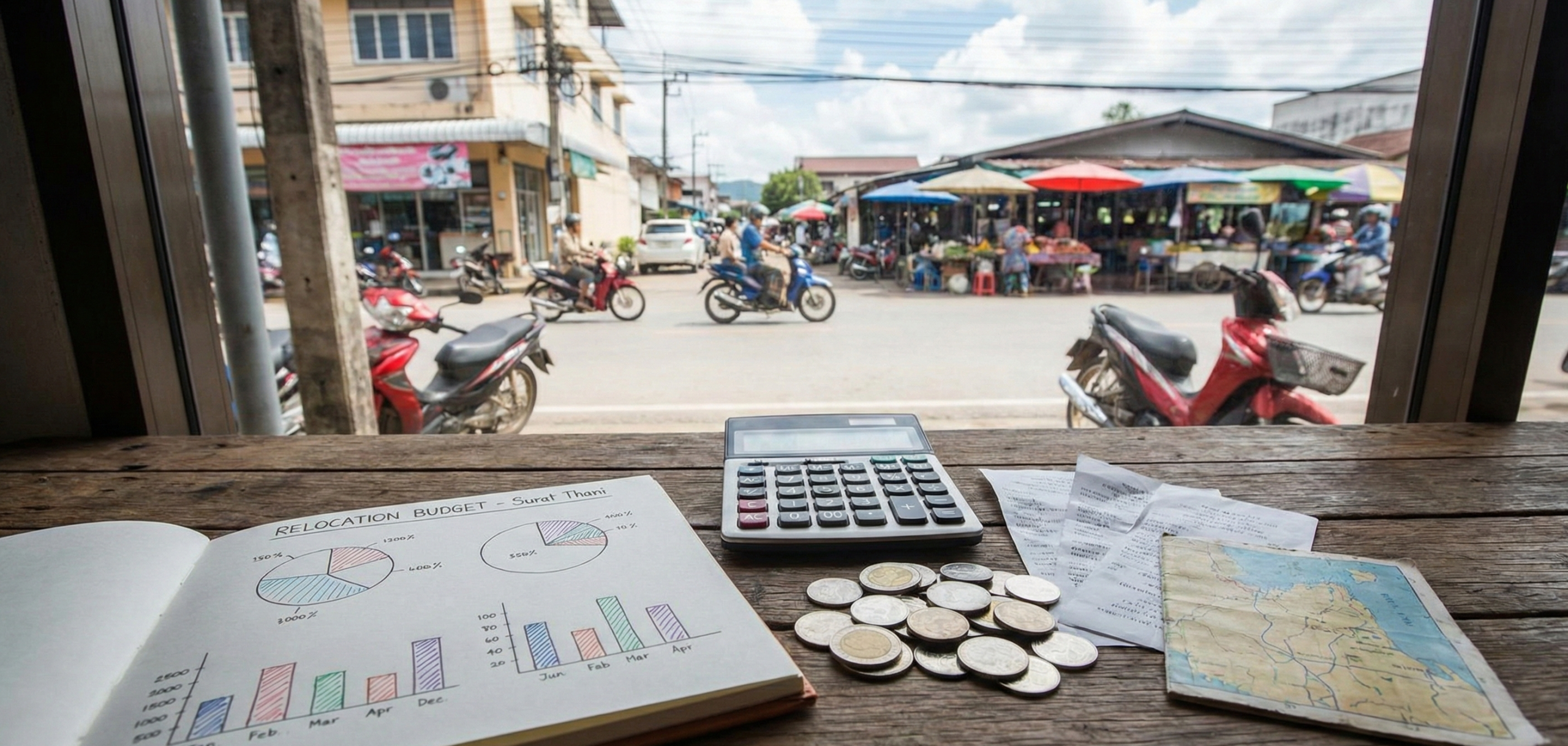
When foreigners research the cost of living in southern Thailand, they often start with the visible numbers like rent, street food prices, and local transportation. While Surat Thani remains one of the most affordable provincial capitals in the region, the true cost of settling here for five to ten years is rarely as simple as the base figures suggest.
A successful relocation depends on understanding the hidden layer of expenses that do not appear in tourism brochures. These range from structural maintenance in a tropical climate to the administrative fees required to maintain legal status. This guide provides a rational, experience-based breakdown of the hidden costs in Surat Thani for 2026, ensuring you can plan a sustainable future without financial friction.
The Reality of Tropical Utility Management
In a mainland city like Surat Thani, utilities are a major variable that can fluctuate based on seasonal demand and local building regulations. While the Thai government has worked to stabilize energy prices for 2026, how you manage your household and the type of rental agreement you sign will dictate your final bill. Many newcomers underestimate the difference between a direct government bill and a managed service rate, which often leads to significant budget discrepancies by the end of the first quarter.
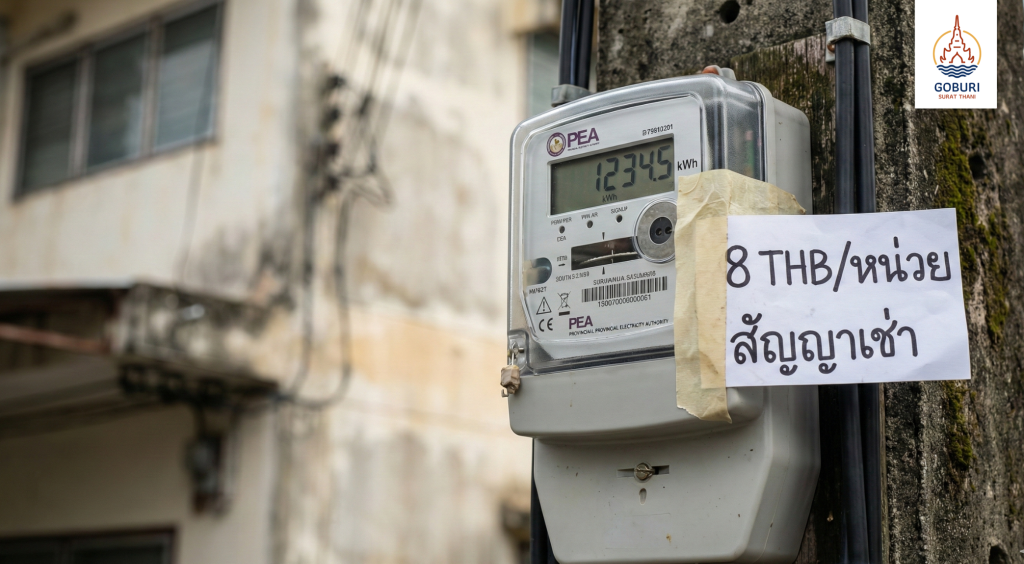
Indirect Billing: For 2026, the Prime Minister’s Office has tightened regulations on rental surcharges. While the government rate is 3.88 THB, landlords are now legally capped at charging no more than 4.88 THB per unit for residential rentals. Be cautious of older contracts still listing 7 to 9 THB; as of January 2026, these are non-compliant and can be challenged through the Office of the Consumer Protection Board (OCPB).
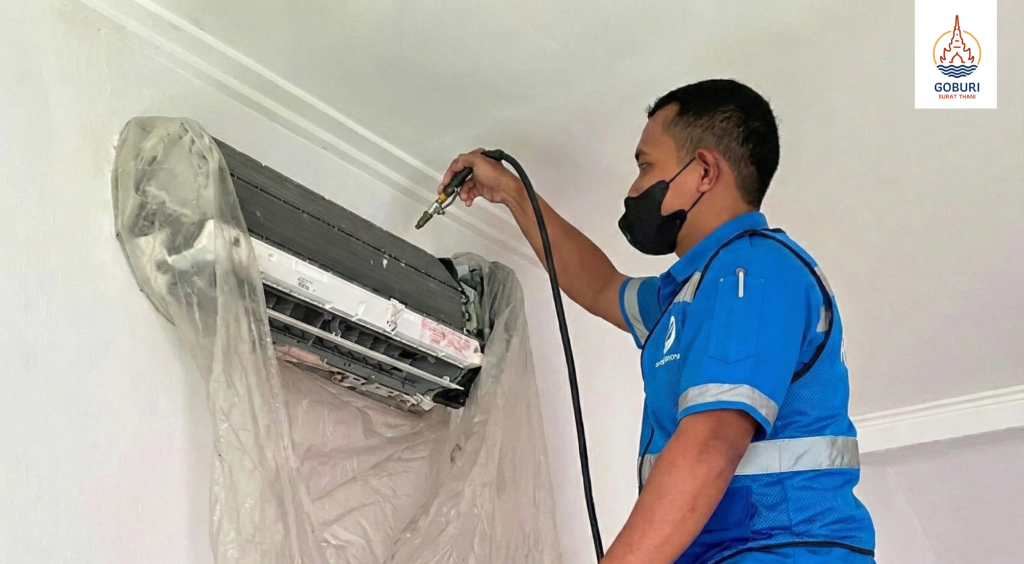
AC Maintenance: In the humidity of Southern Thailand, air conditioning units lose efficiency quickly. A unit that has not been professionally cleaned in six months can consume 20% more power to maintain the same temperature. Budget 600 to 1,000 THB per unit every six months for a deep chemical clean.
Water Quality and Filtration
Tap water in Surat Thani is treated but generally not considered potable by international standards.
The Bottle Cycle: Many families rely on 18-liter white bottle delivery services. While cheap at approximately 15 to 25 THB per bottle, the logistical friction and recurring cost add up.
The Filtration Investment: To avoid the bottle tax, a high-quality undersink reverse osmosis system costs between 8,000 and 15,000 THB. Factoring in filter replacements every six months is a necessary hidden expense for long-term health and convenience.
Infrastructure and Property Maintenance
The mainland environment is harsh on physical structures, often more so than the islands due to the higher accumulation of heat and urban dust. Long-term residents in Surat Thani often face creeping maintenance costs that are not common in temperate climates. While a house may appear structurally sound during a walkthrough, the combination of high humidity, intense UV radiation, and seasonal monsoons creates a cycle of “hidden” wear and tear that requires consistent financial allocation to manage effectively.
Common Area Management (CAM) Fees
If you choose to live in a modern gated community or Moo Baan for security and stability, you will encounter Common Area Management fees. These charges are the silent engine that powers your residential lifestyle by funding the upkeep of all shared spaces and services. While they may appear like a standard service charge, they are a significant hidden cost in Surat Thani because they are often billed annually in a single lump sum, which can cause a sudden strain on your Surat Thani relocation budget if you have only planned for monthly rent.
What Your CAM Fees Cover
The purpose of these fees is to preserve both your quality of life and your long-term property value. In a well-managed community, your contribution typically covers several core services:
24-Hour Security: This includes the salaries of the security guards at the main gate and the maintenance of CCTV systems throughout the streets.
Landscaping and Green Spaces: Regular pruning of trees, lawn care for communal parks, and the upkeep of the project’s main entrance.
Infrastructure Maintenance: Repairs to internal roads, drainage systems, and street lighting that the local municipality does not cover.
Waste Management: While many cities have a small monthly trash fee, Moo Baans often include private garbage collection schedules within their CAM structure to ensure a higher standard of cleanliness.
How Fees are Calculated and Billed
In Thailand, CAM fees are typically calculated based on the size of your land plot. The standard measurement is the “Square Wah” (one square wah equals four square meters). For the 2026 market, rates in Surat Thani usually range from 20 to 50 THB per square wah per month.
For a standard 60 square wah detached house, this results in a monthly fee of approximately 1,200 to 3,000 THB. However, most juristic offices require residents to pay these fees for twelve months in advance. This means you should be prepared for an annual bill of 14,400 to 36,000 THB every January or on the anniversary of your move-in date. This recurring expense is a critical part of the cost of living in Southern Thailand that families must account for during their financial planning.
The Sinking Fund Requirement
In addition to recurring CAM fees, some newer or high-end developments in Surat Thani require a one-time contribution to a Sinking Fund. This is a reserve of capital held by the community for major, non-recurring expenses like replacing a clubhouse roof or resurfacing the main entrance road.
One-Time Payment: This is usually paid by the owner at the time of purchase, but if you are the first tenant in a brand new villa, some lease agreements may attempt to pass this cost on to you.
Transparency: Always ask to see the latest juristic statement to ensure that the community is financially healthy. A Moo Baan with low CAM fees but a depleted sinking fund is at risk of deteriorating quickly, which could eventually lead to higher unexpected costs when living in Thailand, when emergency repairs become necessary.
Pest Control and Prevention
Termites and ants are a constant presence in Southern Thailand and represent one of the most significant maintenance challenges for long-term residents. Unlike temperate climates, where pests are often seasonal, the consistent heat and humidity of the mainland allow these colonies to thrive and reproduce all year round. In Surat Thani, a proactive approach is not merely a luxury but a fundamental necessity to protect the structural integrity of your home and your quality of life.
Even if your house is built of concrete, termites can destroy door frames, cabinets, and furniture. A professional pest control contract is essential for protecting your investment and costs approximately 6,000 to 10,000 THB per year for monthly inspections and preventative spraying.
Transportation Realities on the Mainland
Surat Thani is a logistical hub, but it is not designed for pedestrians. Unlike Bangkok, you cannot rely on a metro system, and unlike Phuket, the taxi infrastructure is not geared toward foreigners.
The Necessity of Private Transport
To live realistically in Surat Thani, you will eventually need a car or a motorbike.
Registration and Insurance: For a mid-range sedan, mandatory insurance (Por Ror Bor) is cheap, but voluntary Class 1 insurance is strongly recommended for expats and costs between 12,000 and 20,000 THB annually.
The Mainland Tax on Tires: The heat and road conditions in the South wear down tires faster than in Europe or North America. Expect to replace a full set of tires every two and a half to three years.
Ride-Hailing Surcharges and Scarcity
While Grab is available in Surat Thani, the fleet is smaller than in major cities. During monsoon rain or peak hours, surge pricing is common. Relying solely on ride-hailing for daily school runs or grocery trips can easily exceed 4,000 THB per month, making it a high hidden cost in Surat Thani.
Administrative and Legal Sustainability
Maintaining a long-term presence in Thailand involves recurring administrative costs that go beyond the initial visa fee.
Visa Maintenance and Reporting
Whether you are on a Long-Term Resident (LTR) visa or a standard Non-Immigrant visa, there are ongoing expat expenses in Thailand 2026 to consider.
90-Day Reporting: While this can be completed via the Immigration Bureau’s online portal, technical glitches may require a trip to the local office. If you use an agency to handle your yearly extension, budget 5,000 to 15,000 THB per year.
Re-entry Permits: If you plan to travel internationally, a single re-entry permit is 1,000 THB, while a multiple-entry permit is 3,800 THB.
The Private Healthcare Gap
Surat Thani has excellent government hospitals, but for long-term expats, private care is the norm for efficiency and English-speaking specialists.
The Pay-Up-Front Reality: Even with premium insurance, most private hospitals require you to pay up-front for outpatient visits and claim later. A routine specialist consultation with basic medication typically costs 1,500 to 3,000 THB.
Insurance Premiums & Co-Pays: As of 2026, premiums are rising due to high medical inflation (approx. 14%). Crucially, most major insurers (such as AIA and AXA) have shifted to a mandatory 30–50% co-payment model for new outpatient policies to keep premiums sustainable. This means your monthly budget must now account for out-of-pocket costs even if you are insured. Expect base premiums between 40,000 and 120,000 THB, but factor in an additional “medical reserve” for these co-pays.
The Lifestyle and Grocery Comfort Tax
Surat Thani’s local markets are incredibly affordable. However, most families will eventually seek out imported comfort foods or specific international brands.
Imported Goods and the Tax Factor
Groceries at local wet markets are significantly cheaper than in the West. However, shopping at Central Surat Thani or specialized supermarkets for cheese, wine, or imported beef carries a heavy tax.
The Tax Impact: Items like wine or imported spirits often carry taxes exceeding 300%. A bottle of mid-range Australian wine that costs $15 abroad will cost 800 to 1,200 THB here.
Dairy and Meat: Imported cheese and beef are luxuries. If your family maintains a Western-style diet, your grocery bill will be your most significant unexpected cost living in Thailand.
Summarizing the Surat Thani Relocation Budget
To live a stable, low-stress life, we recommend adding a 15% buffer to your calculated cost of living in Southern Thailand. This is not because the city is expensive, but because the friction of living in a foreign environment creates small, recurring costs that are difficult to track individually.
Category
Annual Hidden Expense (THB)
Monthly Impact (THB)
AC & Water Maintenance
6,500
541
Pest Control & CAM Fees
24,000
2,000
Private Health (Premium + Co-pay Reserve)
84,000
7,000
Visa & Agency Fees
12,000
1,000
Car Insurance & Maintenance
18,000
1,500
Total Hidden Buffer
144,500
12,041
Building a Sustainable Financial Future
The goal of identifying every hidden cost in Surat Thani is not to discourage your relocation but to ensure that your stay is financially sustainable for the next decade. Many expatriates choose to leave Thailand after only two or three years because they incorrectly budgeted for a permanent holiday lifestyle. They were often caught off guard by the maintenance and administrative realities that surface only after the honeymoon phase of the move has ended.
By shifting from a guest mindset to a resident mindset, you can build a more accurate Surat Thani relocation budget. This transition involves moving away from the “cheap paradise” narrative and toward an honest accounting of the buffers required for a stable life. When you plan for the unexpected costs of living in Thailand, you protect yourself from the financial fatigue that forces many families to return home prematurely.
Moving from Guest to Resident Mindset
A guest focuses on short-term savings, such as the low cost of a street meal or a weekend hotel. A resident focuses on long-term capital preservation and the expat expenses Thailand 2026 will demand. To achieve this, we recommend three specific financial actions:
Establish a Local Maintenance Fund: Allocate 10% of your monthly rent into a separate account. This fund should be used specifically for the AC deep cleans, pest control contracts, and minor household repairs that prevent larger structural issues.
Review Insurance Annually: Do not treat your health coverage as a static expense. Medical inflation on the mainland means that your cost of living in Southern Thailand will fluctuate based on your insurance premiums. Reviewing your policy every October ensures you are not overpaying for unnecessary benefits.
Audit Your Grocery Habits: Most residents find that their grocery bill is their most volatile expense. By tracking your spending on imported goods versus local produce over a three month period, you can identify where your budget is leaking and adjust your lifestyle accordingly.
The Foundation of a Calm Life
This level of honesty is the foundation of a calm and predictable life in Southern Thailand. When you are no longer surprised by a visa fee or an annual car registration bill, you can focus on the reasons you moved here in the first place. You are not just visiting Surat Thani; you are building a home within it.
For a comprehensive view of how these buffers integrate into your primary monthly outgoings, please refer back to our foundational guide on the cost of living in Surat Thani.