We occasionally share updates when important information changes or new long-form guides are published. Just practical updates related to long-term living in Surat Thani and Southern Thailand.
For families and long-term expats settling in Southern Thailand, the primary draw is the perceived stability of expenses. However, the economic landscape of 2026 is not static. While the province remains significantly more affordable than the neighboring islands of Phuket or Koh Samui, residents must navigate a subtle but persistent shift in inflation and price changes in Surat Thani.
Understanding these shifts is not about fear; it is about rational planning. In this guide, we break down the current inflationary trends in energy, food, and housing. We also explain how global factors like the Thai Baht exchange rate impact translate into your daily local spending. Our goal is to move beyond the “cheap paradise” marketing and provide the grounded data required for a sustainable life in the region.
The 2026 Macroeconomic Context in Southern Thailand
As we move through 2026, Thailand’s national headline inflation target remains set between 1% and 3% by the Bank of Thailand. While this suggests a stable national economy, the local experience in the South is often driven by specific supply chain factors and strategic government intervention. For a long-term resident, the national average is less important than the local fluctuations in the Surat Thani market, which are influenced by regional weather patterns and shifting energy policies.
1. Headline vs. Core Inflation
It is important to distinguish between headline inflation, which includes volatile items like fresh vegetables and fuel, and core inflation. In Surat Thani, the headline figure often fluctuates significantly due to the monsoon seasons that affect local agricultural yields. For the first half of 2026, analysts have noted a slight rise in headline inflation driven by a recovery in the tourism sector and a temporary increase in fresh food prices following seasonal flooding.
Conversely, core inflation has remained remarkably stable at approximately 0.8% to 0.9%. This specific metric covers processed goods, health services, and education. This means that while your weekly grocery bill for fresh produce might spike after a heavy rain, the cost of your dental visits, private school fees, or gym memberships remains consistent. This predictability in core services is a cornerstone of the cost of living in Southern Thailand and allows for high confidence in long-term financial forecasting.
2. The Role of Government Subsidies
A significant reason the mainland economy appears resilient to global shocks is the strategic use of government subsidies. In early 2026, the Thai administration continued measures to cap diesel prices at approximately 30 THB per liter. In fact, as of January 9, 2026, retail prices for Diesel B7 at major stations like Bangchak have dipped slightly below the cap to 29.94 THB per liter (excluding local provincial taxes). This intervention acts as a critical buffer and manages utility tariffs to protect household purchasing power. These interventions act as a critical buffer, preventing the full weight of global energy volatility from hitting the local consumer directly.
For example, the Energy Regulatory Commission (ERC) recently approved a reduction in the electricity tariff to 3.88 THB per unit for the early 2026 billing period. This reduction was made possible by a fall in global liquefied natural gas prices and a recalculation of the fuel tariff. By maintaining these caps and subsidies, the government effectively stabilizes the inflation and price changes in Surat Thani, ensuring that transportation and energy costs do not spiral even when global markets are uncertain.
3. Supply Chain Resilience and Local Production
Surat Thani benefits from being a primary producer of palm oil, rubber, and seafood, which provides a natural hedge against certain types of imported inflation. While the Thai Baht exchange rate impact may affect the price of imported luxury goods, the local supply chain for staples remains robust. In 2026, we have seen a normalization of logistics costs after the post-pandemic volatility, which has helped keep the price of locally manufactured household goods stable.
However, residents should be aware that the government is gradually moving toward more targeted subsidies rather than universal schemes. As we progress through the year, certain biofuel subsidies are expected to be phased out, which may lead to minor adjustments in specific fuel categories. Staying informed about these policy shifts is a vital part of expat budgeting in Surat Thani, as it allows you to adjust your consumption before the price changes take effect.
Tracking Specific Price Changes for 2026
To build an accurate expat budgeting Surat Thani plan, you must look at individual spending categories. Inflation does not move uniformly across all sectors on the mainland.
Food and Groceries: The Two-Tiered Market
Food inflation in the province currently hovers around 1.5% annually. However, the impact on your budget depends entirely on where you shop and your willingness to adapt to local availability.
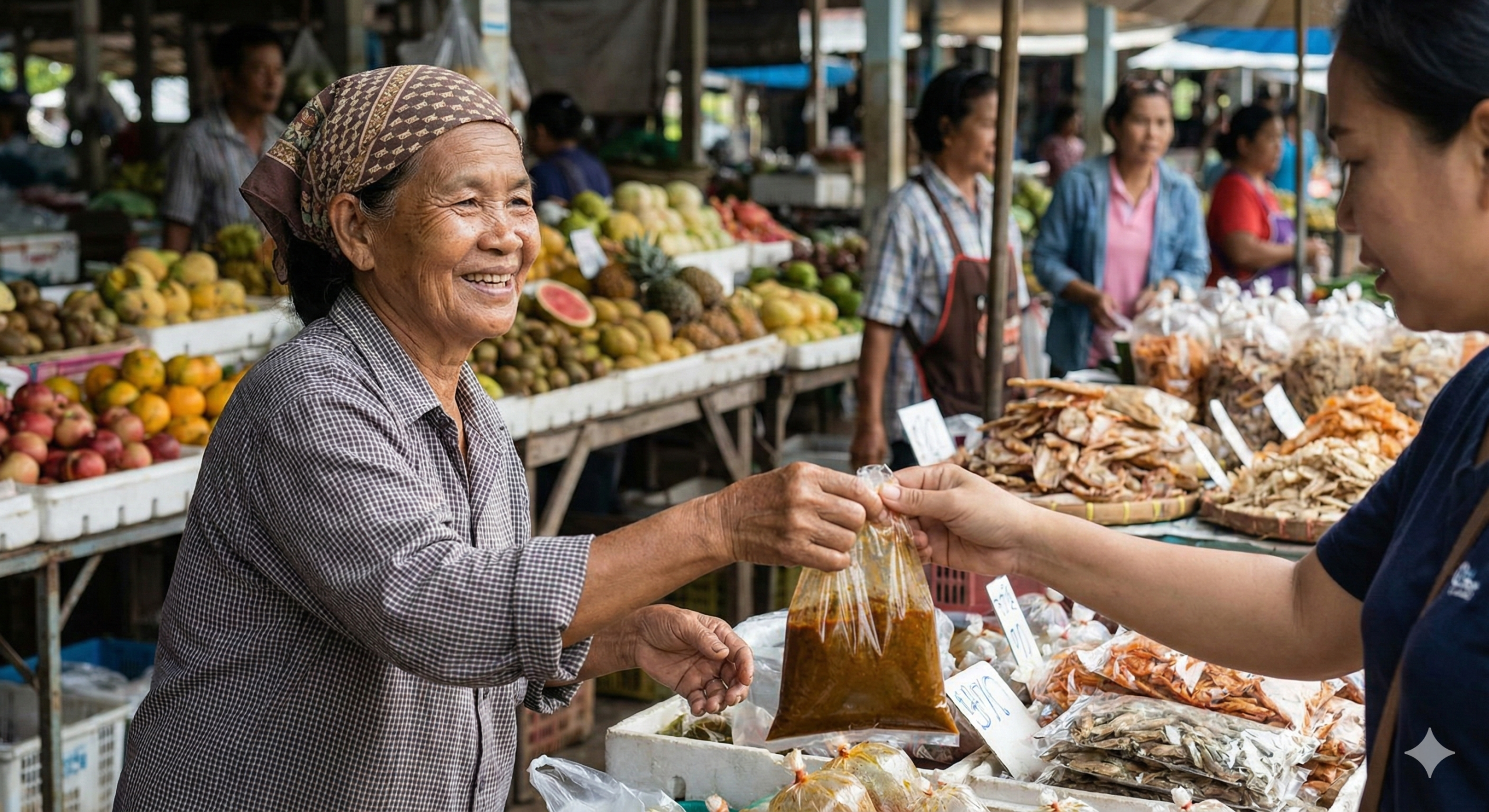
Wet Markets (Local):Surat Thani grocery prices 2026 at local markets remain stable for staples like rice, eggs, and local pork. A typical local meal of Khao Gaeng (curry over rice) that cost 50 THB in previous years now averages 60 THB. This 20% increase over several years is a grounded reality that residents must accept.
Imported Goods (Supermarkets): If your diet relies on imported cheese, wine, or Western-branded cereals, you will feel a higher rate of inflation. Shipping costs and currency fluctuations often result in higher prices for imported items at Central Surat Thani. For 2026, certain dairy imports from Europe and Oceania have seen a 10% price hike due to adjusted trade logistics.
Energy and Utility Costs Thailand Inflation
Electricity remains the most significant variable in any resident’s budget. As of early 2026, the base electricity tariff has been adjusted to approximately 3.88 THB per unit due to government measures, though green utility premiums are being floated for certain industrial sectors.
While the rate per unit is controlled, the consumption required to stay comfortable in the Southern Thai heat is not. As temperatures rise, residents find themselves running air conditioning for longer periods, which creates an effective inflation where the bill rises even if the unit price stays stable. For a 3-bedroom house with regular AC use, a monthly bill of 3,500 to 5,000 THB is now the standard baseline.
The Thai Baht Exchange Rate Impact
For expats living on foreign pensions or remote salaries, the most real form of inflation is the exchange rate. In early 2026, the Thai Baht has shown notable strength, trading at approximately 31.1 to 32.2 Baht per US Dollar.
While a strong Baht indicates a healthy Thai economy, it effectively acts as a price hike for those bringing in foreign currency. If the Baht appreciates by 5%, your inflation and price changes in Surat Thani are effectively 5% higher, regardless of what the local price tags say. This exchange rate volatility is often the single largest “hidden” inflationary factor for the expat community.
Strategy for Currency Volatility
We recommend that long-term residents maintain a buffer of at least six months of living expenses in a Thai bank account. This allows you to avoid exchanging money during periods where the Baht is exceptionally strong, effectively shielding your budget from temporary currency-driven inflation. Monitoring the Thai Baht exchange rate impact monthly helps in timing large transfers during Baht weakness.
Education and Health: The “Hidden” Stability
While food and energy prices fluctuate, the core pillars of long-term life in Surat Thani have shown remarkable stability in 2026.
1. Private School Fees Surat Thani
Education remains one of the best value-for-money sectors on the mainland. For 2026, major institutions like Daniel International School have maintained tuition structures with only minor inflationary adjustments.
International Track: Yearly fees for primary levels range from 250,000 to 330,000 THB.
English Program (EP) Track: Local private schools offer English programs for 60,000 to 120,000 THB annually. Because these schools cater to a mix of local and expat families, they cannot raise prices aggressively without risking enrollment numbers, providing a natural cap on education inflation.
2. Private Healthcare Costs
Medical inflation in Thailand typically runs higher than general inflation, often at 5% to 7%. In Surat Thani, a standard consultation at a private facility like Thaksin Hospital averages 1,500 to 3,000 THB including basic medication. While hospital room rates for 2026 have seen a 4% increase, they remain a fraction of the cost found in Bangkok or Phuket, reinforcing the province’s status as a sustainable long-term base.
Practical Advice for Expat Budgeting Surat Thani
To navigate the current cost of living Southern Thailand, we advise a slightly conservative approach to financial planning. While the mainland offers a buffer against the hyper-inflation seen in tourist zones, a resident must still account for national policy shifts and local environmental factors.
1. The 10% Inflation Buffer and Emergency Fund
When calculating your monthly requirements, add a 10% flex margin to your baseline. This is not because we expect prices to jump 10% in a single year, but to account for the cumulative effect of small increases in fuel, electricity, and imported goods.
For 2026, we also recommend maintaining a monsoon emergency fund equivalent to one month of expenses. Recent climate patterns in Southern Thailand have shown an increase in localized flooding. Having liquid cash available for temporary relocation or emergency home repairs ensures that a seasonal weather event does not derail your long-term expat budgeting Surat Thani plan.
2. Prioritize Local Logistics and Online Shopping Shifts
One of the most effective ways to combat inflation is to reduce your reliance on imported logistics. As of January 1, 2026, the Thai government has ended the import duty exemption for low-value goods under 1,500 THB.
The “Lazada Tax” Factor: Previously cheap items ordered from abroad via platforms like Shopee or TikTok Shop now face a mandatory 7% VAT plus an average duty of 10% to 30%, regardless of the item’s value. Starting January 1, 2026, the long-standing “1,500 THB exemption” has been completely abolished. Most major platforms now integrate these taxes directly at checkout to avoid delivery delays, but this results in a 20% to 40% increase in the final cost for low-value international goods. To manage your unexpected costs living in Thailand, prioritize buying from local Thai sellers who already hold stock within the country.
Eat Seasonally: Buying mangos in April versus October can result in a 300% price difference. Aligning your diet with the local harvest cycle is the simplest way to keep Surat Thani grocery prices 2026 at a minimum.
Service Local: Hire local contractors for home maintenance rather than using high-end agencies from Bangkok. Local labor rates in Surat Thani have remained far more stable than in the capital, often costing 40% less for the same quality of work.
3. Housing and Rent Stability
Unlike Phuket, where rents have surged by 15% to 18% in 2026 due to high demand and tight inventory, the housing market in Surat Thani remains driven by local demand. Annual rent increases are remarkably rare here. Most landlords prefer the security of a long-term, reliable tenant over pushing for a minor percentage increase that might result in a vacancy.
4. Strategic Utility Management
As of early 2026, the Thai government has reduced the electricity tariff to 3.88 THB per unit to ease the energy burden on households. However, this subsidy is often subject to review every four months.
The “Peak Heat” Hedge: Budget for your electricity bill to double between March and May. Even with lower tariffs, the increased load on air conditioning units during the peak heat season is a major utility costs Thailand inflation factor.
Appliance Efficiency: If you are renting long-term, it is often more cost-effective to negotiate the installation of a modern “Inverter” AC unit. The initial cost is offset within 12 to 18 months through a 30% reduction in monthly power consumption.
Comparing Surat Thani to the “Tourist Island” Economy
To understand the stability of Surat Thani, one must look at the volatility of Phuket and Koh Samui. In 2026, those regions are seeing a “dual-pricing” phenomenon where housing and services are priced for short-term vacationers.
Expense Category
Surat Thani (Mainland 2026)
Phuket / Samui (Island 2026)
3-Bed House Rent
18,000 – 25,000 THB
45,000 – 85,000+ THB
Local Street Meal
50 – 70 THB
120 – 250+ THB
Electricity Tariff
3.88 THB / unit
3.88 THB (Direct)
Diesel B7 (Retail)
~29.94 THB / liter
~32.50 – 34.00 THB / liter
Imported Parcel Tax
7% VAT + ~10-30% Duty
7% VAT + ~10-30% Duty
This table illustrates why the mainland is the rational choice for families. While inflation and price changes in Surat Thani exist, they are incremental and predictable. Island inflation is often sudden, aggressive, and detached from the local reality.
Long-Term Sustainability and the 5-Year Horizon
When planning a 5-year stay, you must account for the cumulative effect of a 2% annual inflation rate. A budget of 100,000 THB today will require approximately 110,400 THB in five years just to maintain the same purchasing power.
Managing Vehicle Costs
One often overlooked area of inflation is vehicle maintenance. In 2026, the cost of specialized imported parts for European cars has risen significantly.
The “Mainland Choice”: Long-term residents are increasingly opting for Japanese brands like Toyota or Honda.
Service Costs: A standard service for a Honda City in Surat Thani remains between 2,500 and 4,500 THB. The local availability of parts and labor ensures that your transportation budget remains protected from global supply chain shocks.
Insurance Premiums in 2026
For the 2026 cycle, Thai health insurance premiums are projected to rise by 8% to 10%, fueled by a national medical inflation rate that some analysts place as high as 14.3%. To counter these rising costs, many insurers in 2026 are mandating a 30% to 50% co-payment on outpatient services. This makes a “Medical Reserve Fund” a non-negotiable part of your expat budgeting in Surat Thani.
Budgeting Tip: Always negotiate your premium during the renewal period and consider a higher deductible. This can reduce your annual cost by 20%, effectively neutralizing the year’s inflation.
A Rational Outlook for the Region
Surat Thani remains one of the most economically sound places to live in Thailand precisely because its prices are grounded in local reality rather than international speculation. While you will see small, incremental inflation and price changes in Surat Thani, the province does not suffer from the tourist bubbles that cause financial instability elsewhere.
By staying informed about the Thai Baht exchange rate impact and adapting your consumption habits to the local mainland rhythm, you can maintain a high quality of life that remains resilient to the global economic shifts of 2026. This grounded approach is what transforms a temporary stay into a sustainable, multi-year residence.