We occasionally share updates when important information changes or new long-form guides are published. Just practical updates related to long-term living in Surat Thani and Southern Thailand.
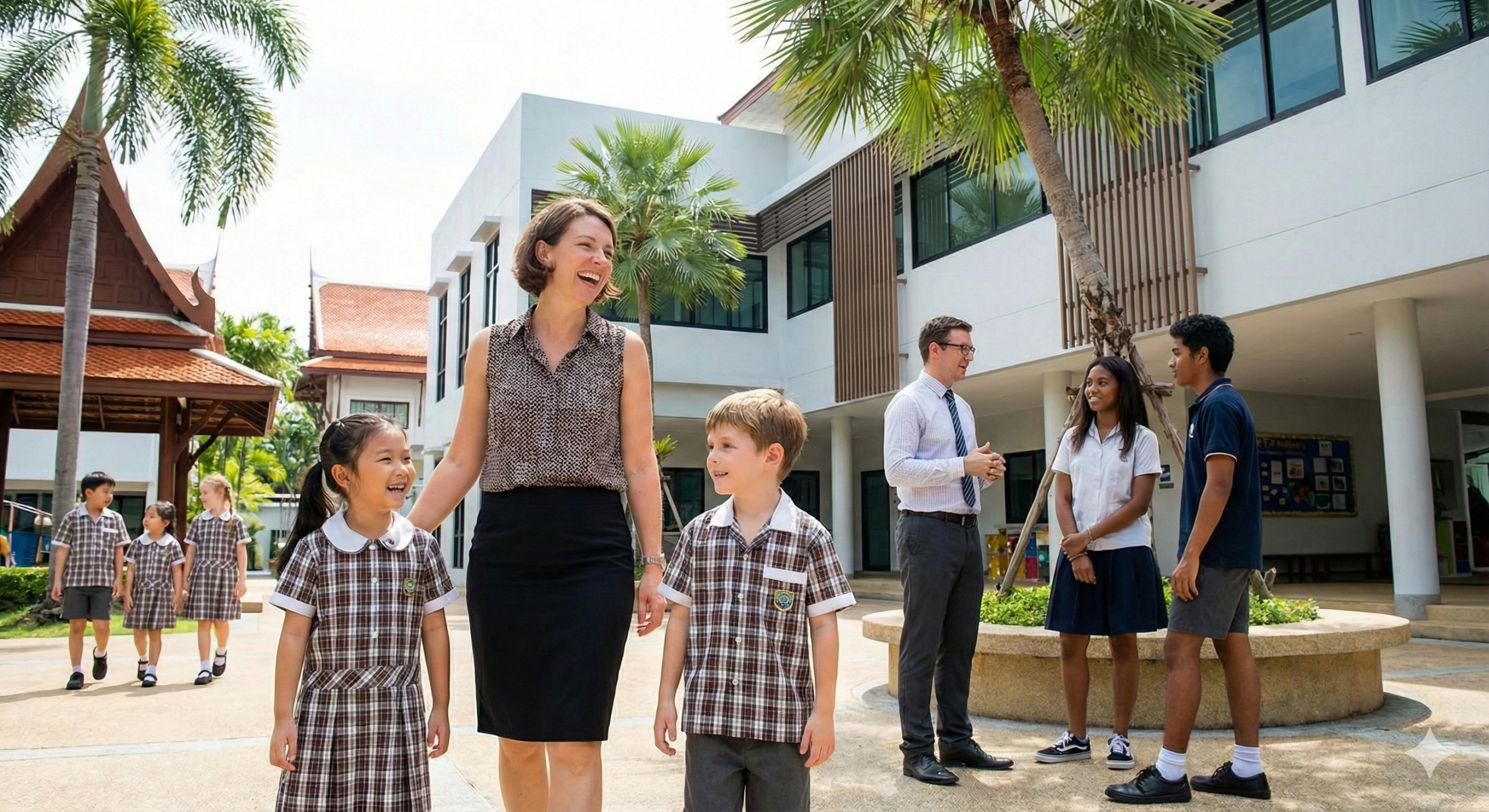
Choosing the right path for education in Surat Thani is a defining decision for any expatriate family. The province provides a unique alternative to the high-cost hubs of Bangkok and Phuket, offering a blend of authentic cultural immersion and modern academic standards.
For parents exploring Thailand schools for foreign kids, the landscape is built on a foundation of inclusivity and the “Education for All” principle. This policy ensures that every child can access schooling regardless of their nationality or legal status. Understanding how to navigate this system is the first step toward building a stable and successful life for your family in Southern Thailand.
The educational environment here is characterized by a tiered system that caters to various budgets and academic goals. Whether you are looking for the rigorous standards of international schools or the deep integration offered by bilingual schools, Surat Thani provides several high-quality options.
This guide explores the legal requirements, the pedagogical shifts toward critical thinking, and the practical realities of student enrollment to help you make a choice that remains relevant throughout your child’s entire academic journey. By moving away from short-term planning and focusing on long-term outcomes, families can ensure their children thrive in a multicultural setting.
The Legal Framework: Education for All and G-Code Registration
The cornerstone of the Thai educational system is the legal mandate that education is a fundamental human right. Under the guidance of the Ministry of Education, Thailand has removed administrative barriers that previously hindered the enrollment of non-Thai children.
Current regulations stipulate that all schools must accept students regardless of their documentation or civil registration status. This policy is designed to foster positive attitudes toward the host country and contribute to long-term social stability. It ensures that no child is left behind because of bureaucratic hurdles.
For children who do not possess a Thai national identification number, the G-Code registration system is used. This process assigns a unique 13-digit identifier starting with the letter G to the student. This code is essential because it allows the Ministry of Education to track academic progress and allocate per-head subsidies that fund essential learning resources.
Parents should work closely with school administrators to ensure that the G-Code is maintained throughout the child’s education. It is the key to receiving official graduation certificates and maintaining legal status within the national education database.
By integrating foreign children into the formal system, the government aims to create an equitable environment where every learner can thrive. While the G-Code specifically grants the right to education rather than broader civil rights, it remains the most critical administrative tool for expat families choosing local or private schools.
Navigating the Four Tiers of Education in Surat Thani
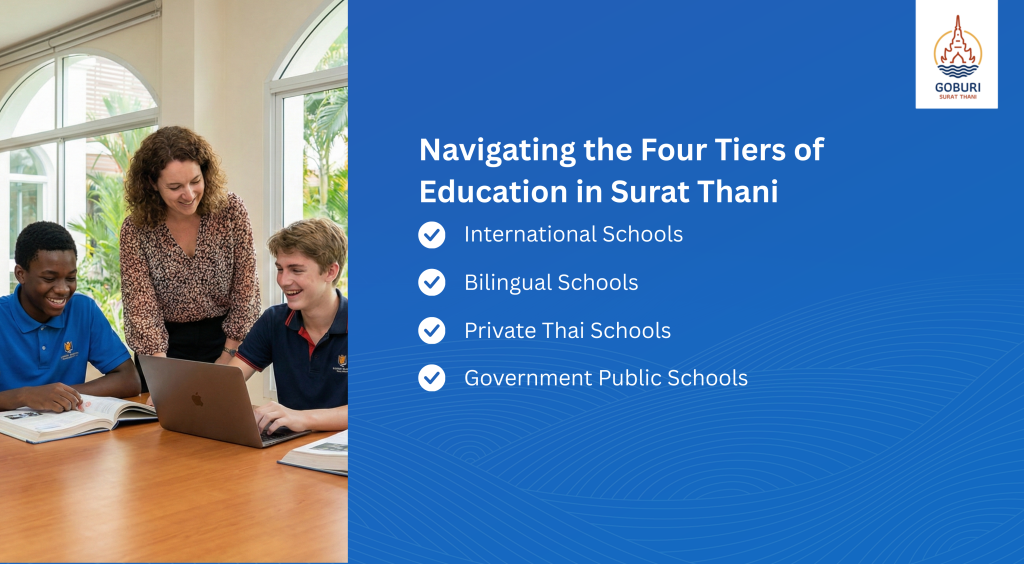
When researching your options, it is helpful to categorize institutions into four distinct tiers. Each tier offers a different level of support for non-Thai speakers and carries different financial implications. Choosing the right tier depends on your family’s intended duration of stay and your child’s future university goals.
Tier 1: International Schools
The highest level of academic continuity is found in international schools. These institutions utilize globally recognized frameworks like the International Baccalaureate (IB) or the American Common Core.
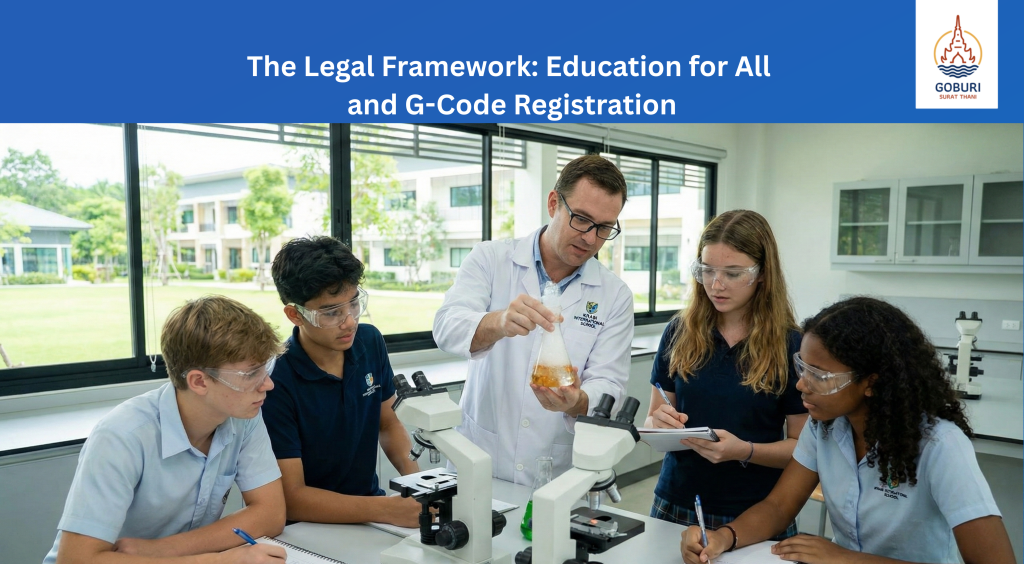
These schools feature a high percentage of native English-speaking faculty and state-of-the-art facilities. You will often find ICT labs, creative arts spaces, and science centers designed to facilitate inquiry-based learning.
Tier 2: Bilingual Schools
For many families, the most sustainable middle ground is the private bilingual schools. In these tracks, core subjects such as Math and Science are taught in English by foreign teachers, while social subjects are taught in Thai.
This model allows children to achieve fluency in both languages while remaining grounded in the Thai national curriculum. It is a cost-effective way to ensure academic rigor while fostering local integration.
Tier 3: Private Thai Schools
These institutions focus almost exclusively on the Thai national curriculum but offer superior facilities and smaller class sizes than public government schools. They are ideal for families committed to long-term residency who want their children to have a strong foundation in Thai literacy and moral values.
These schools often place a heavy emphasis on discipline and traditional manners, which can provide a stable environment for certain personality types.
Tier 4: Government Public Schools
Government institutions like Suratthani School represent the pinnacle of the public system. Established in 1907, Suratthani School is recognized as one of the best secondary institutions in the region.
While these schools offer the deepest level of cultural immersion, they require a high degree of Thai language proficiency. They are a practical option for families on a strict budget who have at least one Thai-speaking parent to facilitate communication with the school. These schools are the heart of the local community and offer insights into Thai life that international institutions rarely replicate.
Understanding Surat Thani School Costs
Budgeting for education in Surat Thani requires a comprehensive look at both recurring and one-time expenses. While the overall Surat Thani school costs are significantly lower than those in larger metropolitan areas, parents must plan for the initial investment required during the first year of enrollment.
Tuition and Recurring Fees
For international schools, annual tuition generally ranges from 250,000 THB to over 415,000 THB depending on the grade level.
Bilingual schools offering an English Program are more accessible, with annual fees typically falling between 80,000 and 180,000 THB.
These fees usually include lunches and basic learning materials, but parents should confirm whether items like after-school clubs or specialized textbooks are included. Some schools offer sibling discounts, which can reduce the burden for larger families.
One-Time Entry Costs
Most private and international institutions require a non-refundable admission or enrollment fee upon acceptance. This can range from 25,000 THB for primary years to 50,000 THB at premium schools.
Additionally, a refundable security deposit of approximately 20,000 to 30,000 THB is often mandatory. This deposit is typically returned when the student withdraws, provided all financial obligations have been met and proper notice is given. These one-time costs are significant factors in the first year budget.
Uniforms and Ancillary Expenses
Uniforms are a mandatory aspect of school life across all tiers in Thailand. A standard set for a primary student, including formal wear, polo shirts, and P.E. kits usually cost between 1,500 and 3,000 THB.
Other expenses to consider include school bus services, which can cost between 15,000 and 35,000 THB per term, and external examination fees for programs like the IGCSE or SAT. To learn more about how to balance these expenses, explore our guide on.
Pedagogy and Curriculum: Rote Learning vs. Critical Thinking
A significant differentiator between Thailand schools for foreign kids and international institutions is the teaching methodology. The Thai national curriculum has traditionally focused on discipline, repetition, and respect for authority.
This structure is designed to build strong group routines and a deep understanding of societal roles. While some find this approach restrictive, it provides a high level of predictability that can be beneficial for younger children who thrive on consistency.
In contrast, international schools increasingly utilize inquiry-based models such as the IB Primary Years Programme or the American Common Core framework. These models view students as active participants who construct their own meaning through exploration and play.
For instance, STIS focuses on transdisciplinary themes that connect classroom learning to real-world issues, encouraging students to think both critically and creatively. These schools aim to develop well-rounded global citizens who are prepared for the complexities of the modern world.
The Ministry of Education has recently introduced policies like “Happy Learning” to modernize the local system. This initiative aims to reduce the testing burden and emphasize life skills and emotional well-being.
For foreign kids, this shift means more opportunities for project-based learning even within the Thai system, making the transition between Western and Eastern pedagogical styles smoother. Parents must weigh whether they want an education that prepares their child to follow a path or one that teaches them to help shape it.
Cultural Immersion and School Traditions
One of the most rewarding aspects of enrolling in a Thai school is the exposure to rich cultural traditions. The Wai Kru ceremony, or Teacher Appreciation Day, is a central event where students show respect to their instructors through traditional gestures and floral offerings.
This ceremony teaches values such as humility and gratitude, which are deeply rooted in Thai identity. It is a moment for students and teachers to strengthen their bond and reaffirm their commitment to the learning journey.
Uniforms also play a significant role in fostering a sense of community. In addition to daily attire, students often wear scout uniforms on designated days and traditional Thai clothing on Fridays or special occasions.
These practices emphasize neatness and politeness, which are highly valued in the local culture. While the rules regarding hair and accessories can be strict, they are intended to promote equality and minimize social distractions in the classroom.
For foreign families, participating in these traditions is a bridge to becoming part of the local community. Schools often host events for Loy Krathong and Songkran, bringing together staff, students, and parents for shared celebrations.
These experiences provide a level of cultural depth that is rarely replicated in purely international environments. By embracing these traditions, foreign children can develop a genuine sense of belonging in their host country.
Navigating the ED Visa and Enrollment Process
For families staying in Thailand long-term, the Non-Immigrant ED visa is the standard requirement for student enrollment. The application process should be initiated well in advance to avoid administrative delays. It is important to coordinate closely with the school to ensure all paperwork is handled correctly.
Necessary Documentation
To apply for an ED visa, you will need to coordinate with your chosen school to secure an official letter of acceptance. Other typical requirements include:
A passport with at least six months of validity.
A bank statement showing sufficient funds, often no less than 4,000 USD.
Certified English translations of the child’s birth certificate and previous academic records.
A health certificate and immunization records.
Timeline and Renewals
The processing time for an ED visa generally ranges from 30 to 60 days. Once granted, the visa is typically valid for 90 days and can be extended for up to one year at the local immigration office.
It is important to note that students on an ED visa are generally not permitted to work, and they must maintain a minimum number of course hours to remain compliant with immigration rules. 90-day reporting is also a mandatory requirement for all visa holders residing in the kingdom.
Social Dynamics and Long-Term Integration
The success of a child in the Thai system often depends on their ability to adapt to new social norms and language requirements. Younger children usually absorb the Thai language with remarkable ease, which gives them a significant advantage in both academic and social settings.
However, older students may face a steeper learning curve and might require additional English as an Additional Language (EAL) support. Research shows that language proficiency is the primary enabler for social bonding and a sense of belonging.
Integration is most successful when parents take an active role in the school community. Joining parent-teacher associations or attending school fairs helps build a support network that can be invaluable during the first year of relocation.
Research suggests that schools with a diverse student body foster a more inclusive environment where foreign kids feel less like outsiders and more like global citizens. This diversity helps mitigate the stigma often associated with being the only foreigner in a local classroom.
While there may be occasional cultural clashes regarding communication styles or curriculum focus, these can usually be resolved through patient and respectful dialogue.
Understanding the Thai way of maintaining harmony through subtle cues and smiles will help you navigate any misunderstandings that may arise. Conflicts are rarely resolved through direct confrontation in Thailand, so adopting a gentle and listening-centered approach is highly recommended for expat parents.
Making an Informed Choice for Your Family
The decision to enroll your child in one of the many Thailand schools for foreign kids in Surat Thani is a multifaceted one. It requires a balance between your long-term residency plans, your academic expectations, and your financial resources.
For those seeking maximum integration, the bilingual schools tier provides an excellent hybrid experience, while international schools offer the most seamless path for families who may relocate again in the future.
By understanding the G-Code registration process, the specifics of the ED visa, and the nuances of the Thai national curriculum, you can ensure that your child receives an education that is both academically rigorous and culturally enriching.
Surat Thani remains a premier destination for families who value community and stability over commercialization. Taking a proactive and researched approach to your child’s education will help you build a flourishing life in the heart of Southern Thailand.