We occasionally share updates when important information changes or new long-form guides are published. Just practical updates related to long-term living in Surat Thani and Southern Thailand.
The provision of emergency care in Surat Thani is a multifaceted operation that must account for one of the most diverse geographic landscapes in Thailand.
As a major southern province, it encompasses a vast mainland area and a world famous island cluster in the Gulf of Thailand, including Koh Samui, Koh Phangan, and Koh Tao. This geographic split creates a dual reality system where the mainland serves as a high capacity medical hub while the islands rely on complex medical evacuation chains to manage critical incidents.
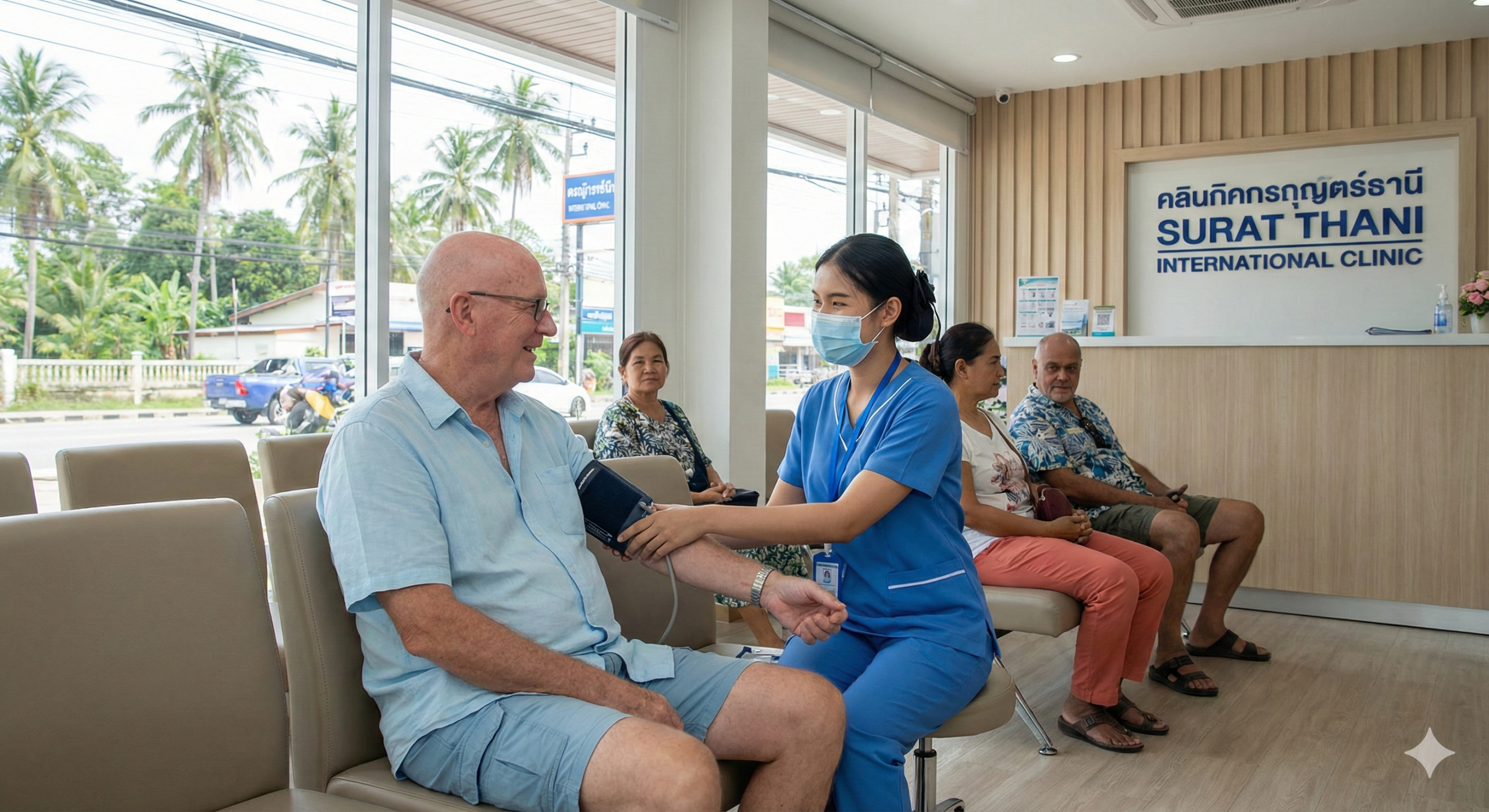
In the mainland urban center of Mueang Surat Thani, the healthcare reality is anchored by a mix of massive public hospitals and specialized private hospitals. The primary state facility, Surat Thani Hospital, functions as a regional referral center under the Ministry of Public Health. This facility is a tertiary level institution that handles the most complex trauma and medical cases referred from smaller community hospitals across the province.
However, the efficiency of this system is frequently tested by high bed occupancy rates, which often hover around 90%, and the logistical challenges of serving a population that swells significantly during peak tourist seasons.
The National Emergency Hotline: 1669 and Dispatch Logic
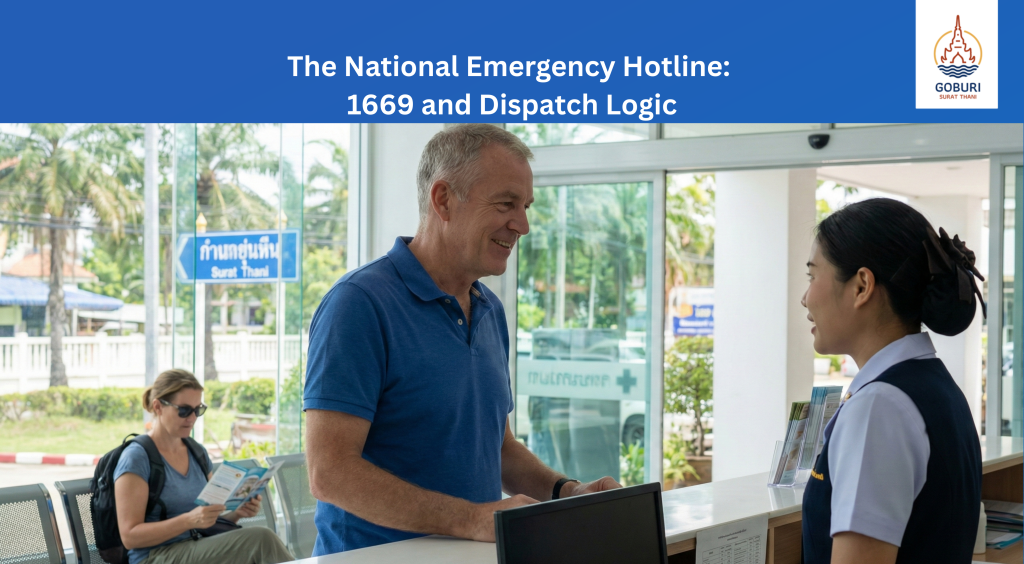
The first line of response for any life threatening situation in Surat Thani is the national 1669 emergency medical services (EMS) hotline. This service is accessible 24 hours a day and is free for everyone within Thailand, including foreign nationals.
The operation of the 1669 system is overseen by the National Institute for Emergency Medicine (NIEM), which implements a standardized protocol known as Criteria Based Dispatch (CBD).
When an emergency call is placed, the dispatcher must follow a rigid set of questions to identify the Incident Dispatch Code (IDC). This process is designed to ensure that the correct level of care is dispatched to the scene.
Depending on the symptoms described, the dispatcher will mobilize one of three types of responders. These include First Responders (FR), who are typically volunteers with 24 hours of specialized training, Basic Life Support (BLS) units, and Advanced Life Support (ALS) units, which are staffed by nurses or doctors and equipped with sophisticated life saving technology.
Responder Level
Training and Capabilities
Typical Response Target
First Responder (FR)
Basic first aid and trauma stabilization
Within 15 minutes for Yellow cases
Basic Life Support (BLS)
Emergency transport and basic medical care
Within 8 minutes for Red/Yellow cases
Advanced Life Support (ALS)
Critical care, medications, and advanced monitoring
Within 8 minutes for Red cases
The technical reality of this dispatch system is increasingly digital. Many Thai medical professionals and dispatchers now use mobile applications based on international standards like the Canadian Triage system or the Emergency Severity Index (ESI).
These tools help reduce human error in the classification of patients, though language barriers remain a significant hurdle for non Thai speakers calling the 1669 line. In such cases, it is often more effective to have a Thai speaker place the call or to contact the Tourist Police at 1155 for assistance.
Triage Protocols and the Golden Hour Reality
The core of emergency care in any setting is the triage process, which in Surat Thani follows a standardized color coded system. This system is applied both at the scene of an accident and upon arrival at an emergency department to ensure that the most critical patients receive immediate attention.
Triage Color
Classification
Medical Status
Red
Critical
Immediate life threatening condition (e.g., cardiac arrest, major trauma)
Yellow
Urgent
Serious condition but stable for short periods (e.g., fractures, high fever)
Green
Non Urgent
Minor injuries or illnesses (e.g., small wounds, mild infections)
White
General
Routine medical issues requiring consultation but no urgent care
Black
Deceased
No vital signs or injuries incompatible with life
The “Golden Hour” refers to the critical period following a traumatic injury or medical event, such as a stroke, during which prompt medical treatment is most likely to prevent death or long term disability.
In the urban areas of Surat Thani, the system is designed to reach “Red” patients with an ALS unit within 8 minutes. However, the 1669 response times in rural districts often deviate from this ideal.
This gap is particularly evident in the mountainous regions and peripheral sub districts where road access is limited and distances to the nearest public hospital are significant.
For residents in these areas, the emergency care reality involves a reliance on local community hospitals and volunteer teams who provide stabilization until more advanced help can arrive.
Technical Analysis of the 1669 Dispatch System
The efficiency of emergency care in Surat Thani relies heavily on the Criteria Based Dispatch (CBD) logic. This protocol involves a set of 25 main symptom categories.
When a caller contacts 1669, the dispatcher uses these categories to generate an Incident Dispatch Code (IDC), which takes approximately 2 to 3 minutes by phone. This code determines whether a Basic Life Support (BLS) or Advanced Life Support (ALS) unit is required.
Recent developments in the province have seen the introduction of triage mobile applications. These apps allow medical professionals and even untrained volunteers to self identify symptoms and correct IDC code representation more effectively than traditional methods.
This technology is particularly beneficial in a province like Surat Thani, where the ratio of specialist doctors to the general population is lower than the national standard in certain districts.
A notable real world example of this system in action occurred during a major tour bus accident on National Highway No. 41 in early 2025. The 1669 hotline received the report at 7:29 PM, only four minutes after the crash. A rescue foundation vehicle arrived on the scene by 7:33 PM, followed by an Advanced Life Support (ALS) unit. Out of the 32 injured survivors, the triage team classified 22 as delayed, 8 as urgent, and 2 as immediate.
This event underscores the vital role of the 1669 response times and the coordination between volunteer foundations and hospital units in managing high volume trauma incidents.
Mainland Infrastructure: The Regional Hub System
The mainland of Surat Thani is the medical engine of the province. It is here that the most advanced diagnostic tools, surgical suites, and specialized intensive care units are located. The interaction between the public and private sectors defines the accessibility of these resources for different populations.
Surat Thani Hospital
Surat Thani Hospital is a massive 862 bed facility that serves as the primary regional hospital for the Ministry of Public Health Health District 11. It is an academic center, training medical students from Thammasat University and Prince of Songkla University. This academic affiliation ensures that the hospital remains at the forefront of medical practice in southern Thailand, despite the challenges of overcrowding.
The public hospital system is the backbone of care for millions of Thai citizens and many expats who are enrolled in the Social Security system. While the quality of medical treatment is often high, the patient experience in a public facility is characterized by high volume and long queues.
For non-emergency visits, it is common for patients to arrive as early as 06:00 to obtain a queue number. In an emergency, however, the triage system bypasses these queues, ensuring that critical trauma cases are handled with the necessary urgency.
The infrastructure of the regional hospital includes specialized departments for neurosurgery, cardiology, and trauma, making it the definitive destination for patients suffering from strokes or heart attacks.
Because it is a state funded institution, the costs are significantly lower than in the private sector. An outpatient visit may cost between 500 and 1,500 Baht, whereas a private hospital would charge several times that amount.
Private Hospital: Bangkok Hospital and Thaksin Hospital
For those seeking a more streamlined experience, private hospitals in the city offer an alternative that prioritizes speed and communication. Bangkok Hospital Surat, part of the extensive Bangkok Dusit Medical Services (BDMS) network, is specifically designed to cater to international standards.
One of the unique features of Bangkok Hospital Surat is its dedicated ICU department and operating rooms equipped with modern medical technologies. This facility also includes a “Comfy Zone,” which operates from 20:00 to 00:00 for patients who arrive with non urgent but concerning symptoms like high fever, diarrhea, or minor trauma.
By creating a separate stream for these patients, the hospital ensures they are seen by specialists without the long wait times often associated with late night emergency visits at larger centers.
Thaksin Hospital is another prominent private facility in the mainland center. It maintains an International Patient Service department to assist foreigners with the complexities of insurance and medical documentation.
While these hospitals are more expensive and generally require upfront payment or a guarantee from an insurer, they are the preferred choice for expats who value English speaking staff and the convenience of modern facilities. Read more information on choosing hospitals and clinics in Surat Thani.
The Island Cluster: Medical Realities in Samui, Phangan, and Tao
The islands of the Gulf of Thailand present the most significant challenge for emergency care in Surat Thani. While Koh Samui has developed a robust healthcare infrastructure of its own, including several private hospitals and a 25 bed government hospital, the smaller islands of Koh Phangan and Koh Tao are limited in their capacity to handle critical trauma or complex surgical needs.
Koh Phangan: Stabilization and Transfer
On Koh Phangan, the medical landscape is served by the Koh Phangan Government Hospital and several private clinics like Phangan International Hospital and First Western Hospital.
These facilities are equipped to handle routine emergencies and provide initial stabilization for serious cases. Phangan International Hospital, for example, features its own resuscitation unit designed to stabilize patients before they are moved to larger centers.
However, the reality for anyone on Koh Phangan is that serious injuries often necessitate a transfer to Koh Samui or Bangkok.
The decision to evacuate a patient is made by the local medical team once they determine that the required specialized care is unavailable on the island. This process involves a coordinated effort between the island clinic, the transport provider, and the receiving hospital.
Koh Tao: The Volunteer and Clinic Network
Koh Tao is even more remote, located several hours by boat from the mainland. The island is served by the Koh Tao Government Hospital, which provides 24 hour emergency services and has a 10 bed capacity for overnight admissions.
The hospital is equipped with an X-ray machine and a laboratory, allowing it to manage a range of injuries and tropical illnesses.
A critical component of the Koh Tao emergency response is Koh Tao Rescue, a non profit foundation staffed entirely by volunteers. These individuals are often the first to arrive at the scene of diving accidents or motorbike crashes. They provide primary care and manage the transport of patients to the island’s clinics or to the pier for medical evacuation.
Because it is a non profit, the foundation relies on donations and support from local businesses to maintain its ambulance and speedboat services.
Medical Evacuation: Maritime and Aerial Logistics
When a patient’s condition is critical and local island facilities are insufficient, medical evacuation becomes the only viable path to survival. This process is governed by the severity of the medical condition, the financial resources of the patient, and the prevailing weather conditions in the Gulf.
Speedboat Evacuations: The Primary Maritime Link
For most residents and visitors on the islands, the primary mode of evacuation is by speedboat. Many hospitals and rescue foundations operate specialized vessels designed for patient transport.
Vessel Component
Specification / Capability
Hull Material
Fiberglass with retractable or fixed roof for patient protection
Hull Design
Monohull with V-shaped bottom for stability
Engine Power
Often 750 HP (3x 250 HP outboard engines) for high speed transit
Operating Range
Up to 80 nautical miles, covering the entire island cluster
Medical Equipment
Automatic CPR machines, defibrillators, oxygen, and spinal boards
The journey from Koh Tao to Surat Thani can take between one and three hours, a duration that can be critical for time sensitive emergencies. During the transit, a medical team consisting of a doctor and nurses typically provides continuous care. The vessel is met at the mainland pier by a waiting ambulance to complete the journey to the regional hospital.
Air Ambulance Services: The Rapid Response
In cases of extreme urgency, such as a severe stroke or complicated cardiac event, aerial evacuation is the preferred method.
Surat Thani is one of the five pilot provinces for air emergency medical services in Thailand. This initiative aims to reduce the delays inherent in maritime transport by providing helicopter support for critically ill patients in remote areas.
Private providers like Medical Air Service operate both helicopters and fixed wing aircraft out of Surat Thani Airport.
Helicopters are used for inter island transfers or for moving patients from remote resorts to the airport, while medical jets are utilized for longer repatriations to Bangkok or international destinations. These aircraft function as mobile intensive care units (ICUs) and are staffed by flight nurses and paramedics specializing in critical care.
Service Type
Use Case
Estimated Availability
Medical Helicopter
Inter island or short range mainland transfers
Often within hours of booking
Medical Jet (Learjet)
Long distance transfer or international repatriation
Generally within 1 to 2 days
Commercial Escort
Non critical patients requiring medical supervision
Requires airline clearance (several days)
Financial and Administrative Admission Realities
The technical quality of emergency care in Surat Thani is world class, but accessing it requires navigating a strict set of administrative and financial rules. Unlike many Western countries, private healthcare in Thailand is a for profit industry that generally requires proof of funds or a guarantee of payment before treatment begins.
The Necessity of Comprehensive Insurance
For expats and travelers, health insurance is not merely a recommendation but a critical component of emergency preparedness. Without a valid policy, a single emergency can lead to significant out of pocket expenses.
Emergency Service
Estimated Cost Range (Baht)
Private Road Ambulance
1,500 to 2,500 Baht
Speedboat Evacuation
13,000 to 45,000 Baht
ICU Daily Rate (Private)
30,000 to 100,000+ Baht
Air Ambulance (Domestic)
500,000 to 1,500,000+ Baht
In many cases, private hospitals will not initiate specialized treatments or organize medical evacuation until they have verified the patient’s insurance status or received a cash deposit. This is why it is essential for expats to understand the difference between local and international policies.
Local Thai policies are often sufficient for routine care and meet visa requirements, but international plans typically offer higher coverage limits and deeper direct billing networks, which can be life saving in a high cost emergency.
Direct Billing Protocols
Many private hospitals in the province, such as those in the Bangkok Hospital group, have established direct billing arrangements with over 1,200 international insurers. However, direct billing is often restricted to inpatient admissions.
For outpatient emergency visits, patients are frequently required to pay upfront and seek reimbursement from their insurer later.
To facilitate direct billing during an emergency, patients should always carry a copy of their passport and their insurance card.
The hospital’s international department will then coordinate with the insurer to obtain a Guarantee of Payment (GOP). This process can take anywhere from a few hours to a full day, depending on the insurer’s response time and the time zone differences.
Communication Barriers and Triage Hurdles for Foreigners
A significant but often overlooked aspect of the emergency care reality is the language barrier. While the standard of English among Thai medical doctors is generally high, as many have trained in the West, the same cannot always be said for support staff, nurses, or emergency dispatchers.
Language Assistance in Public vs. Private Facilities
In a public hospital, the primary challenge for a foreigner is navigating the administrative process and communicating with the initial triage staff.
While doctors will usually be able to discuss symptoms in English, the admission staff and ward nurses may have limited proficiency. This can lead to misunderstandings regarding medication allergies or previous medical history, which are critical in an emergency.
In contrast, private hospitals invest heavily in their international departments. Facilities like Bangkok Hospital Surat provide language assistance for a variety of languages, including English, Chinese, German, and Arabic. These departments not only provide translation but also assist with the cultural nuances of healthcare, such as dietary preferences or religious requirements during a hospital stay.
The Role of Digital Health and Telemedicine
To bridge the communication gap, many foreigners now utilize telehealth platforms for non life threatening emergencies. Services like Doctorsa connect patients with licensed, English speaking doctors via video consultation.
This is a practical option for managing issues like high fevers, infections, or stomach distress that may feel like an emergency but do not require immediate ER intervention. By using telemedicine, patients can receive medical advice and even prescriptions without having to navigate a hospital queue or risk the language barriers of a local clinic.
Seasonal and Environmental Impacts on Response
The emergency care system in Surat Thani must operate within a highly volatile environmental context. The region is subject to a severe monsoon season, typically from October to January, which can fundamentally alter the landscape of medical response.
The Monsoon and Maritime Disruption
During the peak of the monsoon, the Gulf of Thailand can experience relentless rain and waves exceeding five to seven meters. In these conditions, all maritime travel, including ferry services and private speedboats, is often suspended by the authorities. This creates a high stakes scenario for those on the islands.
If a medical emergency occurs during a storm, medical evacuation by boat is impossible, leaving the patient dependent on the limited resources of the local island clinic until the weather clears or an air ambulance can be deployed.
Flooding and Mainland Accessibility
The mainland is not immune to environmental challenges. Severe flooding can submerge roads and cut off access to major hubs. In such events, the Ministry of Public Health may deploy military assets to assist with evacuations.
During extreme flooding in southern Thailand, military helicopters have been used to transport stranded residents and patients to emergency centers established at universities like Prince of Songkla University.
For the healthcare system, these seasonal events require a high degree of resilience. Hospitals must maintain emergency stockpiles of medications and fuel for generators, as supply chains can be disrupted for days at a time.
For residents, the healthcare reality during the monsoon involves a heightened awareness of the risks of isolation and the importance of having a personal emergency plan.
Surat Thani in the National Context
To understand the emergency care reality in Surat Thani, it is useful to compare it to the national standards and other medical hubs like Bangkok or Phuket. While Surat Thani offers high quality care, the province faces unique challenges related to its geography and the distribution of medical personnel.
Personnel and Bed Capacity
The Ministry of Public Health recently identified Surat Thani as one of the 12 “red zone” provinces facing a severe shortage of doctors, with a shortfall in some community hospitals exceeding 40%.
To address this, the ministry has implemented financial incentives, including doubling the pay for emergency room shifts in these high need areas.
This shortage means that while the regional hospital is well staffed, the smaller community hospitals on the mainland and islands may rely on fresh graduates completing their mandatory rural service.
For patients, this can lead to a variable experience where the quality of care depends heavily on the specific hospital and the experience of the staff on duty.
The Medical Tourism Factor
Thailand is a global leader in medical tourism, attracting over 2 million international patients annually.
While much of this is concentrated in Bangkok, the province of Surat Thani is an emerging destination. This influx of intentional medical travelers has driven the development of high end private facilities that mirror the quality of Western hospitals.
However, this development is primarily focused on elective procedures and wellness check ups rather than the emergency infrastructure, which remains the responsibility of the state and the major hospital groups.
Administrative Compliance: Visas and Legal Mandates
For the long term expat, the emergency care reality is inextricably linked to immigration law. The Thai government has made it clear that maintaining residency is contingent upon the ability to cover one’s own medical costs.
Mandatory Insurance for Long Stay Visas
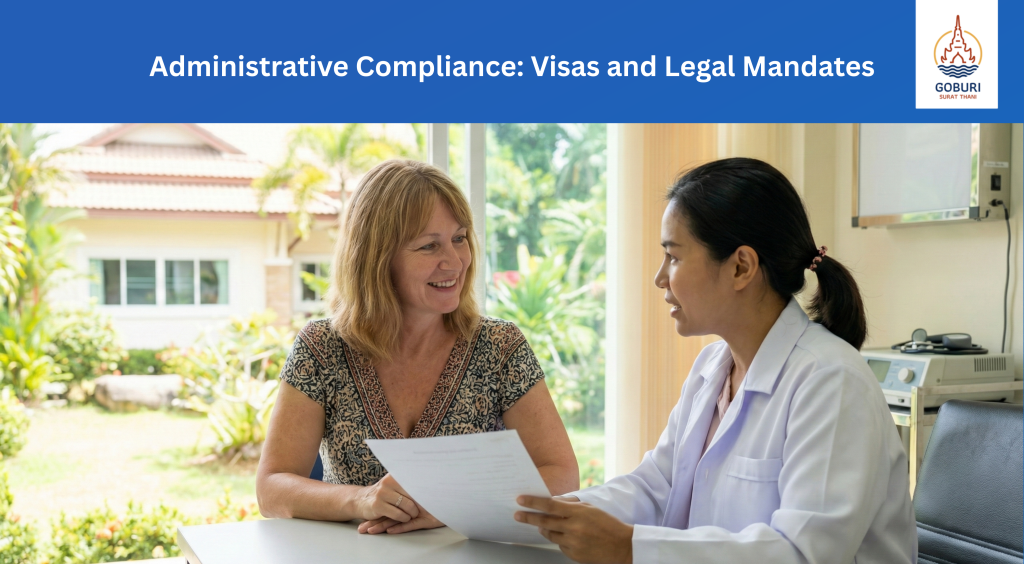
The Non Immigrant O A visa is a primary example of this mandate. Applicants must show proof of insurance covering both inpatient and outpatient care with a total sum insured of no less than 3,000,000 Baht.
Furthermore, the policy must be issued by a company that is officially recognized by the Thai General Insurance Association (TGIA).
Failure to maintain this insurance can lead to visa cancellation, which emphasizes that the healthcare system is not just a medical service but a legal requirement for residency.
For those under the Social Security system, the default access point is an assigned public hospital, and while this provides free care, many choose to supplement it with private insurance to access the faster facilities in the city.
Synthesizing the Emergency Care Reality
The emergency care system in Surat Thani is a robust but tiered infrastructure that requires a nuanced understanding from those who rely on it. The mainland serves as the definitive center for advanced care, anchored by the academic excellence of Surat Thani Hospital and the premium service of private hospitals like Bangkok Hospital Surat.
For those on the islands, the healthcare reality is one of stabilization and transit. The network of volunteer rescuers, island clinics, and specialized medical evacuation vessels ensures that even the most remote locations have a link to life saving care. However, this link is subject to the variables of weather, communication, and financial preparedness.
The reality of emergency care in Surat Thani is that expertise is readily available, but the speed and ease of access are determined by personal preparation.