We occasionally share updates when important information changes or new long-form guides are published. Just practical updates related to long-term living in Surat Thani and Southern Thailand.
The landscape of when you need to leave the province for healthcare is defined by a sophisticated yet tiered infrastructure that balances local accessibility with the necessity for external expertise in complex cases. As Thailand moves toward a projected health spending threshold of one trillion Thai Baht by the year 2026, the province reflects national trends in medical evolution and demographic shifts.
The region serves as a vital corridor for the upper southern provinces, managing a patient population that includes Thai citizens, long term residents, and a substantial volume of international tourists. While the local system is robust, certain clinical thresholds exist where the transition to tertiary care in major urban centers becomes a logistical and medical requirement.
The decision to leave the province is frequently a calculated choice based on the availability of beds, the specialization of surgeons, and the presence of advanced diagnostic technology.
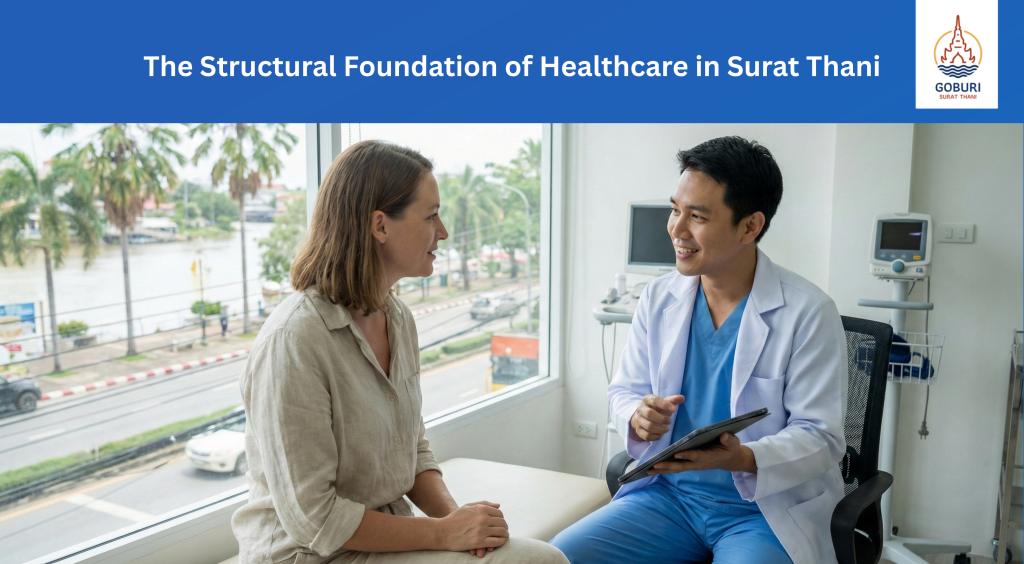
The Structural Foundation of Healthcare in Surat Thani
The provision of healthcare in Surat Thani follows the national model of a dual track system comprising public and private sectors. The public sector is managed primarily by the Ministry of Public Health and is structured to provide universal coverage for Thai citizens. This system includes a network of primary care units, community hospitals in every district, and a large regional hospital in the provincial capital.
Surat Thani Hospital serves as the apex of this public network, acting as a Category A regional facility with a capacity of approximately 885 beds. It is also a significant site for medical education, training new doctors through the Collaborative Project to Increase Production of Rural Doctors in affiliation with Thammasat University and Prince of Songkla University.
In the primary care segment, the province has invested in the development of sub district health promoting hospitals, often referred to as Star Hospitals. Evaluation research suggests that these facilities have improved infrastructure and community access, leading to a reduction in the use of outpatient services at larger hospitals.
However, these primary units still face challenges such as insufficient multidisciplinary teams and limited budgets, which can restrict their ability to manage complex chronic conditions locally. When these local units reach their clinical limits, the referral chain is activated to move the patient toward secondary or tertiary care centers.
The private sector in the province offers an alternative for those seeking shorter wait times and more personalized services. Facilities such as Bangkok Hospital Surat and Bangkok Hospital Samui provide high quality care with a focus on international standards. These hospitals are often part of larger networks, such as Bangkok Dusit Medical Services, which allows them to leverage the resources of a global healthcare leader.
Private facilities are particularly favored by the expat healthcare community due to the prevalence of English speaking staff and streamlined administrative processes.
Facility Type
Core Function
Key Institution
Access Point
Primary Care
Basic health promotion, prevention
Sub district Health Centers
Walk in, local community
Secondary Care
General medicine, minor surgery
Community/General Hospitals
Referral or emergency
Tertiary Care
Specialist surgery, advanced diagnostics
Surat Thani Hospital
Referral from primary/secondary
Private Care
High convenience, specialized clinics
Bangkok Hospital Surat
Direct admission or referral
When You Need to Leave the Province for Medical Referrals and External Care
The transition from provincial care to external centers of excellence is typically triggered when a patient’s medical needs exceed the available resources in Surat Thani. In the medical field, the term tertiary care refers to specialized consultative care that is usually provided on referral from primary or secondary medical professionals.
In some instances, even super tertiary care is required for highly complex or rare diseases. The gap between regional capabilities and the resources of major urban centers is often a matter of sub specialization.
For example, while a regional hospital may have a general cardiologist, a top tier private hospital in Bangkok might house surgeons who specialize exclusively in a specific type of robotic heart valve replacement.
Clinical triggers for leaving the province often revolve around the need for advanced diagnostic imaging that may not be present in the local public or private hospitals. Positron Emission Tomography or PET scans are critical for early cancer detection and staging, as they identify cellular changes earlier than CT or MRI scans.
While some centers in the region have nuclear imaging capabilities, the most advanced hybrid PET/MRI technology is generally concentrated in Bangkok centers like Karin multi Super Specialty hospital. Furthermore, complex oncology protocols involving targeted therapies or clinical trials are more likely to be headquartered in the capital.
The logistical framework for medical referrals is managed through dedicated referral centers within hospitals. These departments, such as the one at Bangkok Hospital Samui, are responsible for helping patients coordinate holistic care support, scheduling appointments, and providing cost estimates for treatment in other provinces.
For international patients, these centers also handle the coordination with insurance providers and embassies, ensuring that the financial and legal aspects of the transfer are managed alongside the clinical ones.
Implications of the referral system:
Experience and Outcomes: Specialist doctors at high volume government hospitals in Bangkok may perform a higher number of specific procedures per month compared to their regional counterparts, which often leads to superior results for the patient.
Resource Concentration: High income prospects in Bangkok drive private investment toward the most expensive medical technologies, such as robotic surgery systems and AI driven diagnostic tools.
Wait Time Management: While public hospitals in Bangkok offer world class expertise, the wait times for non urgent cases can be extensive, prompting many to utilize private facilities for quicker access to specialists.
Bangkok Hospitals: The Apex of Specialized Treatment
Bangkok remains the undisputed hub for medical excellence in Thailand, housing the majority of the country’s JCI accredited facilities. For those residing in Surat Thani, the move to Bangkok is usually seen as the definitive step for accessing the highest level of specialized treatment.
The city’s hospitals are characterized by their integration of cutting edge technology and internationally trained medical professionals, many of whom have received board certifications in the United States, the United Kingdom, or Australia.
Bumrungrad International Hospital is a primary destination for those requiring complex care. As one of the largest private hospitals in Southeast Asia, it treats over 1.1 million patients annually and is recognized for its excellence in cardiology, oncology, and neurosurgery.
The hospital provides a one stop solution for patient needs, ranging from routine screenings at one of the region’s largest check up centers to highly complex surgical interventions. For patients from Surat Thani, Bumrungrad offers an International Patient Services Center that assists with interpreters, airport transfers, and international insurance coordination.
Another significant player is the Bangkok Hospital Headquarters, the flagship of the Bangkok Dusit Medical Services network. It is renowned for its specialized expertise in neurology, orthopedics, and spine care.
The hospital has implemented AI driven innovations, such as Inspectra CXR for chest X-ray analysis and AI mammography for early breast cancer detection, which enhance diagnostic accuracy and speed. Such technology is a key factor in why patients are referred to the capital when local diagnostics are inconclusive.
Samitivej Sukhumvit Hospital is a perennial favorite for the expat healthcare community, particularly for maternal and pediatric care. It was the first hospital in Thailand to be recognized as a Mother and Baby Friendly Hospital by the WHO and UNICEF.
For families in Surat Thani facing complicated pediatric conditions, Samitivej provides a level of specialized neonatal and pediatric intensive care that is difficult to replicate in provincial settings.
Hospital Name
Primary Specialization
Notable Technology
Accreditation
Bumrungrad International
Oncology, Cardiology
Precision Medicine, Robotic Surgery
JCI, GHA
Bangkok Hospital HQ
Neurology, Spine Care
AI Driven Imaging, Smart ICU
JCI, ISO
Samitivej Sukhumvit
Pediatrics, Maternity
Neonatal Intensive Care (NICU)
JCI, WHO/UNICEF
Vejthani Hospital
Orthopedics, Joint Replacement
Robotic Assisted Joint Surgery
JCI, CCPC
Siriraj Piyamaharajkarun
Multi specialty, Academic
Advanced Organ Transplantation
JCI
Regional Alternatives: Hat Yai as a Medical Gateway
While Bangkok is the most prominent destination, Hat Yai in Songkhla province serves as a critical regional alternative for patients in the south. Hat Yai is home to Songklanagarind Hospital, a university teaching hospital capable of super tertiary care. For many in Surat Thani, Hat Yai offers world class medical expertise within a shorter travel distance, which can be advantageous for long term treatments requiring frequent follow ups.
Songklanagarind Hospital is the main teaching facility for the Faculty of Medicine at Prince of Songkla University. It is generally regarded as the final referral center for complicated and rare diseases in Southern Thailand.
The hospital has established six specialized medical centers of excellence, including a heart center, a cancer center, and a gastrointestinal and liver center, ensuring that residents of the south do not have to travel to Bangkok for high level care. It also holds unique certifications, such as the disease specific standard accreditation for placenta accreta care, reflecting its role as a leader in managing complex pregnancy conditions.
Hatyai Hospital, a regional facility under the Ministry of Public Health, also serves as a referral center for the lower southern provinces. It is equipped with advanced technologies like Positron Emission Tomography Computed Tomography and Bone Densitometers. The presence of these academic and regional hubs in Hat Yai creates a southern medical corridor that provides a vital safety net for healthcare in Surat Thani.
In addition to public facilities, the Bangkok Hospital network maintains a strong presence in Hat Yai. Bangkok Hospital Hatyai provides a dedicated International Patient Advocate Program that coordinates care for foreigners, offering translation services in English and Bahasa Melayu. This infrastructure is particularly helpful for residents of Surat Thani who may prefer the Southern region’s pace but require the specialized services of a major private hospital.
Emergency Evacuation and Air Ambulance Logistics
When a medical condition is life threatening or when time is a critical factor, emergency evacuation is required. The geography of Surat Thani, which includes both a mainland area and popular islands like Koh Samui and Koh Phangan, necessitates a versatile evacuation network involving ground, sea, and air assets.
The BDMS Emergency Services and other specialized providers manage these transitions, ensuring that patients can be moved safely to tertiary care centers in Bangkok or beyond.
The air ambulance is the most advanced form of medical transport. These aircraft are essentially mobile intensive care units, staffed by medical teams trained in aviation medicine and aeromedical transport. Fixed wing aircraft like the ATR 72-500 or smaller medical jets such as the Learjet 35A are used for long haul transfers. These planes are equipped with ventilators, cardiac monitors, and specialized mounting for incubators and ECMO machines.
The cost of an air ambulance from Surat Thani is determined by several factors:
Aircraft Type: Larger or more complex jets with full ICU support carry higher operating costs.
Medical Staffing: The presence of flight surgeons, specialized nurses, or pediatric experts increases the daily cost of the mission.
Landing Fees and Logistics: Every airport has unique landing fees and ground handling requirements that add to the total quote.
Distance and Route: While shorter than international repatriations, a domestic transfer to Bangkok still involves significant fuel and crew time.
For patients who are medically stable but cannot travel alone, a medical escort on a commercial flight is a more cost effective alternative. In this scenario, a doctor or nurse accompanies the patient on a regular airline, providing continuous monitoring and personalized care.
This service allows patients to leverage the extensive network of domestic flights from Surat Thani Airport while maintaining a high level of medical security.
Evacuation Mode
Use Case
Typical Configuration
Helicopter
Urgent on site response, hospital to hospital
Critical care team, short range
Fixed wing Jet
Long distance, critical condition
Mobile ICU, pressurized cabin
Commercial Escort
Stable condition, supervised travel
Physician or nurse on airliner
Ground Ambulance
Regional transfer, stabilized patient
Advanced Life Support (ALS) team
Managing Medical Records and the Referral Process
The successful transfer of a patient from Surat Thani to another province relies heavily on the seamless exchange of medical records. Accurate and complete health information ensures that the receiving physicians can continue treatment without redundant testing or dangerous delays. In Thailand, patients have the legal right to access information contained in their medical records, which is a critical protection for those seeking second opinions or transfers.
When preparing for a referral, patients should request a comprehensive copy of their history. This includes discharge summaries, laboratory results, and list of current medications. Imaging is a particularly important component.
Hospitals in Surat Thani provide electronic files of X-rays, CT scans, and MRIs on CD-ROM or USB drives. It is important to note that many institutions require several days to assemble these records, so requests should be made as early as possible.
The Role of International Patient Departments:
Documentation Assistance: Staff at facilities like Bangkok Hospital Phuket or Samitivej assist in gathering necessary medical reports and referral letters from local physicians.
Insurance Verification: These departments contact insurers to confirm that the receiving hospital is an approved provider and to obtain pre authorizations for procedures.
Visa Extensions: If the medical condition requires an extended stay in Thailand, the hospital can provide the documentation needed for the Immigration Office.
For those in the expat healthcare system, maintaining a personal digital health vault can be life saving. While major hospital networks like BDMS are integrating electronic medical records across their facilities, a patient’s move between public and private sectors often requires a physical hand off of data. Being proactive about record collection ensures that the patient remains the center of their own care journey.
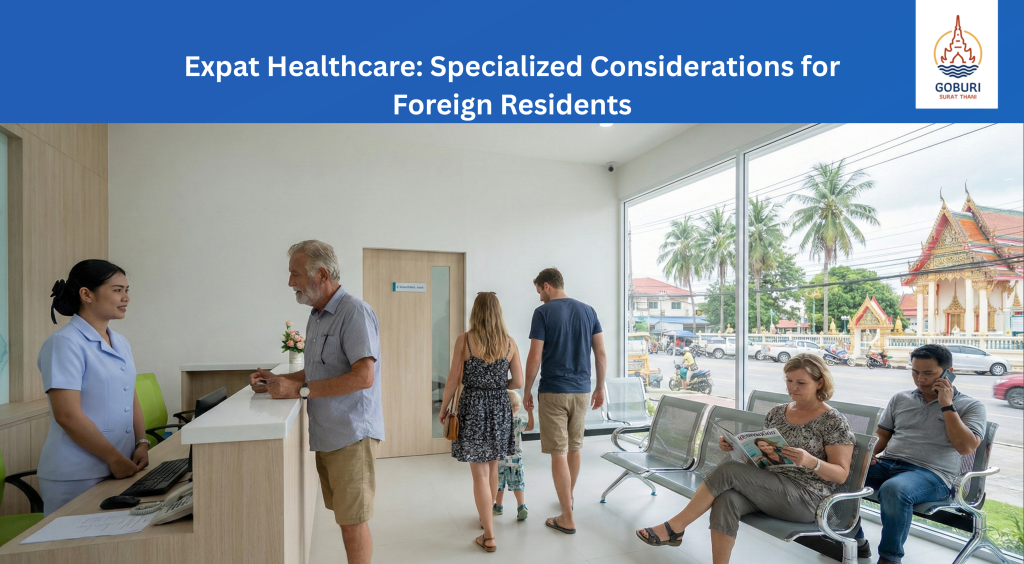
Expat Healthcare: Specialized Considerations for Foreign Residents
Expatriates living in Surat Thani face a unique set of challenges and opportunities when navigating the healthcare system. While the quality of care is generally high, the differences between public and private facilities can be stark.
Most expats prefer private hospitals due to the absence of language barriers and the superior patient experience. However, the cost of private care is significantly higher, making health insurance a mandatory consideration for long term residency.
The Thai government mandates that certain visa holders, such as those on O-A retirement visas, maintain specific levels of health insurance coverage. These requirements usually include a minimum of three million Thai Baht in total coverage, including both inpatient and outpatient services.
For residents of Surat Thani, having an international policy or a high tier local plan is essential for covering the costs of a referral to a premier facility in Bangkok, where a single complex surgery can cost hundreds of thousands of Baht.
Experience from the expat community suggests that for minor ailments, local clinics and community hospitals are sufficient and cost effective.
However, for anything requiring specialist intervention, the consensus is to move toward the JCI accredited hubs. This is not a slight against local doctors, many of whom are highly skilled, but rather a reflection of the facilities and specialized support staff available in the larger cities.
Important considerations for expats:
Language Support: While doctors in public hospitals have studied in English, the support staff and nurses may not be fluent, which can lead to communication gaps during recovery.
Dual Pricing: Public hospitals may have different pricing tiers for foreigners, though these costs are still generally much lower than private sector rates.
Insurance Direct Billing: Major private hospitals have established direct billing agreements with international insurance companies, whereas public hospitals may require payment up front and a subsequent claim for reimbursement.
Legal Framework and Patient Rights in Thailand
The ethical and legal foundation of Thai healthcare is governed by the Medical Council of Thailand and the various professional councils for nursing, pharmacy, and dentistry. These bodies have jointly established a Code of Conduct and a Declaration of Patient Rights that apply to all healthcare facilities in the country.
For those in the process of leaving Surat Thani for care elsewhere, these rights provide a framework for ensuring they are treated with dignity and provided with all necessary information.
The right to informed consent is paramount. Patients must be provided with truthful and sufficient information about their illness and treatment options in a language they can understand. This allows them to make an informed decision to either consent to or refuse a specific procedure or referral.
Furthermore, patients have the right to know the names and professional qualifications of the providers attending to them, ensuring a level of transparency and accountability.
Confidentiality of personal health information is a legal requirement under the National Health Act and the Personal Data Protection Act.
During a referral, the sharing of data between hospitals must be done with the patient’s consent and solely for the purpose of medical treatment. This protection ensures that sensitive health data is not misused during the administrative process of moving between provinces.
The responsibilities of the patient are also clearly defined. These include providing accurate and comprehensive medical facts to their healthcare providers and cooperating with the treatment instructions. In a referral scenario, the patient must disclose all pre existing conditions and medications, as withholding this information can compromise the safety and effectiveness of specialized care in a new facility.
The Future of Healthcare in Surat Thani and Regional Integration
As the healthcare sector in Thailand continues to evolve toward the 2030s, the relationship between provincial hospitals and central hubs is becoming more integrated.
The Ministry of Public Health has signed various Memorandums of Understanding with private hospitals to improve the quality and accessibility of services nationwide. These agreements aim to streamline the referral process and ensure that patients can move seamlessly between public and private sectors when specialized care is required.
One of the most significant trends is the adoption of digital health technologies and Smart Hospital strategies.
Bangkok Hospital Headquarters and other leaders are integrating AI across clinical and non clinical workflows, from real time queue management to automated chest X-ray analysis. These innovations are expected to eventually trickle down to regional centers, potentially reducing the need for referrals by allowing local doctors to consult with remote specialists through advanced telemedicine platforms.
The decentralization of specialized care is also underway. The establishment of new specialty medical centers in the south, such as the upcoming facility in Phuket under the Prince of Songkla University, represents a strategic investment in the region’s autonomy. This 300 bed center will focus on tertiary care, precision medicine, and premium services for tourists, providing an additional layer of high level care within the southern region.
For residents of Surat Thani, this means that the distance required for tertiary care may continue to decrease as regional hubs grow more sophisticated.
Despite these advancements, the central role of Bangkok as a global medical hub is likely to persist. The concentration of wealth, medical innovation, and academic research in the capital creates a gravity that will continue to attract the most complex cases.
Therefore, the path from Surat Thani to the capital remains a vital component of the Thai healthcare success story, ensuring that every citizen and resident has a bridge to the best medical outcomes possible.
A Strategic Approach to Provincial Health
The decision to leave Surat Thani for medical care is a reflection of a patient’s right to seek the most appropriate treatment for their condition. The province offers a robust and growing infrastructure that handles the vast majority of health needs with skill and dedication.
However, when the limits of regional care are reached, the systems for medical referrals and emergency evacuation provide a secure pathway to the world class centers of Bangkok and Hat Yai.
By understanding the clinical triggers for transfer, the logistics of managing medical records, and the landscape of tertiary care, patients can make informed decisions that prioritize their health and safety.
The integration of public and private sectors, the expansion of regional centers of excellence, and the legal framework of patient rights all work together to create a healthcare environment that is among the most respected in Asia.
Whether for a specialized orthopedic surgery, a complex oncology protocol, or a life saving cardiac intervention, the journey beyond the province is a well trodden path designed to restore life and quality of care to every individual in the Kingdom.
For further information on health resources, the referral coordination center at Bangkok Hospital Samui remains a primary point of contact for the region: