We occasionally share updates when important information changes or new long-form guides are published. Just practical updates related to long-term living in Surat Thani and Southern Thailand.
The decision to establish a permanent or long term residence in Southern Thailand requires a move beyond the holiday mindset. For those looking at the Surat Thani housing market, the choice between houses vs condos is the most significant fork in the road.
This choice dictates not only your daily lifestyle but also your legal security, your financial exposure, and your integration into a working Thai city. Unlike the transient and often inflated economies of nearby Koh Samui or Phuket, the mainland city of Surat Thani offers a landscape of stability and authentic local culture.
This stability is rooted in a domestic economy driven by agriculture, logistics, and regional commerce rather than the volatile swings of international tourism..
The Surat Thani housing market is currently at a unique historical juncture. While major hubs like Bangkok have struggled with an oversupply of high rise units, provincial growth markets have seen a surge in interest from international buyers seeking a sustainable cost of living and high quality infrastructure.
Data from recent years indicates that foreign property transfers in Surat Thani surged by 220%, reflecting a strategic shift among expatriates and remote workers who prioritize functional residency over resort living. This guide provides the deep decision support needed to navigate this transition, analyzing the structural realities of foreign ownership, environmental resilience, and neighborhood dynamics.
The Macroeconomic Landscape of Real Estate in Thailand
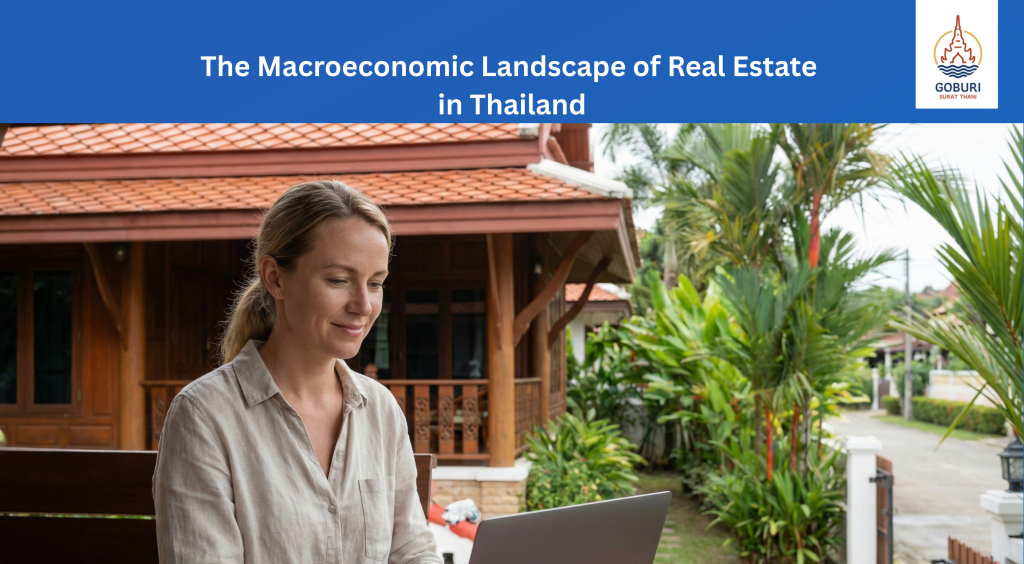
To understand the current state of real estate in Thailand, one must look at the correction that began in 2025. The market endured a period of severe distress characterized by high mortgage rejection rates and a collapse in mass market housing transactions in oversupplied urban centers.
However, this crisis acted as a catalyst for a more mature and resilient market. Developers have shifted away from speculative projects toward niche growth areas and luxury properties, focusing on financial prudence and portfolio repositioning.
For the savvy resident, this environment offers improved alignment between price and value, providing greater negotiation flexibility and a wider selection of quality properties.
Surat Thani has emerged as a standout performer in this new landscape. As a strategic crossroads between the Gulf of Thailand and the southern mainland, it serves as a functional and affordable alternative to the volatility of nearby island destinations.
The city functions for its people, not its visitors, which ensures that housing prices are not subject to the extreme seasonal fluctuations or speculative bubbles seen elsewhere. This makes the Surat Thani housing market particularly attractive to those who value predictability and long term capital growth.
Market Indicator
National Trend (2025-2026)
Surat Thani Market Insight
Residential Transfers
Marginal decline of 0.3%
Surge in foreign interest (+220%)
Price Growth
Slow and steady at 2% to 3%
Stability driven by domestic economic factors
Supply Strategy
Shift to clearing existing stock
Development focused on functional residency
Foreign Demand
Concentrated in lifestyle and growth hubs
Increasing preference for mainland hubs
Legal Architectures of Foreign Property Ownership
The foundation of any property decision in Thailand is a clear understanding of Thai property laws. The legal framework is designed to protect national interests while providing secure pathways for international investment.
The most critical distinction lies in the separation of land ownership from building ownership. While foreigners are generally prohibited from owning land directly under Article 86 of the Land Code, they have several robust mechanisms for securing residential rights.
The Condominium Freehold Advantage
For many, condos in Surat Thani represent the simplest path to ownership. Under the Condominium Act, foreigners can own a unit outright with a freehold title. This grants you a Chanote (title deed) with your name on it, providing absolute ownership in perpetuity.
The process of buying a condo also involves strict financial requirements. Funds must be remitted from abroad in a foreign currency, and the transaction must be documented through a Foreign Exchange Transaction Form (FETF) issued by a licensed Thai bank. This documentation is essential for registering ownership at the local Land Office and for any future repatriation of funds.
The Leasehold and House Ownership Model
When considering houses in Surat Thani, the legal structure becomes more nuanced. Since foreigners cannot own the land, they typically secure a long term lease for the plot, which can be registered for a maximum of 30 years under the Civil and Commercial Code.
While many contracts include a promise of renewal, it is important to understand that these are contractual obligations rather than automatic legal rights.
However, Thai property laws do allow a foreigner to own the physical structure of the house separately from the land. This is established under Section 456 of the Civil and Commercial Code, which recognizes building ownership as a legal right separate from the ground it sits on.
This structure is commonly used by residents who lease land and construct their own homes or by those married to Thai nationals.
Ownership Mechanism
Condos in Surat Thani
Houses in Surat Thani
Ownership Title
Freehold (Outright)
Leasehold (Land) / Freehold (Structure)
Maximum Legal Term
Perpetual
30 Years (Renewable)
Registration Office
Local Land Office
Local Land Office
Quota Restriction
49% of sellable area
No specific quota for leasehold
Financial Requirement
FETF for foreign currency
Clear contract with land owner
The Condominium Paradigm: Urban Convenience and Managed Living
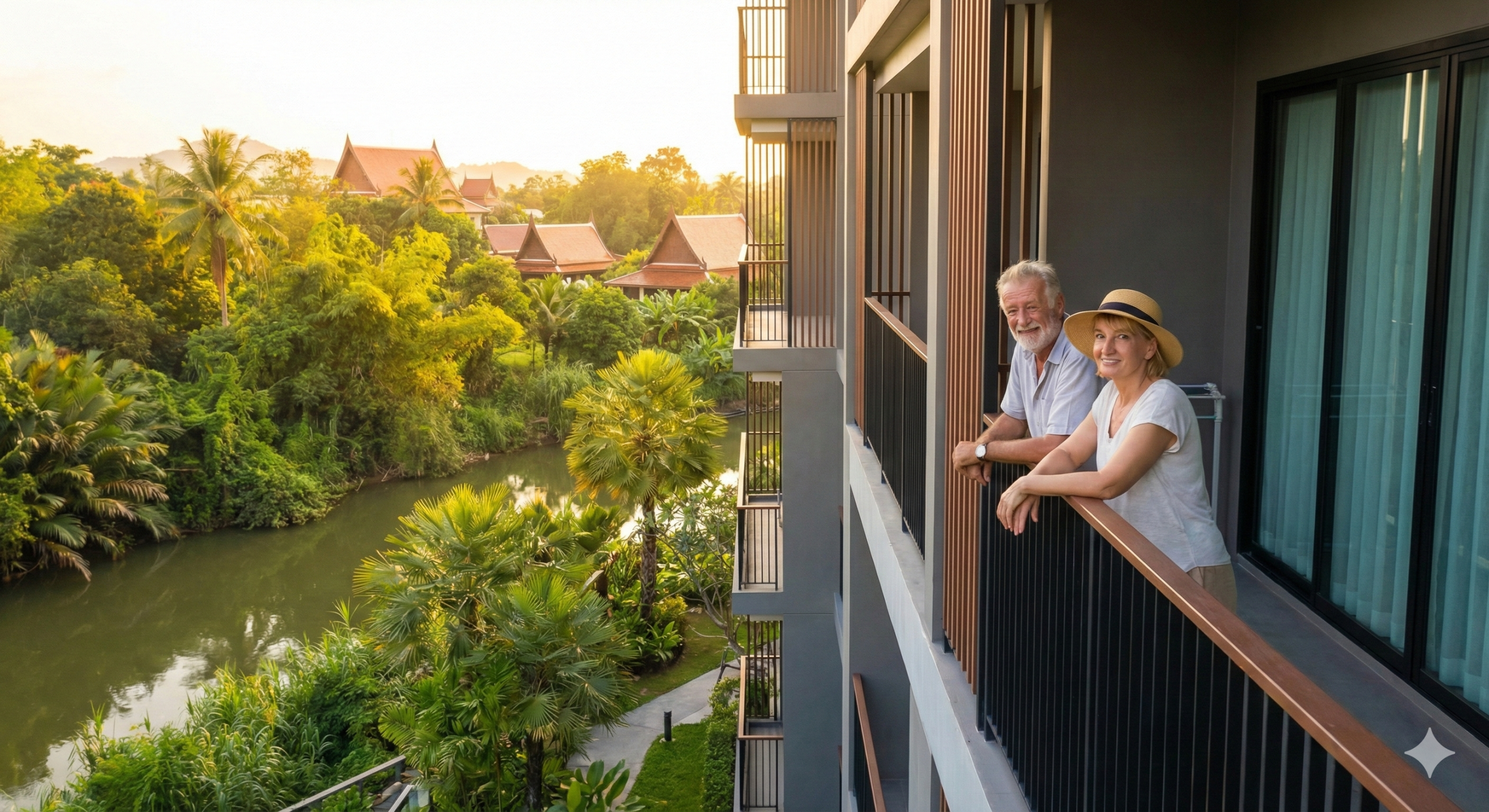
The appeal of condos in Surat Thani is often centered on convenience and the “lock and leave” lifestyle. For many remote workers, single professionals, and digital nomads, a managed apartment provides the necessary infrastructure without the maintenance burden of a standalone home.
Amenities and Shared Facilities
Modern condos in Surat Thani are known for their range of amenities, which frequently include swimming pools, fitness centers, co-working spaces, and 24-hour security. These facilities enhance the quality of life and provide social opportunities in a city where established expat hangouts may be more spread out.
The juristic office handles all common area maintenance, covered by monthly fees that typically range from 40 to 70 THB per square meter. This ensures that the building remains secure and well maintained even during periods when the resident is away.
Urban Proximity and Connectivity
Living in a condo usually means being situated in the urban core, specifically the Mueang District. This provides immediate access to major shopping centers like Central Plaza, the Surat Thani Night Market, and high capacity healthcare facilities such as Bangkok Hospital Surat.
For those who prioritize short travel times and access to professional grade fiber optic internet, the city center is the most practical choice.
However, the condo lifestyle does come with trade offs. Units generally offer less living space than houses and involve living in close proximity to neighbors. Furthermore, strict community regulations may impact factors like pet ownership or interior modifications.
The House and Moo Baan Paradigm: Privacy and Space
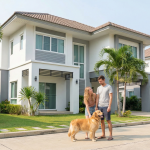
For families and those planning a long term commitment to the region, houses in Surat Thani offer a sense of independence and space that is difficult to replicate in an apartment. The standard for high quality family living in Thailand is the Moo Baan, or gated community.
The Benefits of Gated Communities
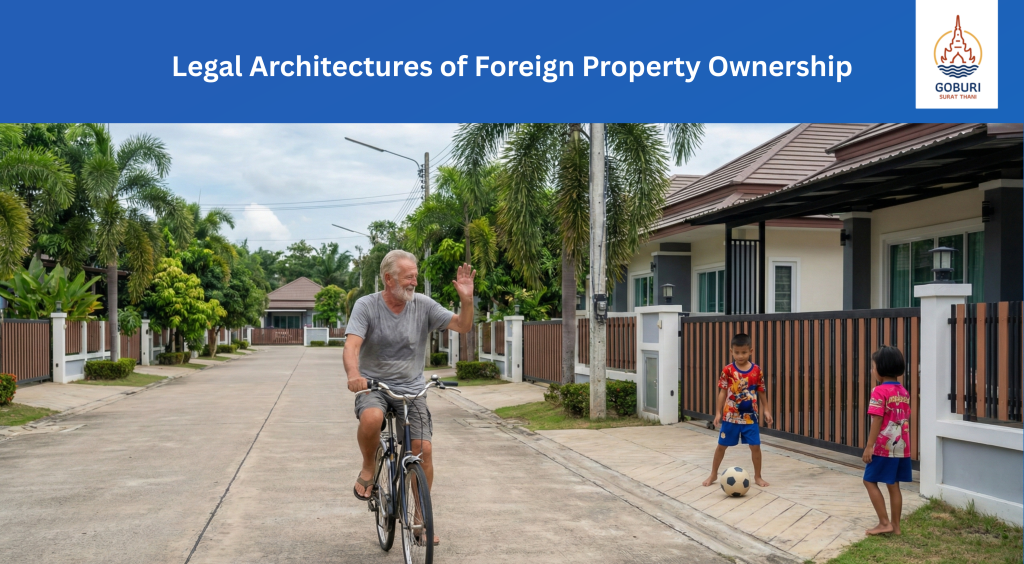
A Moo Baan is a private residential area that offers enhanced security through manned gates and CCTV monitoring. These estates are designed with a community feel, featuring paved internal roads, landscaped gardens, and shared parks or playgrounds. This environment is ideal for families with children, providing a safe and quiet setting away from the noise of the main transit routes.
In Surat Thani, neighborhoods like Khun Thale and Makham Tia have become the primary hubs for these estates. These areas provide larger plots of land and a cooler microclimate, often at a lower cost of living than city center equivalents. Residents in these suburbs are often closer to international schools like Daniel International School, making them a strategic choice for parents.
Maintenance and Personal Responsibility
While a house offers more privacy and customization, it also requires more effort to maintain. The owner is responsible for all repairs, landscaping, and utility management. In a tropical climate, this includes dealing with high humidity and the environmental impact of the rainy season. Houses are also typically located further from the city center, necessitating private transportation for daily errands and commuting.
Lifestyle Factor
Condos in Surat Thani
Gated Communities in Surat Thani
Average Living Space
Limited to unit footprint
Ample with private gardens
Privacy Level
Shared walls and corridors
High, with private boundaries
Security
Multi tier building access
Manned estate gates and patrols
Maintenance
Managed by Juristic Office
Resident responsibility
Social Feel
Modern urban density
Family oriented neighborhood
Environmental Realities and Flood Management
A critical component of the Surat Thani housing market is the city’s relationship with water. Situated near the mouth of the Tapi River, the city was historically built on peat swamps and low lying agricultural land. As a result, urban flood hazard is classified as high, with heavy rains from May to November presenting a seasonal reality for all residents.
Topography and Risk Zones
The city’s topography dictates the flood risk for different neighborhoods. The west and north zones are generally more prone to flooding due to lower elevation, while the south zone is often considered more resilient.
Rapid urbanization has replaced natural flood absorption areas with concrete, increasing the velocity of runoff during extreme rainfall events. For homeowners, this means that the choice of specific site and elevation is as important as the choice of house design.
Surat Thani is currently a pioneer in Nature Based Solutions (NbS) and the “Sponge City” strategy. These initiatives focus on retrofitting urban parks like Suan Luang Ratchakan to retain stormwater and restoring wetlands to serve as natural buffers against climate crises. Living near these managed zones can offer a distinct advantage for long term property value and safety.
Tapi River Living
The areas along the Tapi River offer some of the most serene and high end residential opportunities in the city. Riverside living provides a cooler microclimate and a unique connection to the historical heart of the province.
However, being a resident in these areas requires a sophisticated understanding of local drainage systems and seasonal water levels.
For a single person, a modern one bedroom condo with a pool typically rents for 10,000 to 18,000 THB per month, while a modest standalone house on the outskirts can range from 8,000 to 14,000 THB. For families, a three bedroom house in a well maintained Moo Baan currently ranges between 18,000 and 25,000 THB, with premium modern estates commanding up to 38,000 THB. Electricity is often the most variable monthly expense, heavily dependent on the use of air conditioning.
Community and Cultural Integration
One of the primary drivers for moving to Surat Thani is the desire for an authentic Thai experience. Unlike tourism hotspots where you are a customer, in Surat Thani, you are a resident. This requires a higher degree of cultural adaptation but offers a more grounded and rewarding lifestyle.
Local Initiatives and Lifestyles
The city is home to several innovative community initiatives that residents can engage with. The Lung Dum waste bank in the Wat Potawas community is a successful example of community based waste management that provides financial incentives for recycling.
Similarly, the Na Dan and Talat Lang communities preserve historical Sino Portuguese architecture and promote local seafood traditions. Engaging with these local efforts is a vital part of building a sustainable life in a provincial setting.
Education and Healthcare
For families, the presence of high quality international and private schools is often the deciding factor in neighborhood selection. Many residents choose bilingual programs (English Program or EP) within reputable Thai schools, which provide a balance of English proficiency and cultural integration.
Healthcare is equally robust, with the Mueang District offering access to several high capacity hospitals and specialized private clinics.
The Decision Checklist: Choosing Your Path
Navigating the Surat Thani housing market effectively means aligning your property choice with your long term goals and lifestyle preferences. As of 2026, the market rewards those who prioritize usability and community over speculative excitement.
When to Choose a Condominium
A condo is likely the best choice if you prioritize urban convenience and legal simplicity. It is the ideal solution for single professionals, remote workers, or those who travel frequently and need a “lock and leave” residence.
The freehold ownership structure provides the highest level of legal security for foreign buyers, and the shared amenities offer a high quality of life without personal maintenance burdens.
When to Choose a House
A house is the superior option for families, pet owners, or anyone who values privacy and private outdoor space.
If you are prepared for a higher degree of personal responsibility regarding maintenance and security, the Moo Baan model provides a stable and secure environment for long term residency. This is particularly true if you are comfortable with the leasehold legal structures and have a clear understanding of the environmental realities of the southern mainland.
Decision Factor
Choose a Condo if:
Choose a House if:
Maintenance Preference
You want it managed for you
You want control and space
Family Status
You are single or a couple
You have children or pets
Ownership Priority
You want freehold title
You prioritize space over title
Commute Style
You walk or use Grab
You own a private vehicle
Budget Structure
You prefer predictable fees
You prefer lower rent per sqm
Building a Life in the City of Good People
Surat Thani offers a sustainable middle ground in the Thai property market, avoiding the density of Bangkok and the inflation of Phuket. By choosing between a house and a condo with a clear understanding of the legal, financial, and environmental realities, you can establish a high quality life in a city that is grounded, authentic, and professionally equipped.
Whether you find your home overlooking the Tapi River or within the quiet streets of a suburban estate, the reward is a lifestyle that honors both modern comfort and traditional Thai hospitality.