We occasionally share updates when important information changes or new long-form guides are published. Just practical updates related to long-term living in Surat Thani and Southern Thailand.
The administrative landscape of Long Term Visas Thailand is frequently obscured by a dense layer of anecdotal evidence, outdated internet forum advice, and the idealized marketing narratives of relocation agencies.
For the foreign resident, navigating these regulations is not merely an administrative task. It is a foundational requirement for a sustainable life in the Kingdom. This article examines what most foreigners misunderstand about the system, focusing on the systemic visa misconceptions that lead to immigration friction, financial loss, and legal instability. We prioritize the structural and logistical realities of residency over the paradise narratives frequently found in lifestyle media.
This article is for informational purposes and does not constitute legal advice. The Thai immigration laws and ministerial regulations are subject to change without prior notice. Readers must verify all requirements with official sources such as the Royal Thai Embassy or the Thai Immigration Bureau before making financial or relocation commitments.
No promises are made regarding the outcome of any visa application. The use of third party agents does not guarantee approval or immunity from enforcement. Goburi is an independent platform and does not maintain financial interests in any visa service or real estate agency.
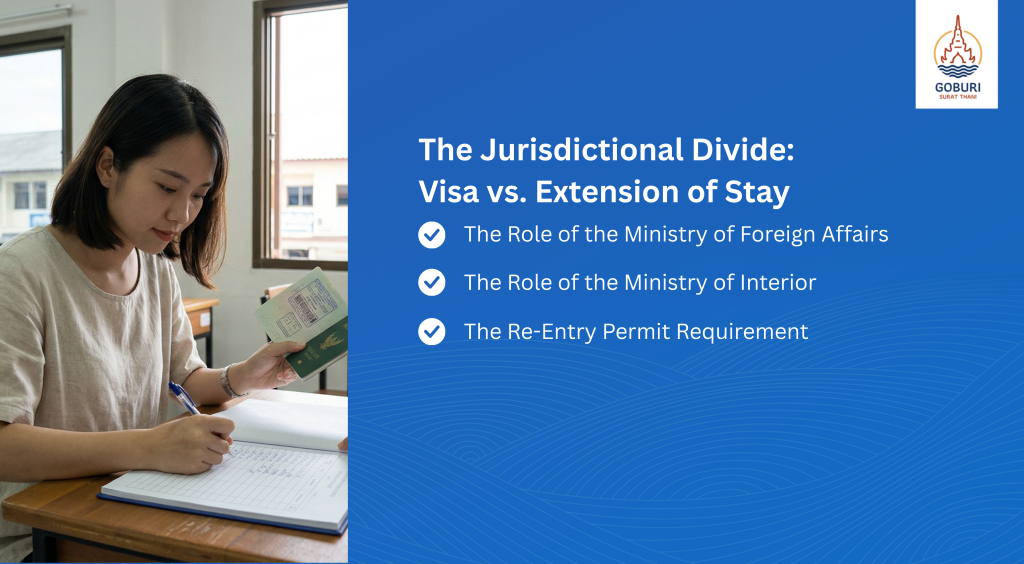
The Jurisdictional Divide: Visa vs. Extension of Stay
The most pervasive element of what most foreigners misunderstand is the conflation of a visa with an extension of stay.
While these terms are used interchangeably in casual conversation, they represent two distinct legal statuses managed by two different government ministries. A failure to recognize this distinction often results in the accidental cancellation of residency status or the imposition of overstay penalties.
The Role of the Ministry of Foreign Affairs
A visa is an entry permit issued by the Ministry of Foreign Affairs through its network of embassies and consulates abroad. Its primary function is to grant the holder permission to travel to a Thai port of entry and request admission.
When a traveler applies for a Non-Immigrant Visa at a consulate in London or a Tourist Visa via the Thai e-Visa system, they are dealing with the diplomatic arm of the government. This visa has a validity period, which is the window during which the person must enter Thailand.
Once the person passes through immigration at the airport or border, the visa is effectively used. The immigration officer then stamps a permitted date of stay in the passport.
The Role of the Ministry of Interior
An extension of stay is a permit issued by the Thai Immigration Bureau, which falls under the Ministry of Interior. This permit allows a person already inside the country to remain beyond the date stamped in their passport during their initial entry.
Most Long Term Visas Thailand are actually annual extensions of stay rather than multi year visas issued by an embassy. This distinction is critical because an extension of stay is geographically anchored.
If a resident holds an extension of stay and departs the country without a re-entry permit, the extension is voided instantly upon exit.
The Re-Entry Permit Requirement
Many foreigners assume that a one year visa allows them to leave and return to Thailand freely. However, if the one year of residency is based on an extension of stay, the permit is strictly tied to the person’s physical presence in the country.
Crossing the border without a valid re-entry permit (TM8) immediately cancels the extension of stay. This misunderstanding remains a leading cause of residents being forced to restart their entire immigration process from scratch.
It is a structural requirement that residents in places like Surat Thani or Bangkok must visit their local immigration office to secure a re-entry permit before any international travel, unless they hold a specific multi entry visa like the Thailand Privilege or DTV Visa Thailand.
The Labor Regulation Myth: Residency Does Not Equal Labor
A critical point of confusion regarding what most foreigners misunderstand involves the legal right to work while residing in Thailand. Many assume that a long term stay automatically includes the right to generate income within the Kingdom.
However, the Thai immigration laws maintain a strict separation between residency and labor. The right to exist in the country does not grant the right to engage in the local economy.
Defining Work Under Thai Law
Under the Alien Working Act, work is defined broadly. It includes the use of physical strength or knowledge to engage in a profession, whether or not there is compensation or an employer. This definition covers volunteering, remote work for foreign companies, and even managing one’s own business from a laptop in a cafe.
The assumption that remote work is a legal gray area is one of the most common visa misconceptions. While enforcement has traditionally focused on those taking jobs from Thai nationals, the legal reality is that any form of labor requires a work permit in Thailand.
Visas That Prohibit Labor
The majority of popular Long Term Visas Thailand strictly prohibit any form of employment. This includes the Thai Retirement Visa (Non-Immigrant O-A or O extensions). These are based on the premise that the resident is drawing from overseas savings or pensions and will not compete with the local labor force.
Similarly, the Thailand Privilege Visa is legally categorized as a long term tourist visa (Privilege Entry PE). This membership does not include a work permit in Thailand. Members can only work if they participate in specific investment programs like the Flexible Plus Program, which requires a minimum investment of one million USD in the Thai economy.
For families, understanding these restrictions is vital before relocating. See our guide here.
The DTV and LTR Paradigm Shifts
The introduction of the Destination Thailand Visa (DTV) in 2024 represents a strategic shift in what most foreigners misunderstand about remote work. The DTV Visa Thailand explicitly allows remote workers, freelancers, and “soft power” participants to reside in the country while working for clients located outside of Thailand.
However, even with a DTV, a foreigner cannot legally accept a job at a Thai company or provide services to a Thai entity without transitioning to a Non-Immigrant B visa and obtaining a formal work permit in Thailand.
In contrast, the Long-Term Resident (LTR) Visa is one of the few high tier options that integrates residency with labor permissions. It targets high potential foreigners and provides a digital work permit Thailand.
For those intending to integrate into the Thai professional landscape, the LTR Visa is often a more viable structural choice than the Thailand Privilege Visa, which remains focused on leisure and lifestyle.
Administrative Compliance: The Reporting Labyrinth
Long term residency in Thailand is not a set and forget arrangement. It requires ongoing interaction with the immigration apparatus.
The two most misunderstood requirements are the 90 day reporting and the TM30 requirements. These are not mere suggestions. They are mandatory check-ins that track the movement and location of all foreign nationals.
The History and Purpose of the TM30
The TM30 requirements are frequently cited as a source of frustration. This regulation requires property owners or landlords to report the presence of any foreigner staying on their premises within 24 hours of arrival. A common element of what most foreigners misunderstand is the belief that the tenant is responsible for filing the TM30.
Legally, the duty falls on the landlord. However, the consequences of a missing TM30 fall upon the foreigner. Without a valid Receipt of Notification from a TM30 filing, a resident may be unable to renew their visa, obtain a driving license, or open a bank account.
The 90-Day Reporting Mandate (TM47) and Biometrics
All foreigners staying in Thailand for more than 90 consecutive days must report their current address to the Thai Immigration Bureau. A common myth is that 90 day reporting is unnecessary if the person’s address has not changed or if they hold a high end visa. In reality, the report is a mandatory administrative check-in.
In 2026, the process is increasingly tethered to biometric data and the TDAC system. The 90 day clock resets every time a person enters the country. If a resident travels abroad every 80 days, they may never actually need to file a 90 day report.
For those who remain in the country for years without departing, 90 day reporting is a quarterly ritual. Failure to report can result in fines ranging from 2,000 to 5,000 THB.
Financial Prerequisite Realities: The Seasoning of Funds
The financial requirements for Long Term Visas Thailand are a frequent source of rejection. Many foreigners believe that simply having the required amount of money in a bank account on the day of their application is sufficient. This ignores the concept of seasoning and the origin of funds.
For a Thai Retirement Visa, an applicant must show either a monthly income of 65,000 THB or a bank deposit of 800,000 THB. If the deposit method is used, the money must be in a Thai bank account for at least two months before the application and for three months after the extension is granted.
Some foreigners attempt to meet financial requirements by using services that temporarily deposit money into their account for a fee. This is a dangerous practice. Thai immigration officers now frequently check transaction histories and bank books for patterns that suggest rented funds. If they find that the funds were not genuinely yours, your visa application may be denied or revoked.
Both the applicant and the provider can face criminal charges for forgery and fraud. For more details on budgeting for your golden years, read here.
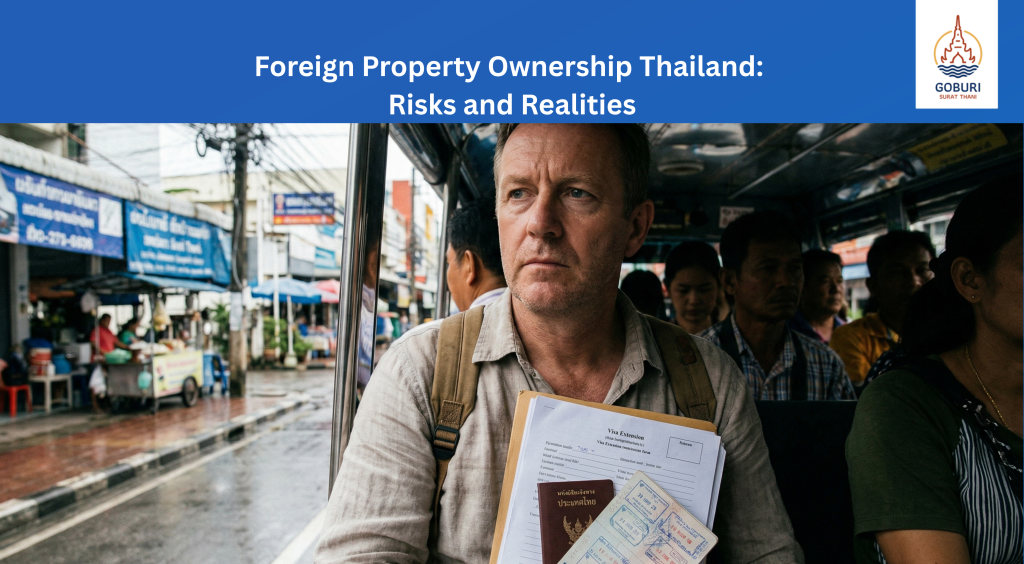
Foreign Property Ownership Thailand: Risks and Realities
The desire for a permanent home leads many foreigners to investigate Foreign Property Ownership Thailand. This area is governed by strict laws that are often misunderstood or bypassed through high risk strategies.
The Land Ownership Prohibition and Section 86
Section 86 of the Land Code Act explicitly prohibits foreigners from owning land. There are almost no exceptions to this rule for individuals. The safest and most transparent way for a foreigner to own real estate is through a freehold condominium.
Under the Condominium Act, foreigners can own a unit outright in their own name, provided that the total foreign ownership in that specific building does not exceed 49%. This is why condominiums remain the primary choice for residents in urban centers.
The Crackdown on Nominee Companies
A common myth persists that a foreigner can own land by setting up a Thai Limited Company where they hold 49% of the shares and nominee Thai shareholders hold 51%. This is a violation of the Foreign Business Act.
In February 2026, the Thai Cabinet acknowledged reports calling for intensified enforcement against these structures. If a company is found to be a mere vehicle for Foreign Property Ownership Thailand without legitimate business activity, the land can be confiscated.
Under proposed 2026 amendments, the previous system of forced sale may be replaced by total forfeiture to the State. Goburi strongly advises against these structures as they offer no real legal protection.
The Financial and Tax Divide: LTR vs. Thailand Privilege
As residents move beyond the honeymoon phase, the tax implications of their stay become a central concern. A core part of what most foreigners misunderstand is the assumption that all long term visas offer tax haven status. This is not the case.
Regardless of the visa held, any person who stays in Thailand for 180 days or more in a single calendar year is considered a Thai tax resident. Historically, many foreigners believed that foreign sourced income was only taxable if brought into Thailand in the same year it was earned.
However, recent changes in Thai tax enforcement (Instructions 161 and 162) have moved toward taxing all remitted foreign income earned after January 1, 2024.
The LTR Visa currently provides a statutory safe harbor for wealth preservation. Under Royal Decree No. 743, LTR holders are exempt from paying Thai tax on income brought into the country from overseas assets or pensions. In contrast, the Thailand Privilege Visa offers no special tax benefits.
Holders are subject to the same tax rules as any other resident. A member who stays more than 180 days becomes a tax resident and is liable for Thai income tax on any funds they bring into the country to support their lifestyle.
A significant number of visa applications are rejected because of technical errors. With the transition to the Thai e-Visa system, precision is essential. The system requires the applicant’s name to match the Machine Readable Zone (MRZ) at the bottom of the passport exactly.
Many applicants use nicknames or omit middle names. For example, a person named Robert who applies as Rob will face immediate rejection.
The TDAC Mandate
Starting in May 2025 and continuing through 2026, the Thailand Digital Arrival Card (TDAC) system has become a requirement for all foreign nationals entering or departing the country. This system replaces the old paper TM6 forms.
A common misunderstanding is that this is a visa. It is actually a travel authorization and tracking system. Failing to complete the TDAC at least 72 hours before arrival can lead to significant delays at the border or denied entry. To understand why these technical hurdles often drive location choices, read here.
The Human Element: Provincial Realities and Guest Status
Beyond the technical statutes of Thai immigration laws, there is the reality of how these laws are applied on the ground. This is particularly relevant for those choosing to live in provincial cities like Surat Thani.
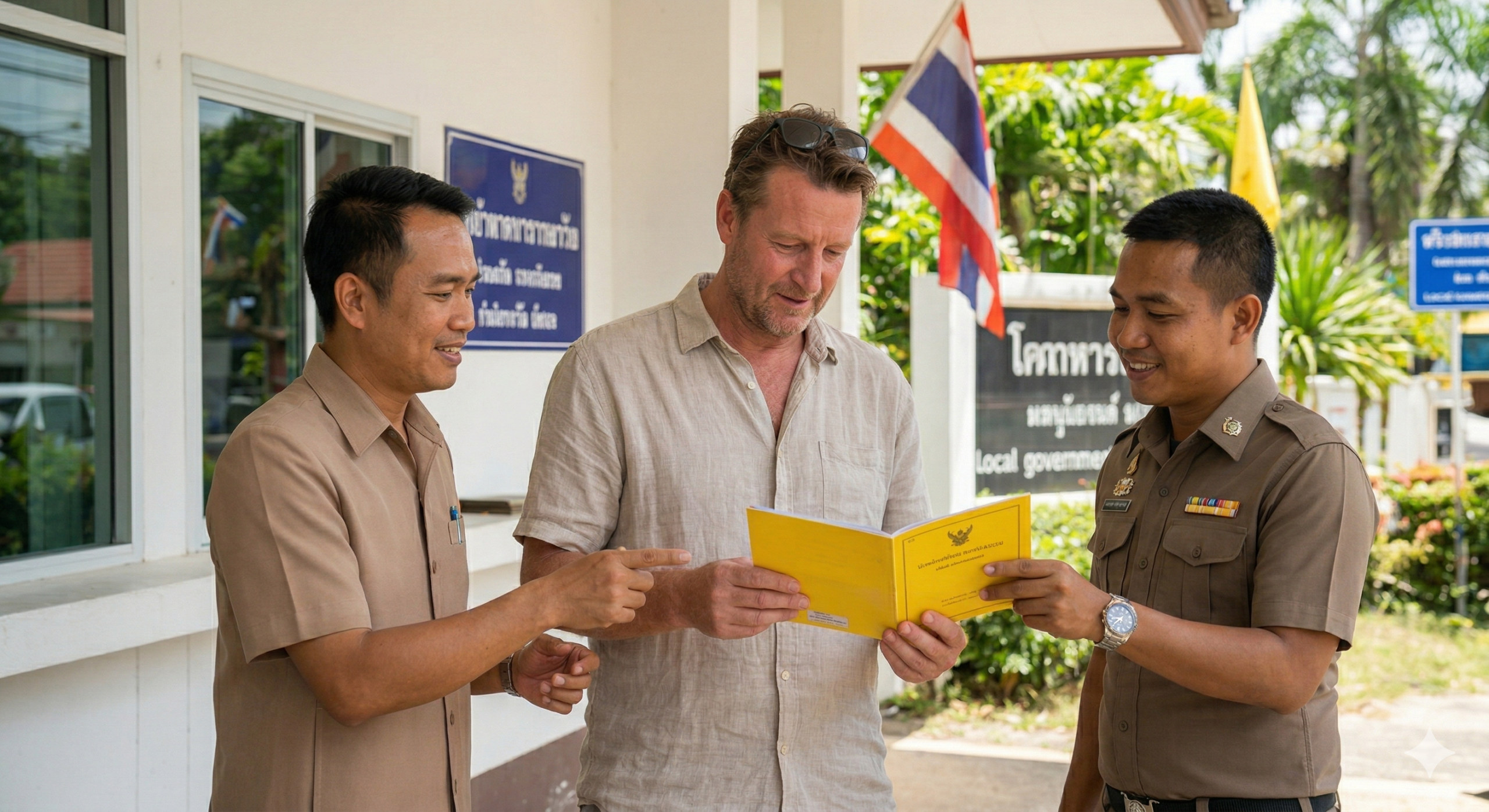
An immigration officer in a provincial office has significant discretionary power to request additional documents not listed on official websites. Success in residency often requires building a respectful relationship with the local immigration office over several years.
When administrative hurdles arise, the Western tendency is to become assertive. In the Thai system, this often backfires. Causing an officer to lose face can lead to a by the book enforcement that makes the residency process impossible.
Success often requires patience, humility, and the understanding that residency is a privilege granted by the state, not a right. This cultural nuance is often the difference between a smooth renewal and an administrative nightmare. Residents often feel this pressure during the transition from travel to living. Read more about this in our expat burnout after the honeymoon phase.
Strategic Summary for the Serious Resident
To avoid the common pitfalls of residency in Thailand, foreigners must adopt a professional approach to their legal status. The following principles are essential for long term success.
Prioritize Logistical Integrity. Understand that the right to stay is a privilege maintained through strict compliance with Thai immigration laws.
Trust Official Sources Only. Do not rely on “visa agents” who promise shortcuts. Ensure every application goes through official channels and results in a legitimate stamp in your passport.
Verify Landlord Compliance. Before signing a lease, confirm that the property owner is registered for the TM30 requirements. This is the foundation of your administrative life.
Season Your Funds. Maintain the required bank balance for the full duration specified by law. Do not use “show money” services.
Acknowledge Tax Obligations. If staying more than 180 days, understand your status as a tax resident and plan accordingly, especially when choosing between the LTR Visa and the Thailand Privilege Visa.
Commit to Integration. Learn the Thai language and respect local administrative norms. This reduces the friction of dealing with the immigration apparatus.
The reality of Long Term Visas Thailand is that they provide a stable framework for those willing to follow the rules. By deconstructing the myths and focusing on the structural requirements, a foreigner can build a sustainable and successful life in the Kingdom.
Navigation of what most foreigners misunderstand is the first step toward that permanence. Consistent adherence to these principles ensures that the transition from a guest to a resident is marked by stability rather than administrative crisis.