Updates from
Goburi Surat Thani

24K subscribers
We occasionally share updates when important information changes or new long-form guides are published. Just practical updates related to long-term living in Surat Thani and Southern Thailand.
You can unsubscribe at any time.

Surat Thani vs Phuket

Choosing a permanent base in Southern Thailand requires a move beyond travel itineraries and into the technical realities of provincial infrastructure. This comparison of Surat Thani vs Phuket evaluates the fundamental Thailand residency trade-offs between two of the region’s most prominent hubs. While both locations offer tropical climates and proximity to the Andaman or Gulf coasts, their economic structures, cost profiles, and social landscapes are fundamentally different.
Phuket functions as a high-density international brand where the economy is built almost entirely around global tourism and foreign investment. In contrast, Surat Thani operates as a mainland logistical engine, serving as the administrative heart for the upper south with an economy anchored in agriculture and regional trade. For those who are still weighing multiple locations across the region, it is helpful to explore our broader Southern Thailand residency and lifestyle comparisons to understand how these hubs fit into the wider provincial landscape.

Demographic and Economic Profiles

Understanding the economic and demographic “why” behind each location explains the practical “how” of daily residency. While both provinces are situated in Southern Thailand, they operate on entirely different financial and social engines. One serves as a specialized international tourism enclave, while the other functions as a diversified regional capital and industrial gateway.
The Surat Thani Economy (The Mainland Engine)
Surat Thani is a production-first province serving as the logistical heart of the upper south. Wealth is rooted in land-based industry, including logistics, agriculture, and regional trad,e rather than seasonal visitors. The mainland city operates as a separate economic world from the nearby Gulf islands. For residents, this provides stable pricing and a community infrastructure built for permanent inhabitants rather than fluctuating tourist traffic.
The Phuket Economy (The Globalized Island)
Phuket’s economy follows a tourism-first architecture prioritizing international standards and foreign capital. By 2026, it will have matured into a primary residence hub for remote professionals and high-net-worth individuals. Economic drivers include hospitality, luxury real estate, and yachting. While this offers high convenience, the resulting residency impact includes significant noise and logistical congestion from a large transient population.

Utilities and Administrative Bureaucracy

For long-term residents, “administrative friction” is a primary factor in quality of life. Dealing with government offices and utility providers differs significantly between a tourist-heavy zone and a provincial capital.
Immigration and Government Services
In 2026, the Destination Thailand Visa (DTV) is the standard for remote professionals, but processing friction varies by hub. Phuket’s massive volume of applicants results in rigid processing cycles and longer wait times for 90-day reporting and address verifications. The Surat Thani Immigration Office offers a streamlined, lower-volume environment. For residents prioritizing speed over English-centric service, the mainland office provides a more efficient experience for visa maintenance.
Utility Management (Electric and Water)
Phuket’s natural water reserves are insufficient for its 2026 population density. This has necessitated the Ratchaprapha Dam water diversion project, a pipeline supplying raw water from the Surat Thani mainland to the island. Surat Thani offers superior utility security as the primary source of the region’s water and power. Residents pay standard government rates and avoid the private surcharges common in Phuket’s managed complexes. Living in Phuket often involves paying a premium for resources fundamentally managed from the mainland.

Climate and Seasonality Logistics

The tropical climate of Southern Thailand is not uniform. The two coasts operate on different monsoon cycles, which directly impact food supply, transport costs, and daily safety. The monsoon patterns in Thailand dictate the “off-season” for both regions.
Surat Thani Climate and Weather
Surat Thani operates on a Gulf of Thailand weather cycle, with its primary rainy season occurring from October to December during the Northeast Monsoon. Because the province is mainland-based, heavy rainfall can lead to localized flash flooding on major arterial roads, which occasionally disrupts land logistics to the Don Sak ferry piers. For residents, this period requires careful planning for road travel, though the inland geography generally protects the city from the severe sea swells common on the Andaman coast.
Phuket Climate and Weather
Phuket’s weather is dictated by the Southwest Monsoon, which brings heavy rain and rough sea conditions from May to October. These environmental factors directly impact the local economy, often causing a 20% to 30% increase in fresh seafood prices due to restricted fishing activity. While the island’s mountainous terrain offers some protection, the western coastal roads can experience minor landslides and drainage issues during peak downpours, making seasonal infrastructure reliability a key consideration for those living in beachside districts.

Housing and Real Estate:
Value Comparison

The disparity in real estate is a significant factor for long-term residents. When evaluating Surat Thani vs Phuket, housing costs represent the largest variable in a monthly budget.

Surat Thani Housing (Mainland Value)

In the Surat Thani housing market, prices are dictated by local Thai salaries. A modern 3-bedroom detached house in a secure gated development (Moo Ban) typically ranges from 18,000 to 35,000 THB per month in 2026. Prices do not double during high season, ensuring rent remains static year-round. Land prices also remain a fraction of island rates for those looking to invest via long-term leases.
who should not move to Surat Thani

Phuket Housing (The Premium Market)

Phuket operates as an international real estate market driven by global demand. This creates a premium layer on the Phuket expat cost of living. Long-term tenants often face seasonal evictions or massive price hikes due to the short-term rental market. A similar 3-bedroom house in expat areas like Rawai or Bang Tao rarely costs under 45,000 to 80,000 THB, with luxury villas exceeding 150,000 THB.

Cultural Life and
Community Events

Public festivals serve as a metric for a province’s community density and logistical priorities. For residents, these events are more than just items on a calendar; they are part of the yearly rhythm that dictates traffic patterns, food availability, and the general atmosphere of the community. In Southern Thailand, cultural life is divided between the international spectacles of the coast and the traditional, community-focused rituals of the mainland.
Festivals in Surat Thani: The Local Tradition
In Surat Thani, festivals are community-driven rituals where you may be one of the few foreigners present. Unlike the high-production events on the coast, these celebrations are built by locals, for locals, offering a window into the province’s deep-rooted southern identity. For long-term residents, participating in these events is not about being a spectator but about witnessing the shared faith and social cohesion that define mainland life.
Chak Phra Festival: Marking the end of Buddhist Lent, this is a mainland-specific event featuring grand land and water processions of Buddha images. It is a time of great local pride and zero “tourist pricing.”
Rambutan & Fruit Festival: Celebrating the region’s agricultural wealth, this event highlights the province’s status as a “breadbasket” of the south.
Festivals in Phuket: The International Spectacle
Festivals in Phuket are characterized by their scale and international appeal. They are vibrant but can cause significant logistical friction for residents.
The Vegetarian Festival: Arguably the most intense cultural event in Thailand. While culturally rich, it leads to road closures and massive crowds in Phuket Town.
Songkran (Water Festival): In Phuket, this can last up to three days of intense street celebrations, making normal errands almost impossible in areas like Patong or Kata.
Loy Krathong: Popular at island lakes and beaches, often featuring large-scale fireworks and tourism-centric performances.

Infrastructure: Healthcare and Education

When moving long-term, “lifestyle” takes a backseat to “logistics.” While the aesthetic appeal of a location is important for the first few months, the quality of a multi-year residency is defined by the reliability of local systems. For expats and families, the decision between Surat Thani and Phuket often hinges on whether they require an internationalized support structure or are comfortable navigating a regional Thai system.

Medical Facilities

Phuket functions as the premier medical hub for the Andaman region, offering JCI-accredited facilities like Bangkok Hospital Phuket that provide multi-lingual coordination at a premium price point. This international infrastructure is expanding in 2026 with the boutique Bumrungrad International Hospital Phuket campus in Thalang, catering to the growing expat population. In contrast, Surat Thani provides a pragmatic medical landscape centered on robust regional hubs like Taksin Hospital, where clinical expertise remains high, but the “hospitality” layer is geared toward a Thai audience with domestic pricing.

who should not move to Surat Thani

Educational Infrastructure for Expatriate Families

Phuket serves as the primary educational center for Southern Thailand, hosting elite international schools such as UWC Thailand and BISP, with 2026 annual tuition often exceeding 500,000 THB. Surat Thani offers a more integrated and cost-effective alternative through institutions like Daniel International School (DIS) and Balance International School (BISS), which provide accredited instruction at approximately half the price. While Surat Thani’s schools provide high-standard international instruction, they feature a social environment more culturally aligned with the local Thai community.

Comparative Data Matrix
(The Resident’s View)

Category Surat Thani (Mainland) Phuket (Island)
Typical Rent (3-Bed House) 12,000 – 18,000 THB 45,000 – 80,000+ THB
Traffic Condition Predictable / Low Stress High / Seasonal Congestion
Language Barrier High (Thai Required) Low (English Common)
Dining Scene Local / Authentic / Cheap Global / Diverse / Premium
Digital Nomad Hubs Minimal / Home-based Abundant Co-working Spaces
Primary Festival Chak Phra (Community) Vegetarian Festival (Spectacle)

Connectivity and Logistics

Transportation remains the most significant differentiator between these two hubs. The choice between them often depends on where you intend to go next.

Surat Thani as a Regional Transit Hub

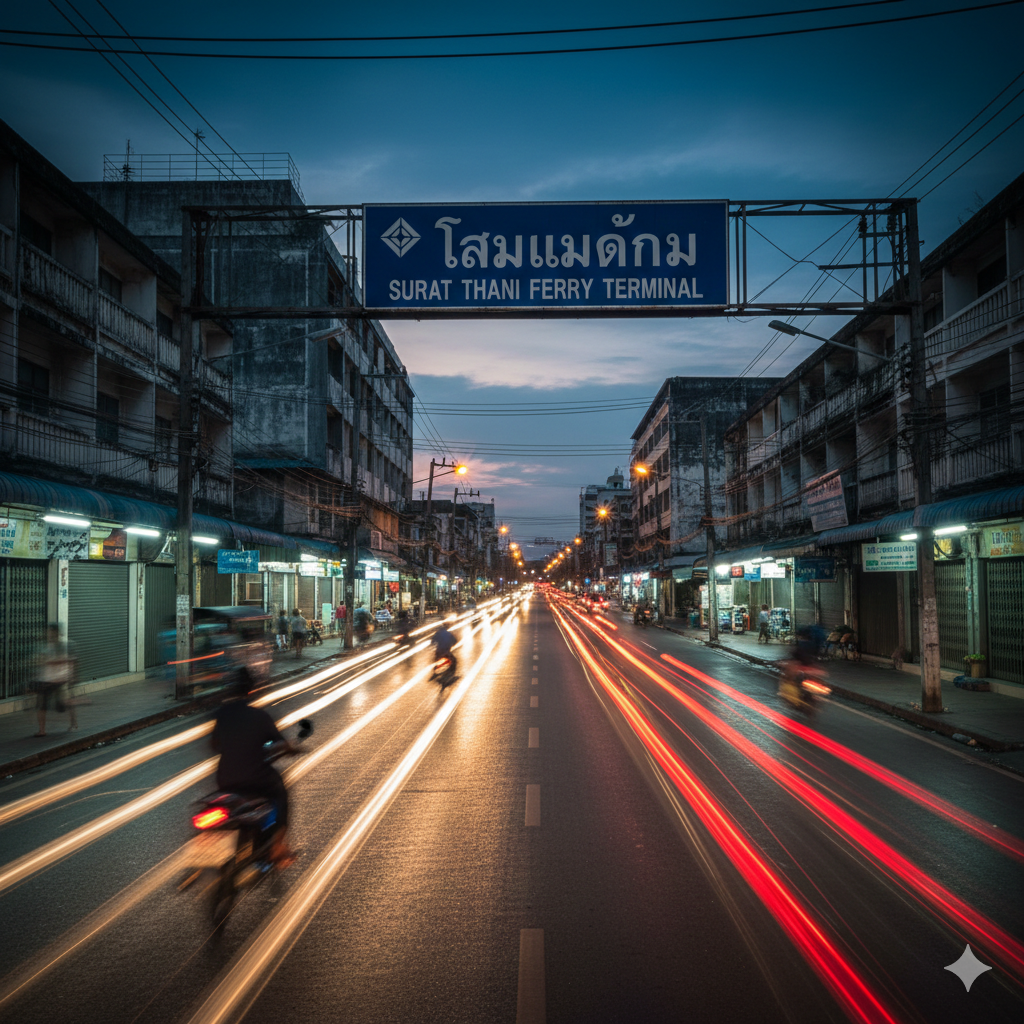
Surat Thani Airport (URT) serves as a strategic domestic gateway, favored by those seeking lower-cost entry points to the region via Bangkok. As a major node on the State Railway of Thailand’s southern line, the province provides a direct rail link between Bangkok and the Malaysian border. Most heavy logistics and passenger traffic flow through the Don Sak pier district, located 90 minutes from the city, which facilitates the primary vehicle and ferry connections to the Samui Archipelago.
who should not move to Surat Thani

Transport Infrastructure in Phuket

Phuket International Airport (HKT) operates as Thailand’s second busiest aviation hub, offering frequent direct flights to Europe, the Middle East, and Asia. Internal transit relies heavily on private taxis and ride-hailing apps like Grab or Bolt, though the Phuket Smart Bus now provides a cost-effective 100 THB flat-fare service along the west coast. Maritime logistics are centered on the eastern coast at piers like Bang Rong and Rassada, which serve as primary gateways for those accessing the Andaman Sea islands.

Which Province Suits Your Long-Term Goals?

Deciding between Surat Thani vs Phuket depends on your professional needs and lifestyle requirements:
Choose Surat Thani if:
You want to minimize overhead; your budget goes significantly further here regarding rent, local markets, and services.
You prefer a “local-first” environment and want to immerse yourself in Thai culture outside of the major tourist zones.
You plan to spend your weekends exploring the Gulf Islands (Samui, Phangan) or the ancient rainforests of Khao Sok.
You are looking for a quieter, mainland lifestyle with less traffic and a lower density of “short-term” tourists.
Choose Phuket if:
You require an international airport with direct long-haul flights for business or family visits.
You prioritize high-end gated communities (villas/condos) and a wide variety of international cuisines.
You are relocating with family and need proximity to accredited international schools and world-class healthcare.
You want a large, established community of foreign residents and diverse networking opportunities.