We occasionally share updates when important information changes or new long-form guides are published. Just practical updates related to long-term living in Surat Thani and Southern Thailand.
For many expatriates and remote workers, the initial appeal of Southern Thailand is often tied to its islands. However, as Phuket and Koh Samui experience escalating costs and increasing density, the Surat Thani mainland has emerged as a strategic alternative for those prioritizing stability, space, and long-term financial sustainability.
Understanding this market requires a shift in perspective. Surat Thani is a provincial capital serving as a regional logistics and administrative hub. Consequently, the housing stock is built primarily for Thai professionals, government officials, and local business owners. While this means “tourist pricing” is virtually non-existent, it also means that high-end, Western-style luxury developments are less prevalent than in Bangkok or Phuket. Finding the right residence involves navigating these trade-offs between local infrastructure and international expectations.
Unlike the speculative real estate markets found in primary tourism hubs, the housing landscape in Surat Thani remains grounded in the local economy. This creates a distinct environment where housing costs in Surat Thani are dictated by local purchasing power rather than seasonal tourism spikes. For families and professionals planning to settle in the region for a year or more, this stability offers a predictable foundation for long-term budgeting.
Why Housing Costs in Surat Thani Are Lower
Understanding why housing costs in Surat Thani remain significantly more affordable than in neighboring provinces requires looking at the structural differences of the mainland market. While popular islands in the region cater to global capital, the mainland remains anchored to the regional economy and local infrastructure. This creates a sustainable environment for those monitoring their overall cost of living in Southern Thailand without sacrificing quality of life.
1. Local Demand and Economic Anchoring
In primary tourist hubs, property prices are often decoupled from local reality because they target high-net-worth holidaymakers. In contrast, the market in Surat Thani is driven by the purchasing power of local residents. These include civil servants, medical professionals from the regional hospitals, and employees from the logistics and agricultural sectors. Because the market must remain accessible to the local middle class, rental prices do not experience the aggressive seasonal spikes seen in Phuket or Samui.
2. Mainland Land Availability and Horizontal Growth
Islands face a natural geographical constraint that creates a scarcity premium on land. Surat Thani sits on a vast coastal plain with significant room for horizontal expansion. Developers can build outward rather than upward, which keeps the cost of new “Moo Baan” developments manageable.
The abundance of land also means that residential zones are not competing for space with high-end resorts or massive commercial complexes. For a detailed look at the legalities of land and property types, you can consult the Department of Lands Thailand for official regulations regarding residential zoning.
3. Lack of Speculation and “Flipping.”
Surat Thani attracts real demand buyers rather than short-term speculators. There is very little interest from international investors looking to flip units or run high-turnover vacation rentals. This lack of speculative pressure results in a more stable and predictable rental market.
As a long-term resident, you are less likely to face sudden, massive rent increases at the end of your lease. The market focuses on long-term occupancy and building community stability rather than maximizing immediate profit from the next wave of tourists.
4. Direct Resource Access
Being on the mainland provides a logistical advantage that lowers the baseline of housing costs in Surat Thani. Building materials, furniture, and maintenance services do not require expensive barge transport or island-specific logistics fees. When you hire a contractor for home repairs or purchase appliances for a new house, you are paying standard mainland rates, which further optimizes your monthly budget.
Monthly Rental Averages: What to Expect in 2026
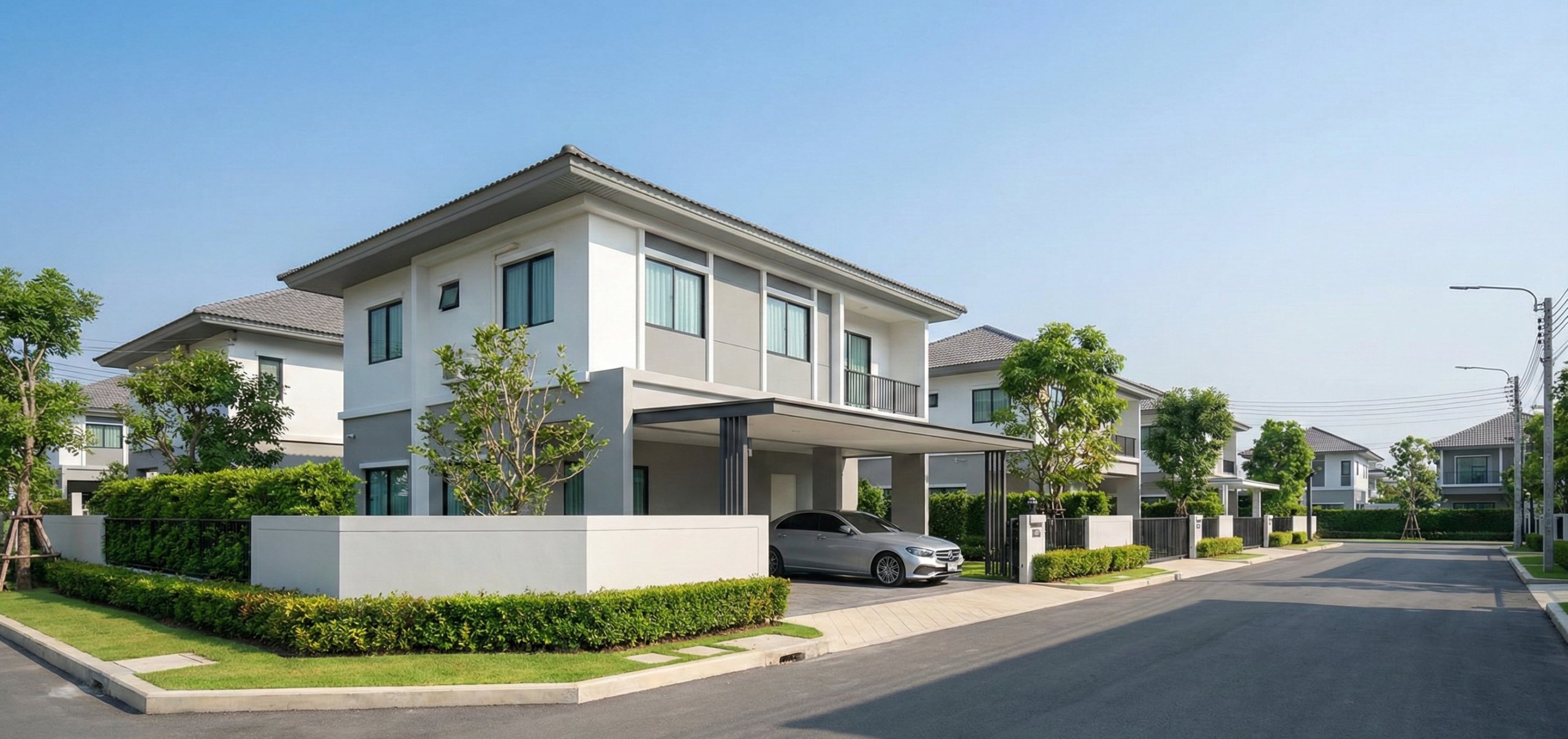
When researching housing costs in Surat Thani, it is essential to distinguish between the city center (Mueang Surat Thani) and the surrounding suburban districts. Most long-term residents opt for Moo Baans, which are gated communities that offer security, consistency, and a sense of neighborhood.
Standard Rental Price Brackets (Mainland 2026)
Property Type
Monthly Rent (THB)
Monthly Rent (USD approx.)
Context / Quality
Studio / 1-Bed Apartment
3,500 – 6,500
$100 – $185
Local Thai-style “Mansion” (no pool)
1-Bed Modern Condo
7,000 – 9,500
$195 – $265
Plus Condo / Escent Ville (Modern)
2-Bed Townhouse
6,500 – 12,000
$180 – $335
Local Moo Baan / Older builds
3-Bed Detached House
12,000 – 18,000
$335 – $500
Standard 2-story house (Mainland)
Premium / Pool Villa
25,000 – 45,000
$700 – $1,260
High-end Moo Baan (Limited supply)
According to 2026 data from local rental hubs like RentHub.in.th, mainland Surat Thani remains one of the most affordable provincial capitals in Thailand, with local-style studio apartments starting as low as 3,500 THB and family-sized detached homes often sitting below the 15,000 THB mark
The Moo Baan (Gated Community) Factor
The majority of expats choose to live in a Moo Baan. A 3-bedroom, 2-bathroom detached house in a mid-range gated community typically costs between 18,000 and 22,000 THB per month. These usually include 24-hour security guards, small community parks, and in some cases, a shared clubhouse with a gym or pool.
Beyond the Rent: Utilities and Maintenance
A common mistake when calculating housing costs in Surat Thani is overlooking the hidden monthly expenses. In a tropical climate, your lifestyle choices, particularly air conditioning usage, will dictate your final budget.
1. Electricity (The Variable Factor)
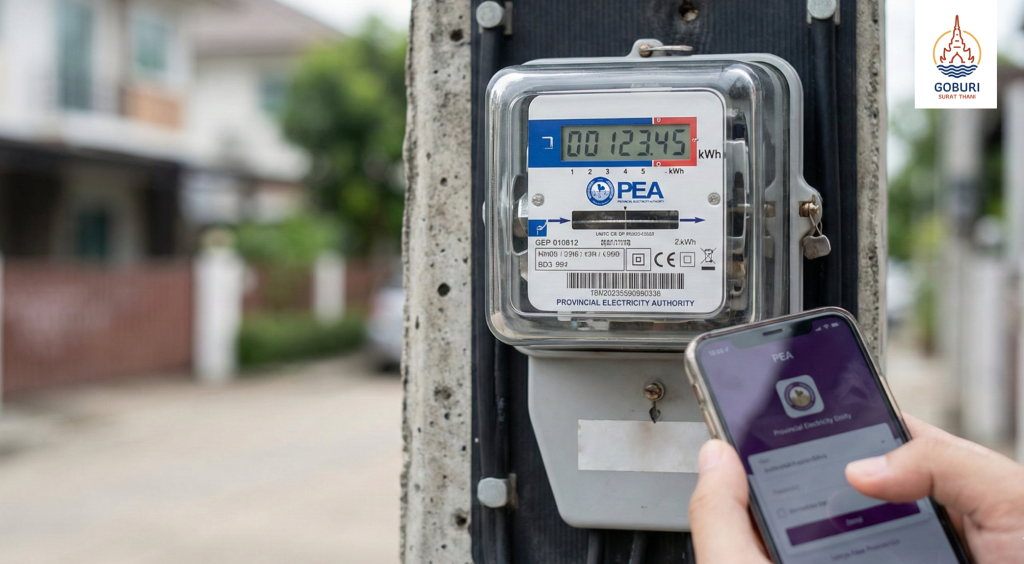
Electricity is almost always your largest utility bill. Ensure your contract states you pay the official rate. As of January 2026, the government has set the base tariff at 3.88 THB per unit (excluding VAT). You can check current updates via the Provincial Electricity Authority (PEA) website.
For a 3-bedroom house with 2 units running only at night, expect 2,500 to 4,000 THB per month. If you work from home with AC running all day, this can easily climb to 6,000+ THB.
2. Water and Trash
Water and Trash Water is remarkably affordable, with most municipal households paying between 200 and 500 THB per month. However, note that some older Moo Baans or standalone houses in Phunphin still rely on groundwater (well water) with private filtration systems. In these cases, you won’t have a water bill, but you should budget for the electricity to run the pump and the periodic replacement of filter media (approx. 1,500–3,000 THB annually). Trash collection is handled by the municipality for a nominal fee of 40 to 100 THB per month.
3. High Speed Internet
Surat Thani has excellent fiber optic infrastructure. Major providers like AIS-3BB Fibre3 offer reliable 1Gbps packages typically ranging from 600 to 799 THB per month. Lower speeds (500Mbps) or “Bring Your Own Device” promotions may be available closer to the 500 THB mark.
4. Garden and Pool Maintenance
If you rent a house with a private garden or pool, maintenance is rarely included in the base rent unless specified.
Gardener (2x per month): 800 to 1,500 THB.
Pool Service (Weekly): 2,000 to 3,000 THB.
Choosing the Right Neighborhood
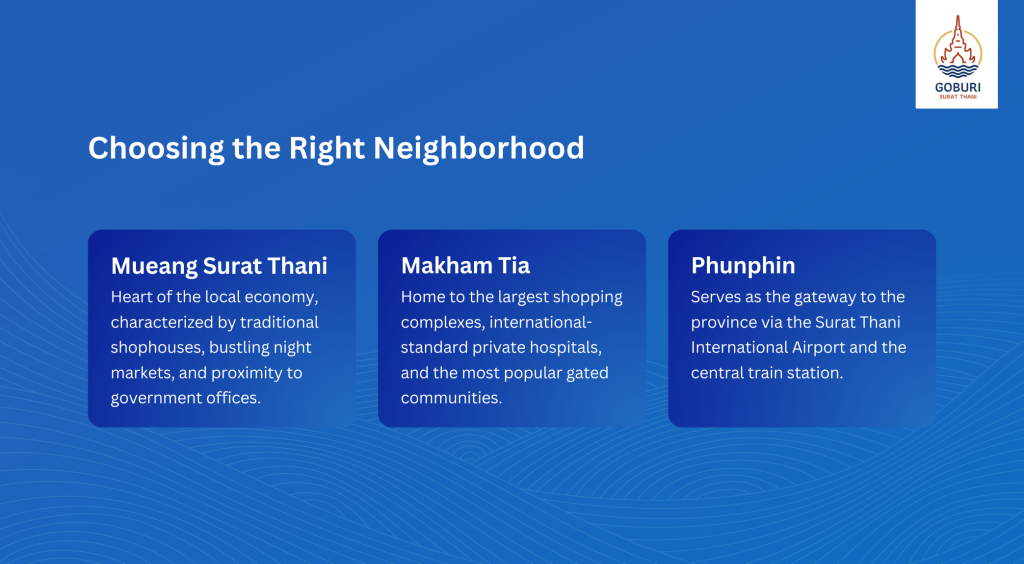
Choosing the right location is the most significant variable in determining your housing costs in Surat Thani. While the province is vast, long-term residents generally gravitate toward three distinct zones that offer a balance of lifestyle, infrastructure, and financial sustainability.
Mueang Surat Thani (The Urban Center)
The city center is defined by the Tapi River and the historic “Ban Don” area. This is the heart of the local economy, characterized by traditional shophouses, bustling night markets, and proximity to government offices.
Housing Profile: Older townhouses and low-rise apartments. Finding a modern Moo Baan inside the city core is difficult.
Cost Profile: While rental prices are low, you may spend more on electricity if the building has older insulation or inefficient air conditioning units.
Pros: Maximum convenience for dining and local culture. You can often live here without a car if you are comfortable using local motorbike taxis.
Cons: High noise levels, limited green space, and older plumbing infrastructure.
Makham Tia / Near Central Plaza (The Expat Preference)
Makham Tia has evolved into the modern face of Surat Thani. This area is home to the largest shopping complexes, private hospitals like Bangkok Hospital Surat, and the most popular gated communities. For families, this neighborhood often provides the highest quality of life while maintaining a reasonable cost of living in Southern Thailand.
Housing Profile: Modern detached houses (3+ bedrooms) and contemporary condominiums. This is where you will find the highest concentration of Moo Baans with 24-hour security and communal pools.
Cost Profile: This is the most expensive district for housing costs in Surat Thani, with premium houses ranging from 22,000 to 35,000 THB.
Pros: Proximity to Central Surat Thani for groceries and western amenities. Better road drainage and modern electrical grids.
Cons: Traffic congestion during school peak hours; a more suburban, westernized feel that some may find less authentic.
Phunphin (The Logistics and Transport Hub)
Located roughly 15 kilometers from the city center, Phunphin serves as the gateway to the province via the Surat Thani International Airport and the central train station. It is a self-contained district that offers a slower pace of life.
Housing Profile: Large, standalone houses with significant garden space and older, affordable bungalows.
Cost Profile: Significantly lower than the city center. You can often find a large 3-bedroom house here for 12,000 to 15,000 THB.
Pros: Deeply local atmosphere and excellent value for money. Ideal for those who travel frequently or work remotely and do not need daily access to the city center.
Cons: A 20 to 30 minute commute to major hospitals and malls. Limited international food options compared to Makham Tia.
For a broader perspective on how these neighborhood choices impact your total monthly budget, including food, schooling, and transport, see our detailed guide on the cost of living in Surat Thani.
Critical Advice for Long-Term Renters
To secure the best value for your housing costs in Surat Thani, you must approach the rental process with a different mindset than you would for a short-term holiday stay. On the mainland, landlords value stability and long-term commitment over high turnover.
The following practical guidelines are essential for navigating the local market while keeping your cost of living in Southern Thailand within a sustainable range.
The Strategic Value of the 1-Year Contract
In the Surat Thani rental market, the one-year lease is the standard benchmark for professional residents. Landlords view shorter durations as high risk and high maintenance, which is reflected in significantly marked-up pricing.
Signing for 12 months typically yields a 15% to 20% discount compared to monthly rates. If you are prepared to sign for two years, it is common to negotiate a further reduction or request specific property upgrades such as new air conditioning units or a fresh coat of paint.
Under Thai law, a written lease for three years or less is a private contract that is generally enforceable in court. For any period exceeding three years, the lease must be formally registered at the local Land Office, which involves a registration fee usually split between the landlord and tenant.
Navigating Security Deposits and Upfront Costs
A common source of friction for new arrivals is the structure of the security deposit. While regulations for business operators (landlords with 5+ properties) have become stricter, the standard practice in Surat Thani remains consistent. Expect to pay the first month of rent in advance plus a security deposit equivalent to two months of rent.
For monthly residential lease contracts, the combined total of the security deposit and advance rent is strictly capped at three months’ rent. Typically, this manifests as a two-month security deposit and the first month of rent paid in advance.
Never pay a deposit without a signed inventory list that includes photographs of the property’s current condition. This document is your primary protection when reclaiming your deposit at the end of the term.
Inspecting for Flood Resilience
When assessing the long-term housing costs in Surat Thani, one must account for the region’s geography as much as the monthly rent. As a low-lying province near the Tapi River, Surat Thani requires a strategic approach to flood resilience. While the central Makham Tia area maintains robust drainage, older neighborhoods can experience localized “flash ponding” during the October/November monsoon.
Recent “Sponge City” pilot projects and upgraded pumping stations (completed in 2026) have significantly improved urban runoff. However, savvy residents still look for flood-conscious design, such as houses built on raised landfills with a visible step up from street level. The most reliable data comes from neighbors; always ask if the water reaches the sidewalk during heavy rain before committing to a lease.
Furnished vs Unfurnished Considerations
When calculating your initial housing costs in Surat Thani, the choice between a furnished and an unfurnished property can significantly impact your long-term ROI.
Partially Furnished (The Norm): Most Moo Baan rentals include basics like a bed frame, a wardrobe, and a dining set. This is ideal for those staying one to two years.
Unfurnished (The Long Term Strategy): If you plan to settle for five years or more, seek out unfurnished houses. These are often 3,000 to 5,000 THB cheaper per month. The savings over two years will more than cover the cost of furnishing the home exactly to your taste at local outlets like Index Living Mall or HomePro.
Always verify if the furnished tag includes a refrigerator and a washing machine. In many Thai rentals, these are considered extra and may need to be negotiated into the contract or purchased separately.
Weighing Your Future in Surat Thani
The housing costs in Surat Thani represent a rare opportunity within the modern Thai real estate landscape. In a decade where many Southern destinations have transitioned into high-priced tourism hubs, the mainland offers a chance to secure a comfortable, middle-class life in a spacious home for under $800 USD a month. For families who prioritize financial stability and deep-rooted savings, the value proposition here is difficult to match elsewhere in the country.
Choosing to live here requires an honest assessment of your lifestyle priorities. Surat Thani is not a “plug-and-play” expat destination. While your overall cost of living in Southern Thailand will be significantly lower than in Phuket or Bangkok, the trade-off is a steeper cultural learning curve. This is a working Thai city that operates on its own terms. It does not cater to international preferences; rather, it invites you to adapt to its rhythm.