We occasionally share updates when important information changes or new long-form guides are published. Just practical updates related to long-term living in Surat Thani and Southern Thailand.
Surat Thani is much more than a transit hub for the islands of Koh Samui, Koh Phangan, and Koh Tao. It is a province defined by lush landscapes, ancient rainforests, and the rhythmic pulse of the Gulf of Thailand. For those living in Surat Thani, the Surat Thani weather is a practical factor that dictates electricity bills, transport choices, and social calendars.
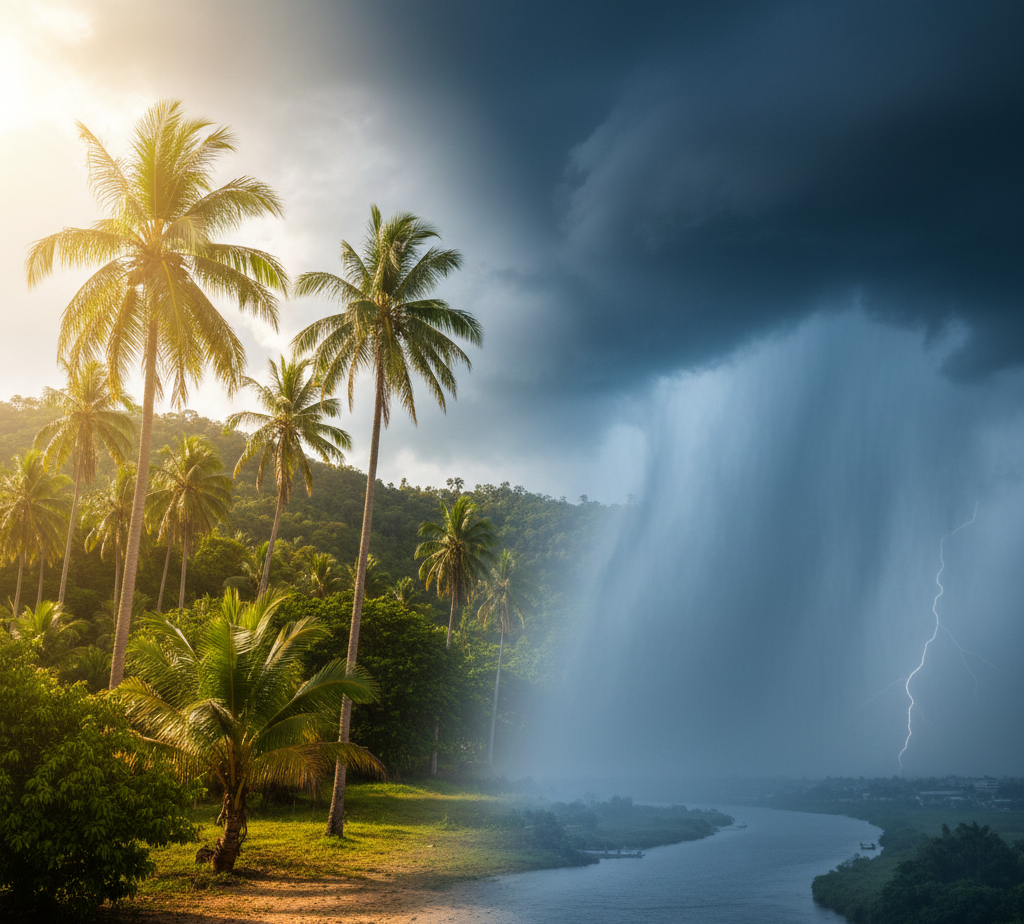
While the province is beautiful year-round, the true Surat Thani experience involves navigating three distinct phases. These include the shimmering heat of the dry months, the sudden intensity of the monsoon, and the brief, breezy “winter” that locals wait for all year. Understanding the Surat Thani weather and seasonal reality is the first step toward a seamless transition to life in Southern Thailand.
Why the Weather Matters for Long-Term Residents
Unlike a tourist who can wait out a storm in a hotel or simply move their flight, residents must adapt their household routines, infrastructure, and health habits to the environment. When you are living in Surat Thani, the weather means more than just getting wet; it is a logistical puzzle. It requires planning a motorbike commute around the 4:00 PM clouds and knowing which streets in the city center are prone to quick flooding.
By mastering the climate and the Surat Thani weather patterns, you can achieve several practical goals:
Optimize Home Costs: Learn when to rely on natural ventilation instead of air conditioning.
Stay Mobile: Understand the seasonal impacts on ferries and local road safety.
Socialize Like a Local: Discover why the city comes alive after 5:00 PM once the tropical heat breaks.
This guide moves beyond the standard forecast to offer practical insights for those making the Surat Thani weather a part of their permanent daily life.
At a Glance: The Surat Thani Climate Cycle
Season
Timeframe
What to Expect
Resident Vibe
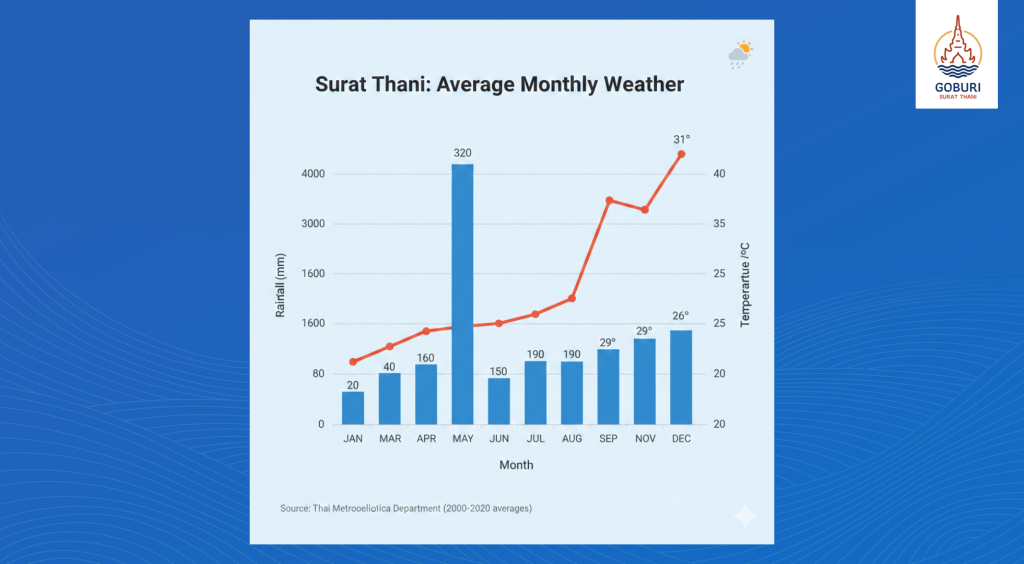
Hot Season
March to May
Intense sun, 35°C+
Peak AC usage and afternoon hibernation.
Rainy Season
June to November
Heavy downpours
Ponchos over umbrellas and lush scenery.
Cool/Dry Season
December to February
Breezy, low humidity
Outdoor festivals and comfortable commuting.
Understanding the Weather and Seasonal Patterns
The Surat Thani weather features a tropical environment characterized by high humidity and consistently warm temperatures. Unlike Northern Thailand, which can see significant temperature drops in the winter, the Surat Thani weather maintains a tropical baseline. However, the transition between the seasons affects everything from the cost of groceries (as local crops react to rain) to the reliability of local transport.
Typical Temperatures and Humidity: This is the most intense time of year. Temperatures frequently climb above 35°C (95°F), but the “heat index” is what truly matters. Because the province is situated near the coast and surrounded by wetlands and rivers, the humidity remains high even when it isn’t raining. This often makes the “real feel” temperature exceed 40°C (104°F) during the peak of the dry season Surat Thani experiences.
Living and Coping Tips:
Manage your AC usage: This is when electricity bills peak for residents. If you have an older Thai-style house with high ceilings, use them to your advantage. If you live in a modern condo, use blackout curtains during the day to prevent the “greenhouse effect.”
Hydration is critical: Drink more water than usual to combat the constant humidity associated with the climate in Surat Thani.
Shift your schedule: Adopt the local habit of finishing errands by 10:30 AM. Retreat indoors during the peak UV hours (11:00 AM to 3:00 PM) and emerge again in the evening.
Vehicle Care: If you own a car or motorbike, avoid parking in direct sunlight. The UV levels in Surat Thani during April can cause dashboard plastic to crack and paint to fade prematurely.
Rainy season Surat Thani (June to November)
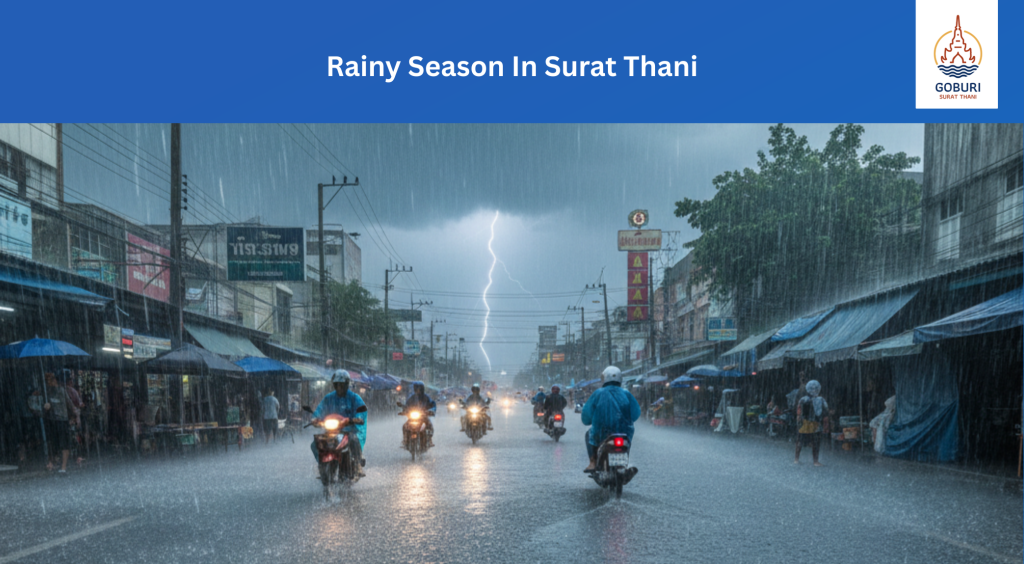
Rainfall patterns and storm likelihood: The rainy season in Surat Thani is influenced by the Southwest Monsoon. While the islands (Samui/Phangan) have a slightly different rain peak (usually later in November), the mainland begins seeing heavy, predictable downpours in mid-year. These usually occur in the late afternoon or evening.
Practical Resident Advice:
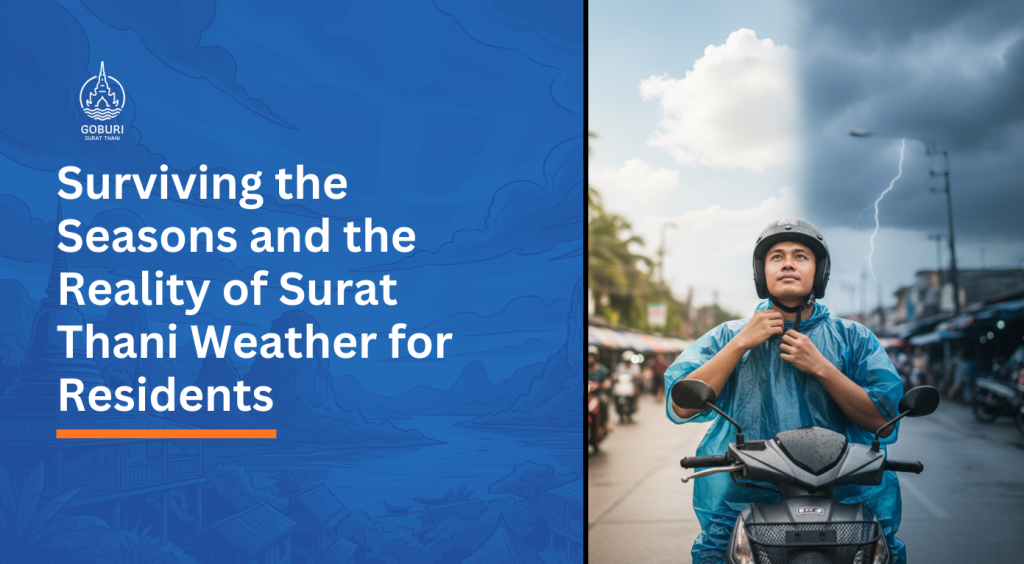
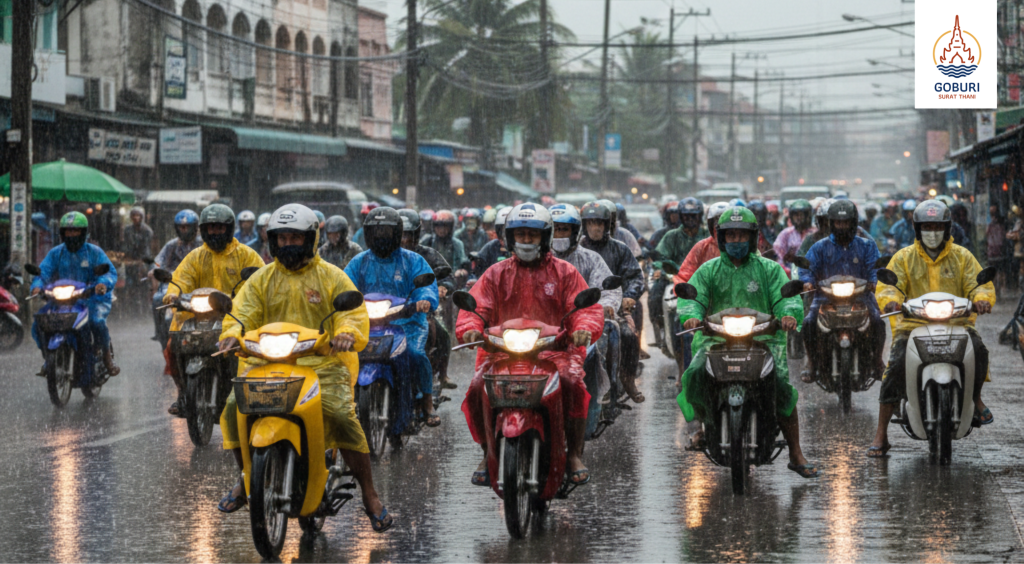
Invest in a quality poncho: Umbrellas are largely ineffective against the driving wind and horizontal rain of a Southern Thai monsoon. High-quality, heavy-duty ponchos are the standard “uniform” for anyone living in Surat Thani.
Infrastructure Awareness: Ensure the gutters and drains on your property are clear before June. Residents in areas near the Tapi River should keep an eye on water levels during particularly heavy weeks of rain.
Digital Nomad Logistics: If you work remotely, invest in a high-quality surge protector. While the power grid in Surat Thani city is generally stable, lightning strikes during monsoon storms can cause brownouts or surges that threaten sensitive electronics.
Be flexible with travel: If you plan to visit the islands, always check the local maritime reports as waves can become quite high during the peak of the monsoon.
Dry season Surat Thani / Cool Season (December to February)
The “Goldilocks” Period: The dry season Surat Thani offers during these months features comfortable temperatures and lower humidity. This period is widely considered the best time for living in Surat Thani. The skies are clear, the humidity drops significantly, and the evenings can even feel slightly crisp (dropping to 22°C or 23°C). For a newcomer, this is the most stable weather in Surat Thani.
Best time for activities:
Outdoor Exploration: This is the perfect window for visiting Khao Sok National Park or hiking local trails without the risk of heat exhaustion.
Community Events: Most major festivals take place during these months because the climate in Surat Thani is reliable and dry.
Home Maintenance: Use this period to handle any exterior home repairs or painting that the moisture of the rainy season in Surat Thani might prevent.
How Weather Affects Daily Life in Surat Thani
The climate in Surat Thani does more than just determine what you wear. It shapes the entire rhythm of the city. From transport logistics to energy consumption, being aware of the seasons in Surat Thani is key to a low-stress lifestyle.
Commuting and Transportation
For those living in Surat Thani, the motorbike is the most common way to get around. It is fast, fuel-efficient, and easy to park. However, the weather dictates your safety:
Slippery Roads: After a long dry spell, the first 15 minutes of rain are the most dangerous, as oil and dust on the road surface create a slick film. Experienced residents often pull over and wait for the “first flush” to pass.
Ferry Delays: If your life involves frequent trips to the islands, the “monsoon gap” is real. High swells in the Gulf can lead to ferry cancellations. Residents usually keep a “buffer day” in their travel plans during October and November.
Energy and Household Costs
The dry season Surat Thani experiences between March and May is the most expensive time for homeowners.
The AC Trap: Many expats make the mistake of leaving the AC at 20°C all day. In Surat Thani, this can lead to monthly bills exceeding 4,000–5,000 THB.
Efficiency: Setting the AC to 26°C and using a floor fan is the “pro move.” The fan moves the cooled air, making it feel like 23°C while using a fraction of the power.
Social Rhythms
The climate in Surat Thani encourages a “night owl” culture. Because the midday heat can be draining, the city truly comes alive after 5:00 PM.
Ko Lamphu Park: This island park in the middle of the river is packed with runners and families at 5:30 PM, but virtually empty at 2:00 PM.
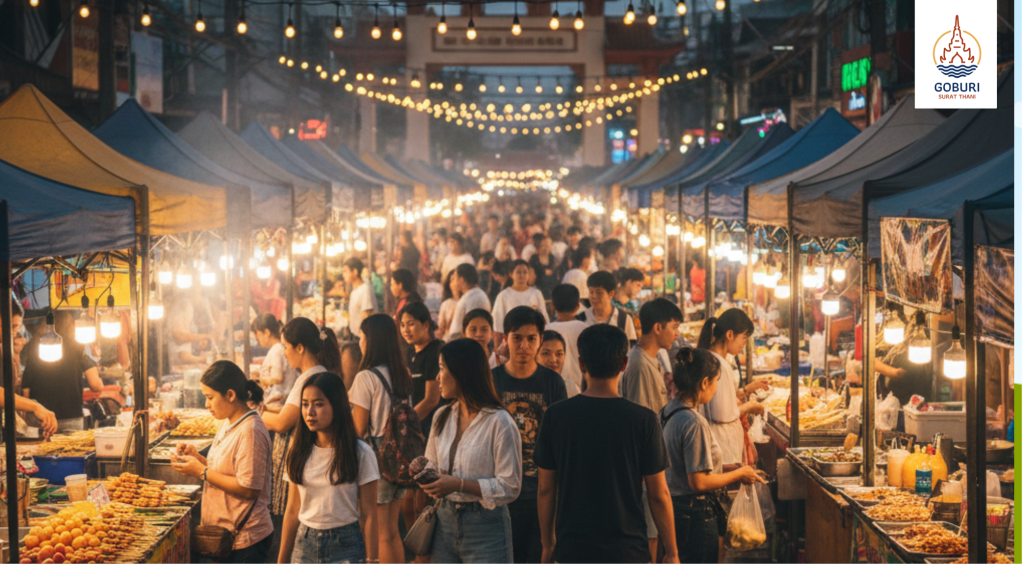
Night Markets: Surat Thani’s famous night market (San Chao Market) thrives because the air is cooler, allowing people to browse comfortably. Understanding this shift is vital for your social integration; if you try to meet people at noon, you’ll likely find them hibernating in air-conditioned malls.
Preparing for Surat Thani’s Weather
Living comfortably year-round requires a proactive approach to the weather in Surat Thani. Whether you are dealing with the peak dry season Surat Thani heat or the humidity of the monsoon, these preparations will help you settle in.
Clothing Recommendations
The golden rule for the climate in Surat Thani is to choose natural, breathable fabrics.
Prioritize Cotton and Linen: These materials help absorb sweat and allow airflow, which is vital in high humidity.
Footwear Choices: During the rainy season, leather shoes are a liability. They take days to dry and are prone to mold. Opt for high-quality waterproof sandals (like Tevas or Chacos) or local rubber “Crocs-style” shoes that can be dried with a paper towel.
The “Office Jacket”: Paradoxically, if you work in a bank or a government office in Surat Thani, you will need a sweater. Thai air conditioning is notoriously cold, often kept at 18°C as a sign of “luxury” and comfort.
Sun Protection: The UV index remains high regardless of the seasons in Surat Thani. Always have a hat and high-SPF sunscreen ready for any daytime outdoor activity.
Home, Transport, and Health Tips
Preparing your home and body for the living in Surat Thani climate will improve your long-term wellbeing.
Hydration: High humidity means you lose fluids through perspiration even when you aren’t active. Keep electrolyte powder on hand, especially during the hot season.
Pest Control: The rainy season Surat Thani endures often leads to an increase in mosquitoes. Ensure your home has high-quality window screens and keep repellent on hand to protect against dengue fever.
Mold Prevention: To manage the moisture levels typical of this environment, ensure your home has good ventilation. Using a dehumidifier during the wettest months can protect your clothes and electronics from mold damage.
Monitor Local Forecasts: Stay updated on the weather in Surat Thani by following local Thai meteorological apps. This is especially important for planning weekend trips to the nearby national parks or islands.
Managing Logistics
Flash Flooding: Surat Thani is relatively flat. During an “epic” downpour, certain roads in the city center (near the bus station or the talad kaset) can experience 10–20cm of standing water. It usually drains within an hour, but knowing which streets to avoid can save your motorbike engine from water damage.
Weather Apps: Don’t rely on the default weather app on your phone, which often generalizes for the whole “South.” Use the Thai Meteorological Department (TMD) app or Windy.com, which provide better radar data for the Gulf of Thailand.
The Environmental Nuances of the Province
Surat Thani is a large province, and the weather can vary depending on where exactly you are situated.
The Mainland vs. The Islands
One of the biggest misconceptions for people moving to Surat Thani is that the weather is the same as Koh Samui. It isn’t. The mainland often receives rain from the Southwest monsoon (coming from the Andaman side) while being somewhat shielded by the mountain ranges. The islands, meanwhile, get their heaviest “hitting” rain from the Northeast monsoon later in the year. If it’s raining in Surat Thani city, it might be perfectly sunny on Samui, and vice-versa.
The Influence of the Tapi River
The Tapi River acts as a massive heat sink and humidity generator for the city. If you live right on the riverbank, you will benefit from a constant breeze, which can make the “Hot Season” much more bearable. However, the proximity to the river means higher humidity in the mornings, often resulting in a beautiful but thick mist that blankets the city until 8:00 AM.
Khao Sok’s Microclimate
If you plan on living near or frequently visiting the Phanom district (home to Khao Sok), be prepared for significantly more rain. The rainforest creates its own microclimate; it can rain here daily even during the “dry” season. The temperatures in the jungle are also 3–5 degrees cooler than in the city, providing a perfect weekend escape for heat-fatigued residents.
Making the Most of Surat Thani’s Weather
The seasons in Surat Thani offer a beautiful variety of experiences for those who know how to plan for them. By respecting the power of the monsoon and enjoying the breezy comfort of the dry months, you can fully embrace the southern Thai lifestyle.
Exploring the limestone cliffs of Khao Sok or enjoying a quiet evening by the Tapi River becomes much easier when you are equipped for the local conditions. Being prepared for the weather in Surat Thani ensures that the tropical environment remains a highlight of your journey rather than a challenge. This proactive approach allows you to enjoy the unique beauty of the climate in Surat Thani and feel truly at home in this vibrant province.
FAQ
When is the best time to visit Surat Thani?
The “best” time depends on your priorities. For outdoor activities and clear skies, the dry season from December to March is ideal, offering lower humidity and comfortable temperatures. However, if you are looking for lush green landscapes and lower prices, the shoulder months of June to August are excellent, as the rain usually falls in short, predictable bursts in the late afternoon.
Does it rain all day during the rainy season in Surat Thani?
No, it rarely rains all day. During the monsoon (typically June to October), the weather pattern usually consists of bright, sunny mornings followed by heavy, short-lived tropical downpours in the late afternoon or evening. While these storms are intense, they often clear up quickly, allowing residents and travelers to continue their daily routines after an hour or two.