We occasionally share updates when important information changes or new long-form guides are published. Just practical updates related to long-term living in Surat Thani and Southern Thailand.
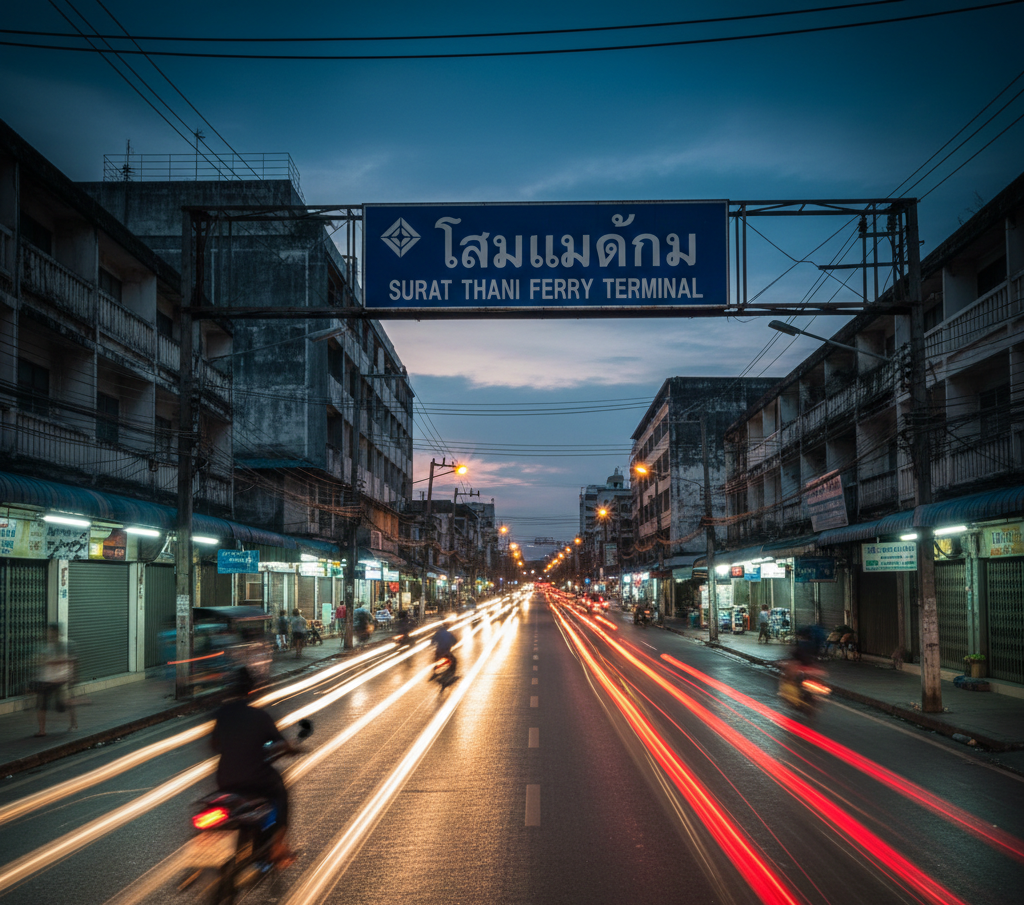
Surat Thani is a provincial center in Southern Thailand that functions primarily as a working city rather than a tourism-driven destination. Daily life is shaped by local institutions, Thai-language systems, and regional infrastructure, creating an experience that differs from more internationally oriented cities such as Phuket or Bangkok.
When considering long-term living in Surat Thani, alignment matters more than surface appeal. Not every location supports every lifestyle equally, and understanding who should not move to Surat Thani is an important part of making an informed decision. This page is written for readers who want to evaluate fit before making a long-term commitment and who are looking for a realistic view of living in Surat Thani.
Rather than focusing on attractions, the sections below examine situations where the realities of moving to Surat Thani may not suit certain expectations or priorities. These are not isolated drawbacks, but structural and cultural conditions that shape everyday routines. By exploring common challenges of living in Surat Thani, including lifestyle limitations, language requirements, work environments, education options, healthcare access, and daily logistics, readers can better assess whether relocating to Surat Thani aligns with how they plan to live, work, and raise a family over time.
Infrastructure Expectations for High-Intensity Urban Lifestyles
One of the most common sources of misalignment for new residents relates to everyday infrastructure. Surat Thani functions as a regional service center rather than a high-density metropolitan area, and its built environment reflects that role. For people whose routines depend on a wide range of international-standard amenities within easy reach, this difference can shape daily life in ways that are not always anticipated.
Absence of Large-Scale Retail Centers
Surat Thani has modern shopping centers and essential services, but the overall range is narrower than in larger cities. There is no concentration of large-scale malls, luxury retail clusters, or specialized service providers comparable to those found in Bangkok or Phuket. Many products and services are available, but choice is often limited to a small number of providers.
For residents accustomed to extensive options for dining, entertainment, or niche retail, this can affect both convenience and lifestyle. Certain items or services may require online ordering, waiting periods, or travel to other cities. Over time, these small frictions can accumulate and influence how people experience long-term living in Surat Thani.
Daily Convenience and Service Hours
Urban life in Surat Thani operates on a more traditional schedule. While basic needs are met reliably, expectations around extended service hours, rapid turnaround times, or on-demand convenience may not align with local norms. Some services close earlier than newcomers expect, and availability can vary depending on location within the province.
This environment tends to suit residents who value routine and predictability over constant access. For those who rely on late-night services, highly specialized facilities, or immediate problem resolution, these infrastructure realities may feel restrictive and are worth considering carefully when evaluating who should not move to Surat Thani.
Language Expectations in a Working Thai City
Surat Thani operates primarily in Thai. Outside of limited service environments such as private hospitals or larger retail centers, English is not commonly used in daily interactions. This reflects the province’s role as a working regional city rather than a tourist hub designed to accommodate short-term visitors.
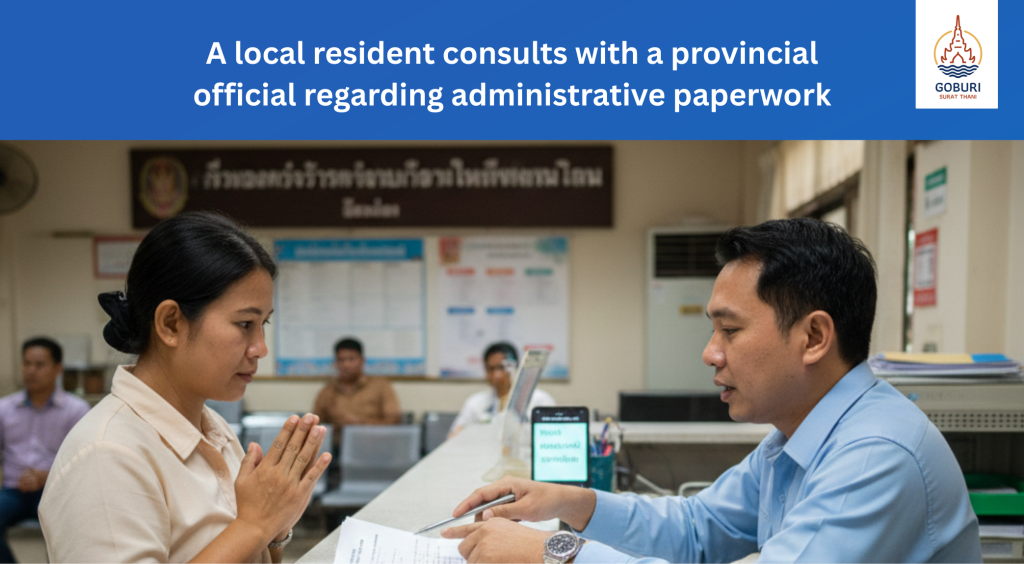
For long-term residents, basic or survival-level Thai is often insufficient. Routine tasks such as dealing with the Surat Thani Immigration Office, coordinating repairs, communicating with schools, or managing utilities typically require a higher level of language ability. Without this, daily life can involve frequent misunderstandings or reliance on third parties, which may not be sustainable over time.
Professional and Social Constraints Without Language Fluency
Language also affects social and professional integration. In Surat Thani, many social networks, community activities, and informal support systems operate entirely in Thai. For individuals who are unwilling or unable to invest in intensive language learning, this communication gap is a primary indicator of who should not move to Surat Thani, as daily life can quickly become a series of exhausting hurdles.
From a professional standpoint, language limitations further narrow already limited opportunities. Even for remote workers, collaboration with local service providers, schools, or administrative offices often requires clear communication in Thai. For individuals who are unwilling or unable to invest in language learning, this reality can shape whether long-term living in Surat Thani feels manageable or increasingly restrictive over time.
Social Connectivity and Expat Community Scale
Surat Thani has an international presence, but it is modest and dispersed. Social life for foreign residents tends to be built gradually through work, schools, local activities, or long-term routines rather than through large, centralized expat networks. For some, this structure supports stability and independence. For others, it can feel isolating.
Who This Environment Tends to Suit
Families who prioritize routine, schooling, and community over nightlife
Self-reliant professionals are comfortable building social connections slowly
Long-term residents who value quieter social settings
Individuals who are open to forming relationships outside of exclusively expat circles
Who May Find This Environment Limiting
Those seeking a large, diverse international nightlife scene
New arrivals who expect instant access to Western-style social groups
Individuals who rely on frequent organized expat events or meetups
People who prefer highly active social calendars centered on foreign communities
This distinction is less about availability and more about scale and expectations. For readers evaluating who should not move to Surat Thani, understanding the size and structure of the local expat footprint can be a key factor in determining long-term satisfaction.
Employment Opportunities Within the Local Economy
Surat Thani’s economy is built around regional services, logistics, agriculture, fisheries, and domestic trade. It is not structured to support a large number of foreign professionals in corporate or specialized roles. For readers evaluating who should not move to Surat Thani, employment expectations are one of the most important factors to assess realistically.
Limited Access to Senior Corporate Roles
High-paying corporate positions for foreigners are uncommon. Most senior or specialized roles within local companies are filled domestically, and English-language work environments are limited. This reality applies across sectors and is not specific to any single industry.
For individuals whose relocation depends on securing local employment at an international compensation level, Surat Thani may not align with those expectations. Even when opportunities exist, they tend to be narrowly defined and require specific experience, language ability, or long-term local integration.
Work Environment Constraints for Remote Professionals
While Surat Thani is a viable base for those on the Destination Thailand Visa (DTV), it does not offer the dense ecosystem of coworking spaces found in nomad hubs. For digital workers who depend on frequent in-person collaboration, the lack of professional meetups suggests who should not move to Surat Thani. If your productivity relies on a social professional circle, the provincial reality may present a significant hurdle.
For digital workers who depend on frequent in-person collaboration, professional meetups, or highly curated coworking communities, this environment may feel isolating or inefficient. Those accustomed to the built-in support systems of places like Chiang Mai or Koh Phangan will find that daily routines in Surat Thani require significantly more self-organization. If your productivity relies on a social professional circle or a rotating variety of laptop-friendly venues, the provincial reality of Surat Thani may present a significant hurdle to your long-term success.
Pace of Life in a Provincial Southern Setting
Surat Thani follows a steady and predictable rhythm shaped by local norms and administrative structures. The table below outlines common points of adjustment for readers evaluating long-term living expectations.
Expectation Common Among Newcomers
Typical Experience in Surat Thani
24/7 access to services
Fixed operating hours for most offices and businesses
Rapid issue resolution
Multi-step processes that may require follow-up visits
Digital-first administration
In-person documentation and manual procedures
Time-bound appointments
Flexible timing with limited enforcement
Efficiency-driven work culture
Process-oriented approach with emphasis on patience
These differences are not signs of dysfunction, but reflections of a provincial operating style. For residents who value routine, flexibility, and personal interaction, this pace can feel manageable or even supportive.
For those whose work or personal priorities depend on strict timelines, immediate responses, or continuous service availability, adapting to this rhythm can be difficult. Understanding this early helps clarify who should not move to Surat Thani and whether its pace of life aligns with long-term expectations.
Education and Healthcare Factors That May Not Suit Every Family
For families planning long-term living, education and healthcare often determine whether a location is viable. In Surat Thani, these systems meet everyday needs, but certain family profiles may find the available structure misaligned with their expectations.
Families Who May Struggle With Local Education Options
Parents seeking a wide selection of internationally accredited schools within one city
Families that require specific curricula, advanced placement pathways, or specialized academic programs
Households that prioritize flexibility to change schools without relocating
Families with older children who need exam-focused preparation or broader extracurricular choices
Families Who May Face Healthcare Planning Challenges
Households managing ongoing medical conditions that require frequent specialist care
Families who prefer access to advanced diagnostics and subspecialties within the same city
Parents who want all routine and specialized healthcare handled locally without travel
Caregivers who need predictable continuity of specialist services over long periods
For families that fall into these categories, the need to adjust expectations, supplement services, or travel periodically can become a deciding factor when evaluating who should not move to Surat Thani.
Environmental Conditions and Everyday Mobility
Climate and connectivity shape daily routines in ways that are difficult to adjust once a move has been made. In Surat Thani, environmental factors and transport norms are manageable for some residents but limiting for others. This section focuses on who may find these conditions difficult to live with long-term.
Individuals Sensitive to Heat and Seasonal Weather Patterns
People who struggle with sustained heat and high humidity throughout most of the year
Residents accustomed to temperate or highly climate-controlled environments
Individuals whose work or family routines depend heavily on outdoor movement Households are unprepared for prolonged periods of heavy rainfall during the monsoon season
The climate affects more than comfort. It influences commuting, school schedules, outdoor activities, and overall energy levels. For those who require predictable weather conditions to maintain productivity or well-being, this can become a persistent challenge when living in Surat Thani.
Residents Who Prefer Car-Free or Public Transport Lifestyles
Individuals who do not wish to drive a car or ride a scooter regularly
Families relying on comprehensive public transportation networks
Residents expect walkable neighborhoods with consistent pedestrian infrastructure People accustomed to on-demand transport availability at all hours
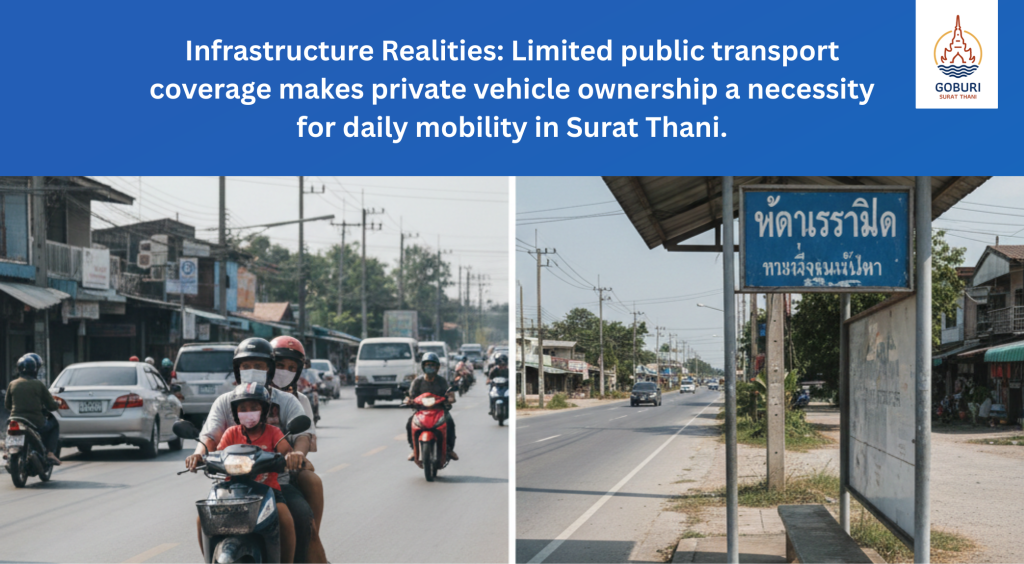
Public transport options exist but are limited in coverage and flexibility. Daily mobility often depends on private vehicles, particularly for families, work routines, or access to services outside central areas. For those unwilling to adapt to this reality, transport limitations can significantly affect quality of life and should be considered carefully when evaluating who should not move to Surat Thani.
Assessing Long-Term Fit: Who Should Not Move to Surat Thani?
Surat Thani tends to support a specific type of long-term resident. It is generally well-suited to people who are comfortable with fewer conveniences, a slower pace of life, and a high degree of self-reliance. This includes individuals who are able to manage daily logistics independently, families that prioritize stability, routine, and cost awareness over variety.
Conversely, when defining who should not move to Surat Thani, the profile usually includes those who depend on high-efficiency systems, immediate service access, or highly connected transport networks. This assessment is not intended to discourage, but to provide clarity. Understanding these realities helps ensure that relocation decisions are based on long-term sustainability rather than short-term impressions.
For readers who want a broader perspective beyond the specific constraints discussed here, the complete guide to living in Surat Thani provides a structured overview of everyday life, long-term planning considerations, and how these factors connect across different household and lifestyle needs.
At the same time, these characteristics can create ongoing friction. Individuals who require a wide range of medical options or professionals who rely on dense international ecosystems are essentially who should not move to Surat Thani. This assessment is intended to provide clarity so that relocation decisions are based on long-term sustainability.
Understanding who should not move to Surat Thani helps ensure that you don’t make a costly mistake based on short-term impressions. For those who value variety and high-speed urban life, the challenges of living in Surat Thani may eventually outweigh the benefits of its lower cost of living.
FAQ
Is Surat Thani a good place for expats to live?
While Surat Thani offers a much lower cost of living and a more authentic Thai experience than tourist hubs like Phuket or Samui, it is best suited for self-reliant residents. It is a “working city” where life revolves around local industry and Thai-language systems. Expats who enjoy quiet routines, local markets, and a slower pace thrive here, while those who require large Western social circles, high-end international amenities, or a bustling nightlife may find the environment limiting.
Can I live in Surat Thani without speaking Thai?
Living in Surat Thani without Thai language skills is significantly more challenging than in Bangkok or the nearby islands. Outside of major hospitals and central shopping malls, English is not widely spoken. For long-term tasks such as visiting the Surat Thani Immigration Office, managing home repairs, or navigating local utilities, fluency or a reliable translator is often necessary. A lack of Thai can also lead to social isolation because most community networks are Thai-speaking.